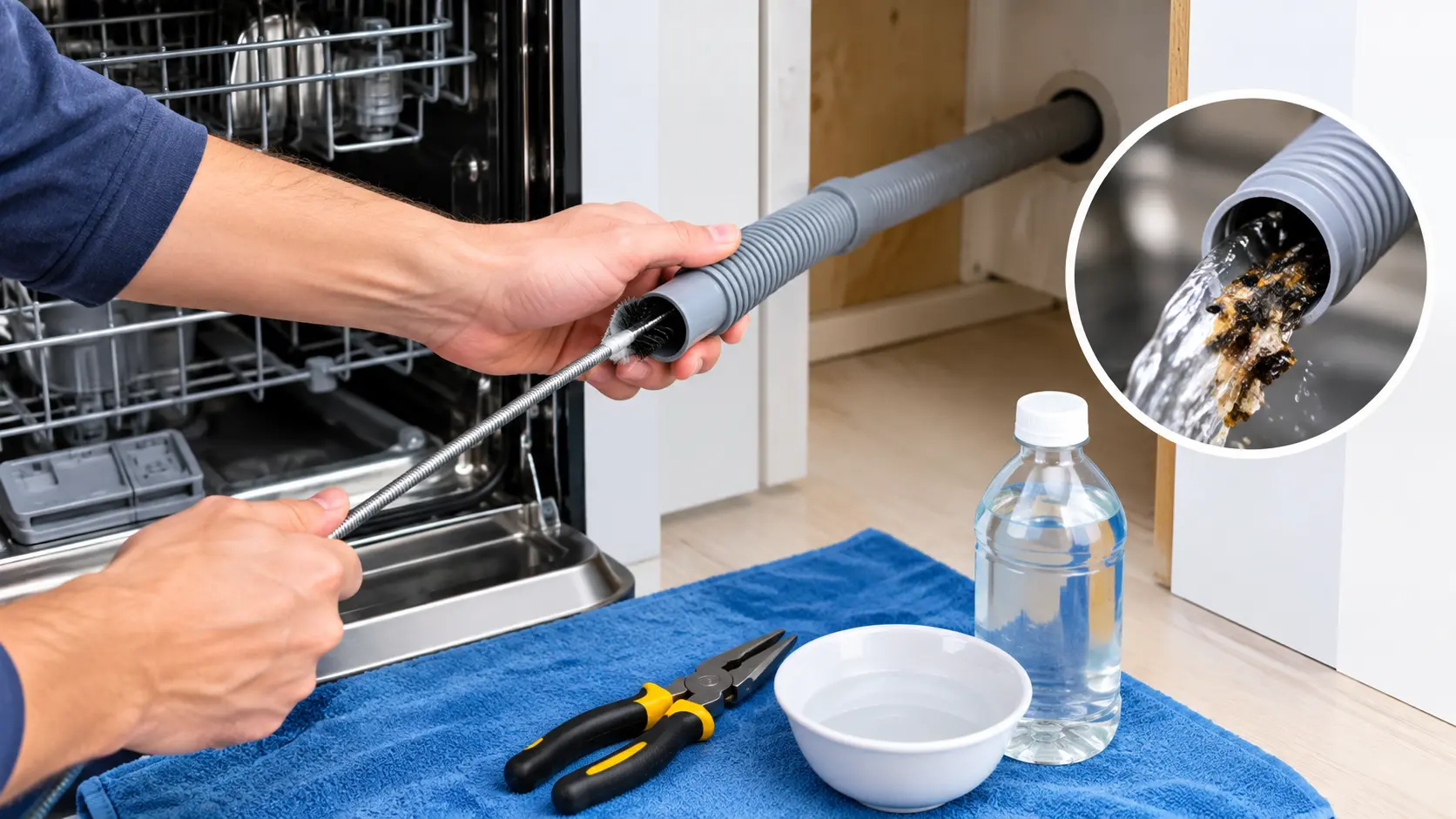

How to unclog a dishwasher drain hose without removing it is easier than you think if your dishwasher leaves dirty water at the bottom after a cycle. The good news is that you do not have to remove your dishwasher to do this job. It can typically be done in 20-30 minutes with a few common household items, and this guide will walk you through the entire process step by step.
This guide shows you one method to unclog your dishwasher drain hose. There are many other ways to do it, and some may work better in specific situations than others. This method is simple and safe for most dishwashers.
Why Does a Dishwasher Drain Hose Get Clogged?
The drain hose carries used water from your dishwasher to your sink’s drainpipe or garbage disposal. Over time, it collects:
- Food particles and grease that slip past the filter
- Soap scum and mineral buildup from hard water
- Small debris like glass shards, labels, or broken food bits
- Kinks or bends in the hose that trap standing water
When the hose can’t move water freely, you’ll notice standing water in the dishwasher, a bad smell, slow draining, or dishes that come out dirty and wet.
Signs the Drain Hose Is the Problem
Before you start, rule out easier fixes. Check these first, since they take less time:
- Dirty filter – Pull out the bottom rack and check the filter at the base of the tub. A clogged filter causes the same symptoms as a clogged hose.
- Garbage disposal – If your dishwasher drains into a disposal, run it for a few seconds to clear any blockage there.
- Air gap (if you have one) – This small cylinder on your sink can get clogged and stop drainage.
If all three are clear and water is still backing up, the drain hose itself is likely blocked.
What You’ll Need
- White vinegar
- Baking soda
- A cup or small bowl
- An old towel or rags
- A wet/dry shop vacuum (optional, but very effective)
- A flexible drain snake or long flexible brush (optional)
- Rubber gloves
Step-by-Step: How to Unclog the Hose Without Removing It
Step 1: Turn Off and Empty the Dishwasher
Switch off the power at the breaker or unplug the unit. Remove any dishes, then soak up standing water at the bottom with towels so you’re working with a dry, clear space.
Step 2: Locate the Hose Access Points
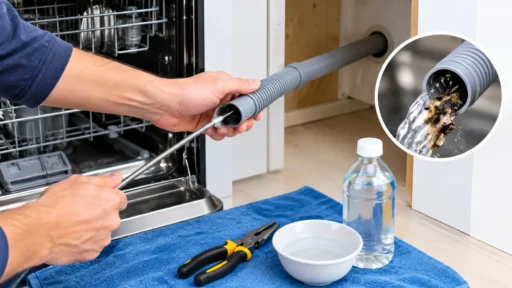
You should not have to disconnect the hose from the dishwasher pump. Work on both ends, the connection point where the hose meets the dishwasher tub and where it connects to the sink drain or disposal under the cabinet. Most clogs occur near the connections.
Step 3: Try the Baking Soda and Vinegar Method
This natural combo is gentle on hoses and works well on grease and soap buildup:
- Pour about ½ cup of baking soda down into the dishwasher’s drain area (near the filter).
- Follow with 1 cup of white vinegar.
- Let the mixture fizz and sit for 15-20 minutes. The reaction helps break down grease and loosen debris inside the hose.
- Flush with a pot of hot (not boiling) water to help carry the loosened gunk through.
Step 4: Use a Wet/Dry Shop Vacuum
This is the most effective no-removal trick. Here’s how it works:
- Set your shop vac to “wet” mode.
- Create a tight seal around the sink-side opening of the drain hose with a rag or your hand.
- Turn on the vacuum and let it pull for 2-3 minutes. The suction often pulls out clogs, food bits, and standing water from deep inside the hose without you ever detaching it.
- Repeat 2-3 times, checking for debris each time.
Step 5: Flush and Run a Rinse Cycle
Once you’ve cleared the clog, run an empty rinse cycle (no detergent, no dishes). Watch the bottom of the tub during the cycle – if water drains quickly and doesn’t pool, your hose is clear.
Step 6: Check for Kinks
Sometimes the “clog” is really just a bent or pinched hose. Gently feel along the visible length of the hose under the sink cabinet and behind the dishwasher kickplate (if accessible) to make sure it’s running in smooth curves, not sharp bends.
What to Avoid
- Don’t use Drano or other chemical drain cleaners. These are too harsh for the plastic and rubber parts inside a dishwasher and can damage the pump, hose, and seals.
- Don’t force a rigid snake too far into the hose. Flexible hoses can tear easily; use a soft brush or flexible plumbing snake instead.
- Don’t skip the filter check. A huge number of “clogged hose” complaints turn out to be a dirty filter instead.
How to Prevent Future Clogs
- Scrape large food scraps off plates before loading
- Clean the filter basket every 1-2 weeks
- Run a vinegar rinse cycle once a month
- Avoid overloading the dishwasher, which can trap more food debris
- Use rinse aid to cut down on grease buildup
A small amount of regular maintenance goes a long way toward keeping your drain hose clog-free.
FAQ
Q: How do I know if it’s the drain hose and not the pump?
If water is backing up but you can hear the dishwasher humming or running normally, it’s more likely a hose or filter clog. If the dishwasher makes no draining sound at all, the pump or motor may be the issue, and that usually needs a technician.
Q: Can I use a wet/dry vacuum on every dishwasher?
Yes, this method works on most standard under-counter dishwashers as long as you can access either end of the drain hose without full disassembly.
Q: Is vinegar safe for all dishwasher hoses?
Yes. White vinegar is mild and safe for the plastic and rubber materials used in drain hoses. It won’t cause the corrosion that chemical cleaners can.
Q: How often should I clean my dishwasher drain hose?
Doing a quick vinegar flush monthly and a deeper clean (like the vacuum method) every 6 months helps prevent major clogs.
Q: What if the clog won’t clear after trying these steps?
If water still isn’t draining after multiple attempts, the clog may be deeper in the hose or near the pump, and it may be time to call an appliance repair technician.