
Knowing how to clean grout lines on tile floor is essential because grout turns grey fast, even on a floor you mop every week. The grooves between your tiles are porous, so dirt sinks in and sits there instead of wiping away. The good news: you don’t need a specialist cleaner or a sore back to fix it. A simple paste and 20 minutes will do most of the job.
Quick Answer: How to Clean Grout Lines on Tile Floor Fast
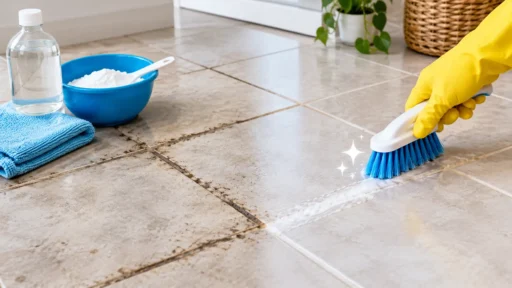
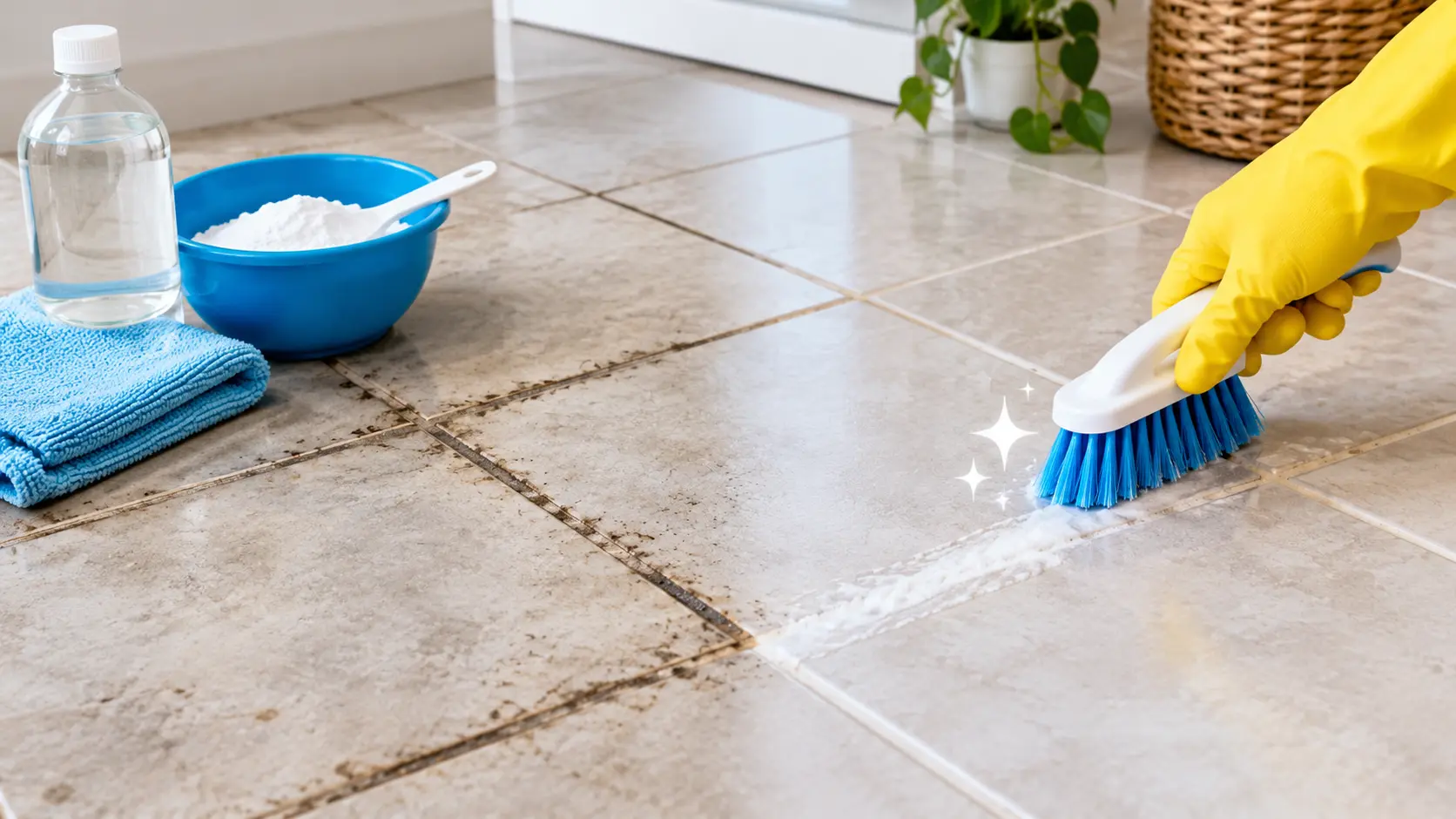
For quick grout cleaning, simply combine baking soda with water to form a thick mixture, apply it to the grout, and use white vinegar to create a frothing reaction. After 10 minutes of sitting time, all you need to do is use a worn-out toothbrush to remove the grout debris and rinse the tiles with clean water. This method is suitable for ceramic and porcelain tiles and requires no special equipment.
What You’ll Need
- Baking soda (bicarbonate of soda)
- White vinegar
- A spray bottle
- An old toothbrush or a stiff grout brush
- A bucket of warm water
- A mop or clean cloth
- Rubber gloves
Step-by-Step: How to Clean Grout Lines Fast
1. Sweep First
Grit left on the floor turns into scratches once you start scrubbing. Sweep or vacuum before you bring out any liquid.
2. Make the Paste
Mix three parts baking soda to one part water until it’s thick enough to sit on the grout line without dripping off.
3. Spread It On
Use an old finger, a spoon, or a small brush to push the paste into the grout lines. Don’t worry about neatness. Cover every line you want cleaned.
4. Spray with Vinegar
Fill a spray bottle with plain white vinegar and mist it over the paste. It will bubble. That reaction is what lifts ground-in dirt out of the grout.
5. Wait 10 Minutes
Walk away. Giving the mixture time to work means less scrubbing for you later.
6. Scrub
Go over each line with a toothbrush or grout brush, using short back-and-forth strokes. Stained corners usually need an extra pass.
7. Rinse and Dry
Mop with clean water to remove all the residue, then dry the floor with a towel so you can see the real result.
What If My Tile Is Natural Stone?
Skip the vinegar. Marble, travertine, limestone, and granite are all sensitive to acid, and vinegar will etch the surface over time, leaving dull marks that don’t buff out. For stone tile, use a pH-neutral stone cleaner instead, or a paste of baking soda and water on its own, left for 15 minutes before scrubbing.
Steam Cleaning: The No-Scrub Shortcut
If you have a steam mop with a grout attachment, this is your quickest option of all. The hot water breaks down grime on contact, so there’s little need to scrub, and no unpleasant chemical odors to worry about. Great for big expanses of floor to be cleaned, such as in your kitchen or hallway, where you don’t want to spend an hour cleaning every groove.
Stubborn Stains? Try This
- Hydrogen peroxide: spray it directly onto dark or mouldy grout, leave for 10 minutes, then scrub.
- Oxygen bleach: mix with warm water per the label and apply with a brush for whitening old, dingy grout.
- A melamine sponge (like a Magic Eraser): works well on light surface stains with almost no effort.
- A dedicated grout cleaner: products built specifically for grout, such as Zep Grout Cleaner, use stronger acids designed to cut through years of buildup in one go.
Avoid mixing bleach and vinegar in the same session. Combined, they release a gas that’s genuinely dangerous to breathe in.
How to Keep Grout Clean Longer
A floor you clean properly once still gets dirty again in a month if nothing changes. Three habits fix that:
- Sweep before every mop so grit doesn’t grind into the grout lines.
- Wipe up spills the same day, especially in kitchens, so they don’t have time to soak in.
- Seal the grout once it’s fully clean and dry. A sealer stops stains from sinking in the first place, so your next clean takes a fraction of the time.
How Often Should You Clean Grout?
Give floor grout a proper scrub once a month, and a quick damp mop weekly in between. High-traffic entryways and kitchens may need the full treatment every two to three weeks instead.
Frequently Asked Questions
What’s the fastest way to clean grout lines?
Baking soda paste plus a vinegar spray, left to fizz for 10 minutes before scrubbing. Most floors are noticeably cleaner within 30 minutes, start to finish.
Does vinegar damage grout?
Plain vinegar is safe on sealed cement grout and on ceramic or porcelain tile. It isn’t safe on natural stone tile, and frequent use on unsealed grout can wear it down over years, so reseal afterward.
Can I use bleach on grout?
Yes, diluted bleach (about one part bleach to four parts water) works well on white grout, but it can discolour coloured grout and shouldn’t be mixed with other cleaners, especially vinegar or ammonia.
How do I whiten grey grout without regrouting?
Oxygen bleach paste left on for 15 minutes usually brightens grout that’s gone grey from age rather than staining. If it doesn’t lift, a grout pen can mask the rest.
Is a steam cleaner better than scrubbing by hand?
For large floors, yes, since it saves time and avoids chemicals. For small areas or deep stains, a paste and brush still gets into the grout more precisely.
Final Word
Clean Grout Tips: How to Use Baking Soda and Vinegar to Reveal Beautiful Floors
Clean grout will make an entire floor look new, and most of the work can be accomplished by mixing two items that are probably already under the sink. Begin with baking soda and vinegar, but keep a steam mop handy, and ensure that the grout is sealed after cleaning so that the next cycle can be performed in roughly half the time.