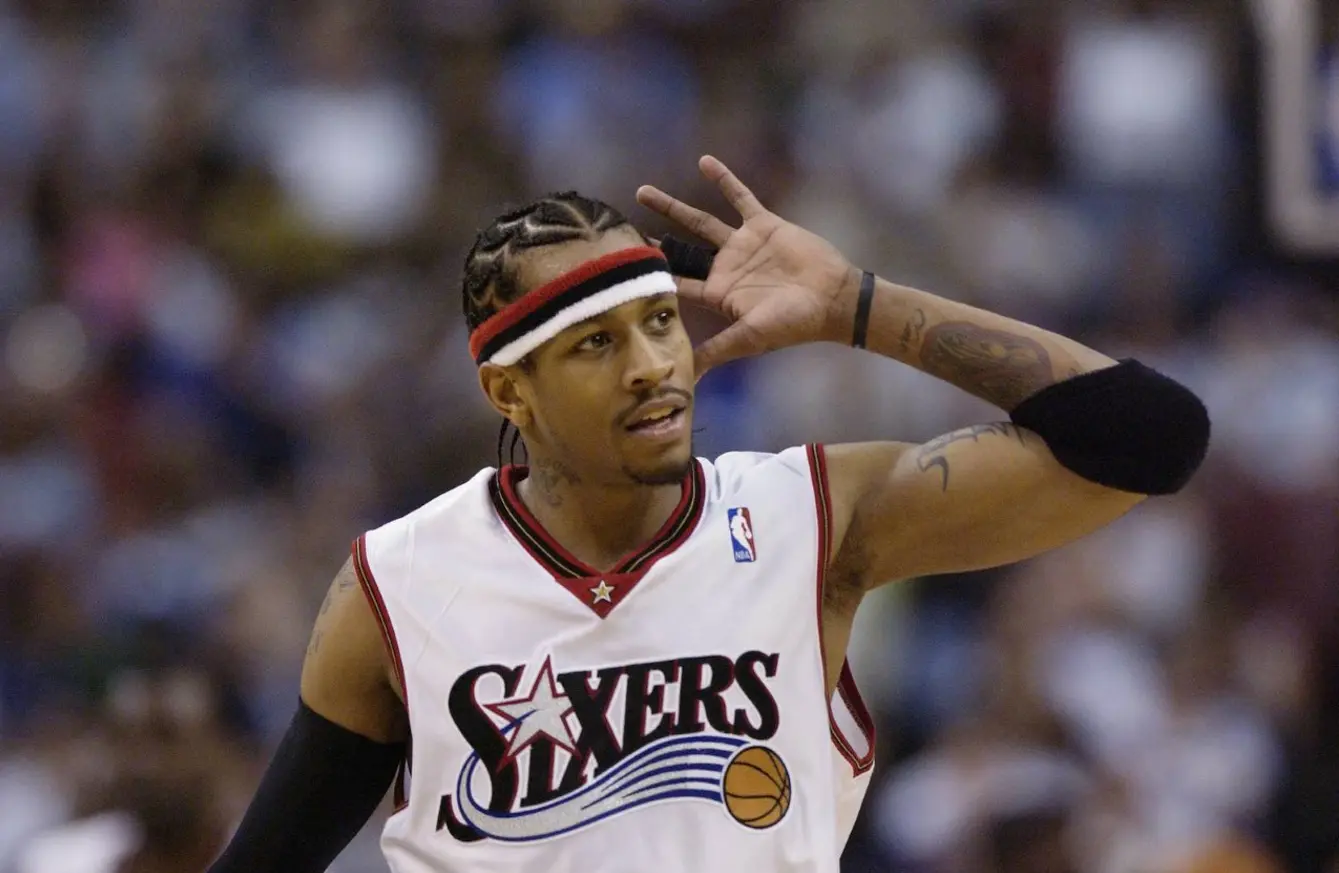

I still remember the first time I watched Allen Iverson play through a body that had no business still moving. Crossovers so low they looked illegal. A frame that seemed built for anything but 82-game seasons in the NBA. And yet, there he was, night after night, refusing to sit down.
That’s the image most of us carry of Iverson’s prime — the Philadelphia years, the 2001 MVP season, the iconic run to the Finals against a Lakers team that looked unbeatable until it wasn’t, for one game anyway. Eleven seasons in a 76ers jersey. A city that adopted his rebellion as its own.
But careers don’t end where they peak. And this week, Iverson reminded everyone that the chapter after Philadelphia mattered too.
On December 19, 2006, Iverson was traded from the 76ers to the Denver Nuggets. He was 31 years old, well past the point in a career where a player is supposed to be “discovering” anything new about himself. In a recent Instagram post, Iverson called that trade the most difficult transition of his career.
Sit with that for a second. Not the injuries. Not the losing seasons that came later in Detroit and Memphis. The hardest adjustment of Allen Iverson’s basketball life was leaving the only organization he’d ever known and starting over in Denver, at an age when most stars are already coasting toward retirement.
He didn’t dwell on the difficulty, though. He used the post to do something better — to thank the people who made that transition survivable. Iverson credited his Nuggets teammates for building a bond he says will last him a lifetime. That’s not the kind of line an athlete drops for engagement. That’s the kind of line you write when a chapter of your life is still doing work on you decades later.
WHAT IVERSON ACTUALLY BUILT IN DENVER
Here’s what tends to get lost when people talk about Iverson’s career in shorthand: MVP, Finals, crossover, done. The Denver years were real basketball, not a farewell tour.
Iverson landed on a roster that already had Carmelo Anthony coming into his own, along with J.R. Smith and Kenyon Martin. Across 135 games with the Nuggets, Iverson averaged 25.6 points, 7.1 assists, and 3 rebounds per game. That’s not decline. That’s a 31-year-old guard still operating as a primary offensive engine on a playoff team.
And it was a playoff team, twice. Denver made the postseason in both 2006-07 and 2007-08 with Iverson running the show alongside Anthony, though both trips ended in first-round exits. In 2007, Iverson put up a Nuggets career-high 51 points in a losing effort against the Lakers — a stat line that tells you everything about a player who never learned how to play conservatively, even on a team that wasn’t quite good enough yet.
The team’s ceiling in those years wasn’t as high as what Denver would eventually build around Nikola Jokic. But that’s not really the point of what Iverson was saying in his post. He wasn’t grading the wins and losses. He was talking about the people.
WHY THIS ONE HITS DIFFERENT
I’ve covered enough athlete social media posts to know the difference between a scripted thank-you and something a person actually needed to get off their chest. This read like the latter.
Iverson has never been shy about how much the game cost him personally — the toll of being undersized in a league of giants, the scrutiny, the years spent being reduced to a highlight reel instead of a whole career. So when a guy like that says the hardest transition of his professional life also produced relationships he’ll carry forever, it’s worth actually listening instead of scrolling past.
Iverson was inducted into the Naismith Basketball Hall of Fame in 2016, and while the bulk of that resume was written in Philadelphia, the Denver chapter is part of why the whole picture holds together. Two playoff runs. A 51-point night. A locker room that, by his own account, changed him.
Nuggets fans got a version of Iverson that wasn’t quite the Answer of Philly legend, and wasn’t quite the version fading out in Detroit and Memphis either. They got him in between — still dangerous, still stubborn, still finding out who he was going to be once the city that built his legend was no longer the one cashing his checks.
That’s the version he just said thank you to.
You May Also Like: