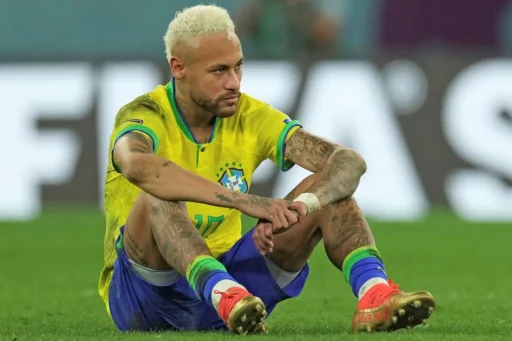
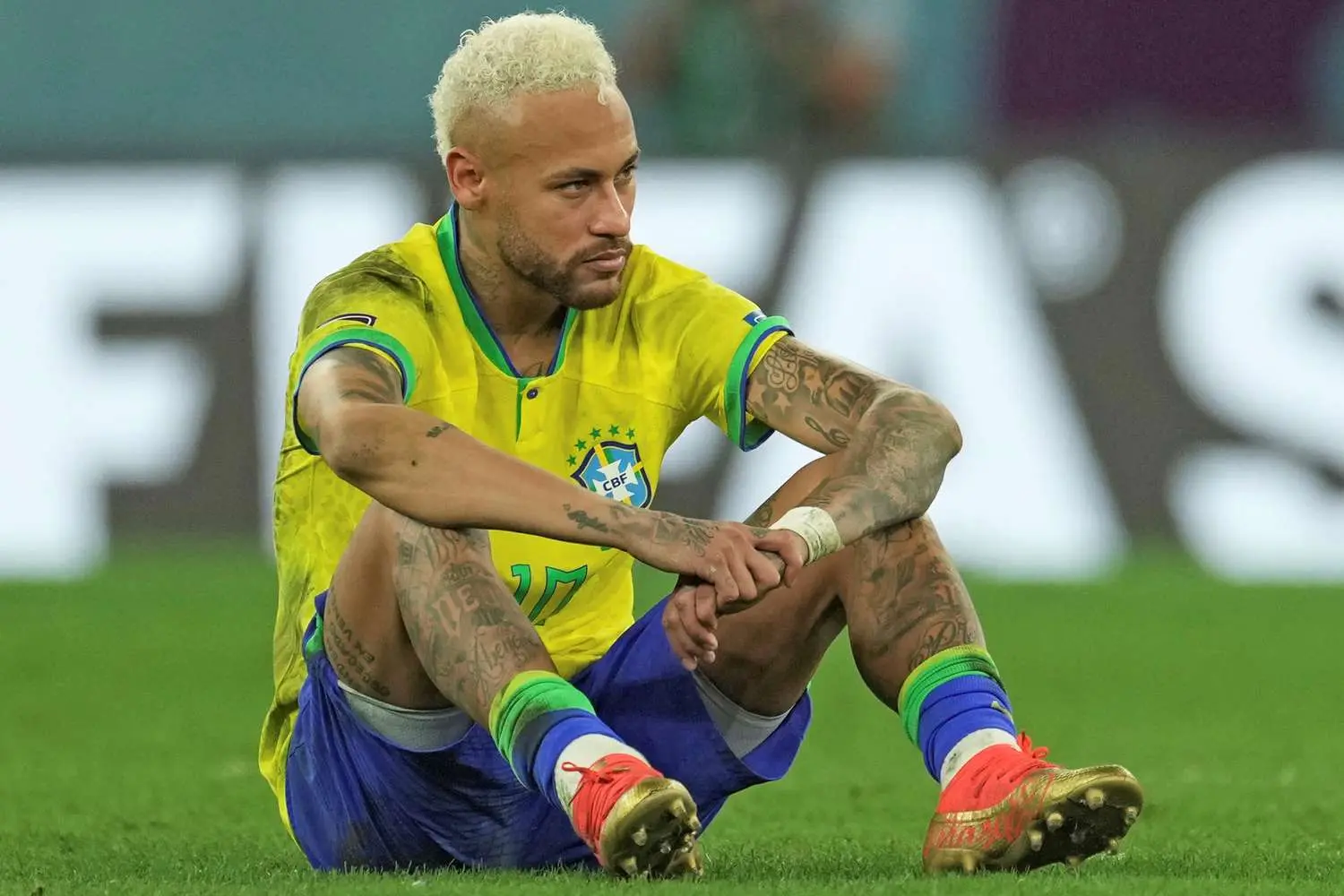

I’ve watched a lot of football in my life, but I’ve only ever gone quiet — actually quiet, remote-down, phone-face-down quiet — for a handful of players. Neymar is one of them. Not because he’s the best (that argument will get you nowhere at a bar), but because watching him always felt like watching someone perform a private joke only he was in on. A step-over that didn’t need to happen. A backheel in a moment that called for caution. It shouldn’t have worked as often as it did. And yet.
I say this as someone who writes for a living — UX copy by day, which is a polite way of saying I spend my working hours making sure a button says “Continue” instead of “Next” — so maybe I notice performance for its own sake more than most people do. Neymar has always been performance for its own sake. The tragedy, if you want to call it that, is that it’s taken most of his career for people to admit the performance was also substance.
So: who is he, actually, underneath the highlight reels and the hairstyles and the years of being everyone’s favorite person to have an opinion about?
The Kid From Mogi das Cruzes
Neymar da Silva Santos, Jr. was born on February 5, 1992, in Mogi das Cruzes, Brazil.
He began playing football as a boy in São Vicente under the guidance of his father, Neymar Santos Sr., a former professional footballer who has remained his son’s closest adviser and mentor throughout his career.
There’s a version of this story where the father-son thing reads as a cliché — the ex-pro dad living vicariously through the kid — but by most accounts it’s the opposite. Neymar himself has said his father has been by his side since he was little, taking care of things. It’s less “stage dad” and more permanent co-pilot.
In 2003, the family moved to Santos, where Neymar joined the youth academy of Santos FC— the same club, worth pausing on, where Pelé built the legend that every Brazilian forward since has been measured against, fairly or not. Here’s the detail I like best: at eleven years old, Santos’ youth director had to talk his father out of taking meetings with Real Madrid and other European giants who were already circling. Eleven. Most of us were still losing library books at eleven.
Making It Official, Then Making It Global
He was promoted to Santos’ first team in 2009 at just seventeen, and it took him roughly a week to score his first senior goal. By nineteen, he’d led Santos to their first Copa Libertadores title in 48 years — the win that turned “promising kid” into “the guy Brazil is pinning its hopes on.”
In 2013, he moved to Europe, joining FC Barcelona, where he played until 2017 alongside Messi and Suárez in one of the most feared attacking trios the sport has produced.
Then came Paris Saint-Germain, from 2017 to 2023, for a then-record transfer fee, where he helped the club win five Ligue 1 titles and came agonizingly close to a treble in the 2019–20 season, losing the Champions League final.
This is the part of the biography that reads, on paper, like an unambiguous success story. It wasn’t, quite. Injuries chased him across every one of those years — ankles, hamstrings, the kind of setbacks that steal not just matches but momentum. Genius interrupted, over and over, is still genius, but it’s exhausting to watch, and I imagine more exhausting to live.
The Detour, and the Long Way Home
In August 2023, Neymar joined Saudi club Al-Hilal. Two months later, he suffered a severe ACL tear playing for Brazil against Uruguay, an injury that kept him sidelined for over a year. He came back to make just seven appearances before departing Al-Hilal in January 2025.
Here’s where the story does the thing good stories do — it loops back on itself. On January 30, 2025, Neymar announced on social media that he’d be returning to his first club, Santos. He made his re-debut coming on as a half-time substitute, and by most accounts the stadium erupted — fans in tears, phone lights up, a hero’s welcome twelve years in the making. He started wearing the number 10 — Pelé’s number.
I don’t think you get to choose the shape of your own redemption arc, but if you did, you’d probably pick this one. The kid who left for Europe as a teenager, came home to the same stadium, the same shirt number, to try to finish the story properly.
It wasn’t a clean fairy tale, though. His return to Santos was far from easy — injuries limited his continuity, including a meniscus surgery on his left knee in December 2025.
In September, he suffered another thigh injury during training and spent 48 days sidelined. He kept coming back anyway. On December 3, 2025, he scored his first hat-trick since returning, helping Santos climb out of the relegation zone.
In February 2026, he told a Brazilian broadcaster, with the kind of honesty that doesn’t usually make it into press conferences, that he didn’t know what would happen from year to year — that he might want to retire by December.
That’s not the quote of a man performing invincibility anymore. That’s just a person, tired and still showing up.
I’ll admit the stats stopped feeling real to me somewhere around researching this piece. Neymar is the all-time top goalscorer for the Brazil national team, with 80 goals
— a record that, in 2023, surpassed Pelé’s long-standing mark. He’s one of only five players ever to score 100 goals for three different clubs, and he’s both the all-time Brazilian top scorer and assist provider in Champions League history.
He’s appeared in four consecutive FIFA World Cups, from 2014 through 2026.
On June 24, 2026, he came on as a substitute in Brazil’s final group match against Scotland, becoming only the fourth Brazilian to feature in four World Cups, after Pelé, Djalma Santos, and Cafu. Then, on July 5, he scored a penalty in a round-of-16 loss to Norway — his ninth World Cup goal, making him just the second Brazilian ever to score in four separate World Cups, again after Pelé. Following that defeat, he announced his retirement from international football, at the same stadium where he’d made his Brazil debut years earlier.
There’s something almost too neat about that symmetry — beginning and ending a chapter in the same building — but sports occasionally writes better endings than fiction does.
Off the pitch, Neymar is a father of three — Davi Lucca, born in 2011, and two daughters, Mavie and Helena. He’s known for staying unusually close to his sister, Rafaella Santos, who he’s described as his best friend. He’s also, somewhat delightfully, a serious poker player who has competed in professional tournaments — proof, maybe, that the same instinct for reading a room and manufacturing an opening never really switches off.
His commercial life is its own separate empire. His endorsement portfolio includes Puma, a headline-making switch from Nike, and Red Bull, alongside past deals with Panasonic, Gillette, and Beats by Dre. Analytics firm HypeAuditor estimated, as of July 2026, that his Instagram account alone generates somewhere between $905,000 and $1.24 million a month in value. He’s not just a footballer anymore, if he ever purely was one. He’s a small industry that happens to also play football.
What I Keep Coming Back To
Writing this, I kept circling the same tension: Neymar the prodigy who was supposed to be the next Pelé, and Neymar the thirty-four-year-old who came home, banged up, uncertain, wearing Pelé’s actual number, trying to finish something instead of start it. Both of those people are true at once. That’s rare. Most careers pick a single narrative and stay there.
I don’t know if he’ll play past this year. Neither does he, by his own admission. But there’s a version of this story — the one where a kid from Mogi das Cruzes turned down Real Madrid at eleven, went to Europe anyway a few years later, won almost everything there was to win, got hurt more than any of us would wish on someone, and still found his way back to the same stadium where it all started — that doesn’t need an ending to already feel complete.
Also Read:- Why Did Neymar Retire From International Football? The Reason Behind His Emotional Goodbye