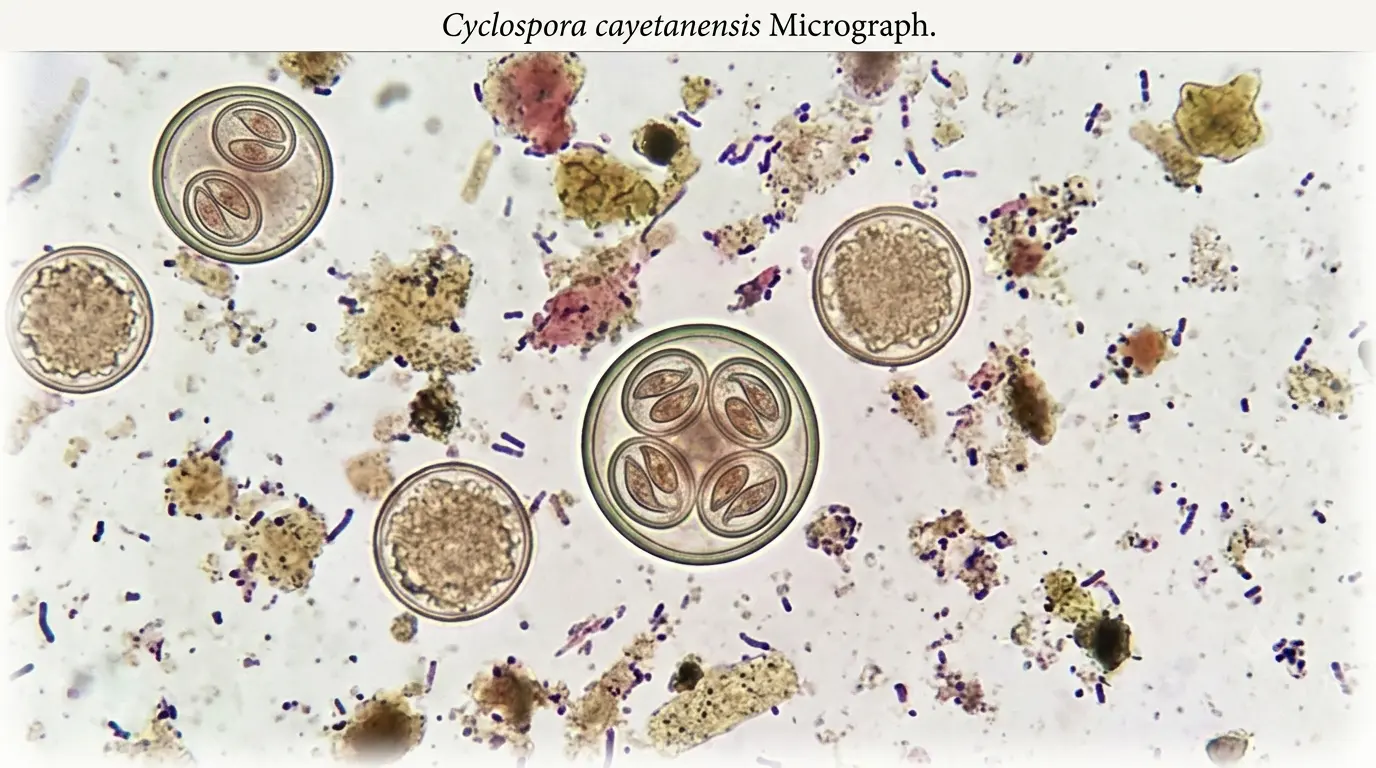

Cyclospora Parasite Outbreak 2026: I am not a doctor or a scientist, I just write some health related articles based on my experience and research. I am a health writer you can say, atleast that’s what my byline says. That’s what my last few years of work suggest. That’s the box most editors would put me in without thinking twice.
But here’s the thing about that box — it doesn’t come with immunity.
Because two summers ago, I spent four days on a bathroom floor in a way I still don’t fully talk about at dinner parties. Watery, relentless, the kind of diarrhea that makes you cancel plans and then cancel the plans you made to cancel your plans. I didn’t know what it was then. I do now. It’s called cyclosporiasis, and this July, it’s making a mess of a lot more people’s summers than mine.
I’ve also been reading a lot of what passes for health journalism on the internet this week.
And I’ll be honest with you: most of it is either fear-mongering or so clinical it forgets a human being is reading it.
So let’s do this differently.
What’s actually happening right now
As of mid-July 2026, cyclosporiasis — an intestinal illness caused by a microscopic parasite called Cyclospora cayetanensis — has been reported in at least 32 states. The CDC had logged 843 confirmed cases as of July 9, though independent tallies from state health departments put the real number well above 4,000, and the CDC itself admits the true figure is almost certainly higher than what’s officially reported, since plenty of people ride it out at home without ever seeing a doctor or getting tested.
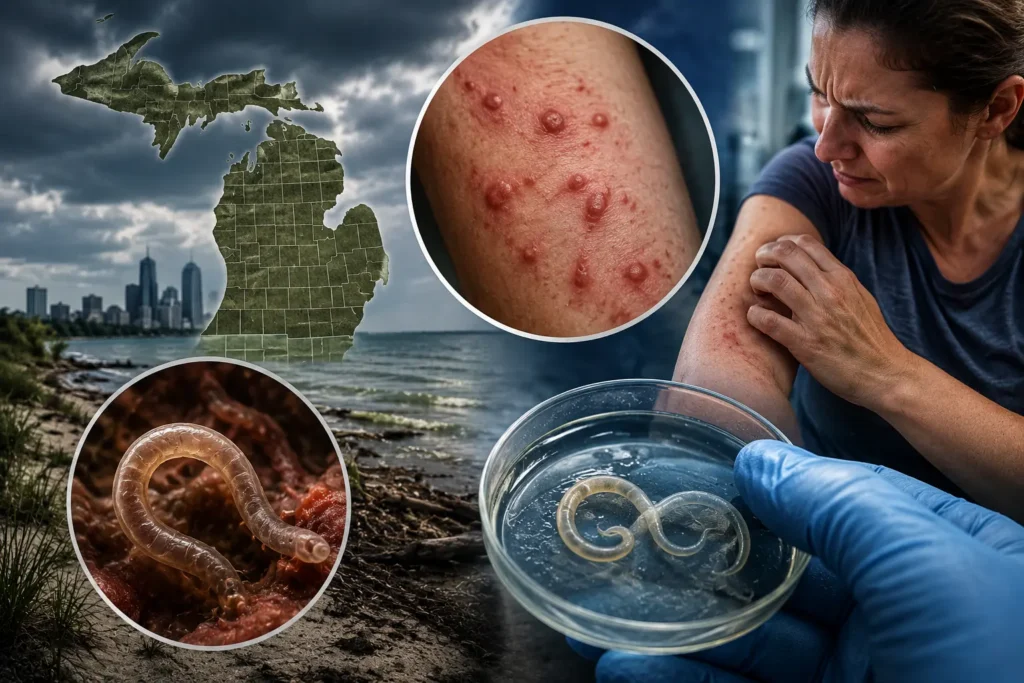
Michigan is the epicenter of the worst of it — over 2,640 cases as of July 9, which is roughly fifty times the state’s normal annual average of 40 to 50 cases. Ohio, New York, Illinois, and North Carolina round out the list of hardest-hit states. Investigators in Michigan and Ohio suspect lettuce or salad greens may be involved, though as of this writing, no recall has been issued and no single confirmed food source ties every case together. The CDC has been careful to say there’s no evidence yet of one big multistate outbreak — it looks more like several separate clusters happening at the same time, which, if you ask me, is almost more unsettling than one clean answer would be.
What the parasite actually does to you
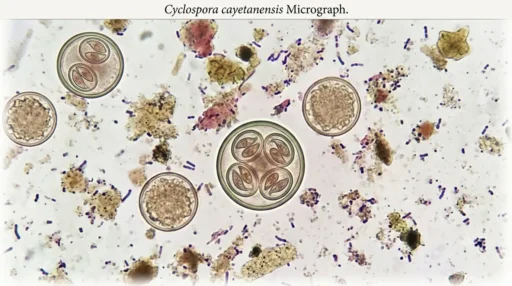
Cyclospora is a single-celled parasite. You can’t see it, you can’t taste it, and you definitely can’t smell it on your spinach. It lives in the intestines of infected people and spreads when someone eats food or drinks water contaminated with feces carrying the parasite’s oocysts — its dormant, egg-like form. This is not a person-to-person illness. You can’t catch it from your sick coworker breathing near you. You catch it from what you eat or drink.
Historically, the produce most associated with U.S. outbreaks includes basil, cilantro, raspberries, snow peas, and pre-washed lettuce or salad blends — foods that get eaten raw, handled a lot, and are notoriously hard to wash completely clean.
Symptoms usually show up one to two weeks after exposure, sometimes longer, which is exactly why tracing the source is such a nightmare for investigators — nobody remembers what salad they ate two Tuesdays ago. When it hits, it hits like this:
- Watery diarrhea, often described by patients as “explosive” (their word, not mine, though after my own bout, I don’t disagree)
- Loss of appetite and noticeable weight loss
- Stomach cramps and bloating
- Nausea, sometimes vomiting
- Fatigue that doesn’t match how “minor” the illness sounds on paper
- Low-grade fever, though this one’s less common
Left untreated, it doesn’t just go away in a couple of days like a normal stomach bug. It can drag on for weeks, and symptoms can fade and then return in a frustrating relapsing pattern even after you think you’ve recovered. Of the cases with hospitalization data available so far this season, roughly 1 in 20 people needed inpatient care. No deaths have been reported in this outbreak, which is the one genuinely reassuring number in this whole story.
Why doctors sometimes miss it
Here’s something that doesn’t get said enough: standard stool tests often don’t catch Cyclospora. It requires a specific request from your doctor — special staining techniques or PCR testing — and because the parasite sheds intermittently, sometimes more than one stool sample is needed to confirm it. If you’ve had unexplained watery diarrhea for more than a few days, especially this summer, don’t just accept a vague “it’s probably a virus” and move on. Ask specifically about Cyclospora testing. I wish someone had told me that during my four days on the bathroom floor.
Treatment, if you get it
The standard treatment is a course of trimethoprim-sulfamethoxazole, which is the antibiotic combination sold under brand names like Bactrim. If you’re allergic to sulfa drugs, alternative regimens exist, but they’re less well-studied, so that’s a conversation to have directly with your doctor rather than something to self-manage. Alongside antibiotics, the real work is rest and hydration — plenty of fluids, because the fluid loss from this kind of diarrhea is no joke and can sneak up on you.
How to actually protect yourself
I’m not going to tell you to stop eating vegetables. That would be a worse outcome for your health than the small risk we’re talking about here. But there are real, unglamorous habits that matter:
- Buy whole heads of lettuce instead of pre-washed bagged salad mixes, and pull off and discard the outer two or three leaves before washing the rest under running water
- Wash cilantro and basil leaf by leaf under running water — don’t just rinse the bunch and call it done
- Trim and wash green onions thoroughly, including under the outer layer
- Cook leafy greens and herbs when you can — heating food to 158°F (70°C) kills the parasite outright
- Scrub firm produce like melons and cucumbers with a clean produce brush, even though you’re peeling them, because the knife can drag contamination from the skin into the fruit
- Wash your hands with soap and water before and after handling any fresh produce
- Sanitize cutting boards, countertops, and utensils after prepping fruits and vegetables
None of this is exotic advice. It’s the boring, unsexy stuff that actually works, which is usually how it goes with prevention — the internet wants a dramatic hack, and the real answer is “wash your hands and your lettuce, properly, every time.”
The part I keep thinking about
What strikes me most about this outbreak isn’t the case count, though 4,000-plus is nothing to shrug at. It’s how invisible the whole thing is until it isn’t. You can’t see Cyclospora sitting on a leaf of basil. You can’t smell it in a glass of water. The only warning most people get is their own body, several days later, telling them something went badly wrong with something they ate without a second thought.
If there’s a season to take this seriously, it’s this one — May through August is peak cyclosporiasis season in the U.S., and this year’s numbers are already running ahead of last year’s, according to the CDC’s own July update. So wash the lettuce. Wash it again. And if your stomach turns on you this summer and doesn’t let up after a few days, don’t just wait it out on principle. Go get checked, and ask the question out loud: could this be Cyclospora?
I wish I had.
You May Also Read: