
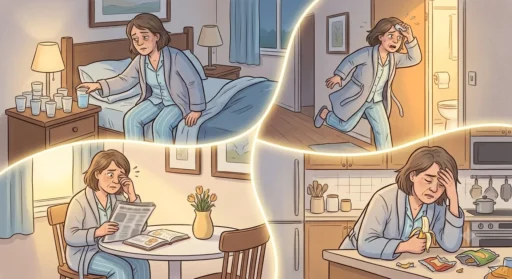
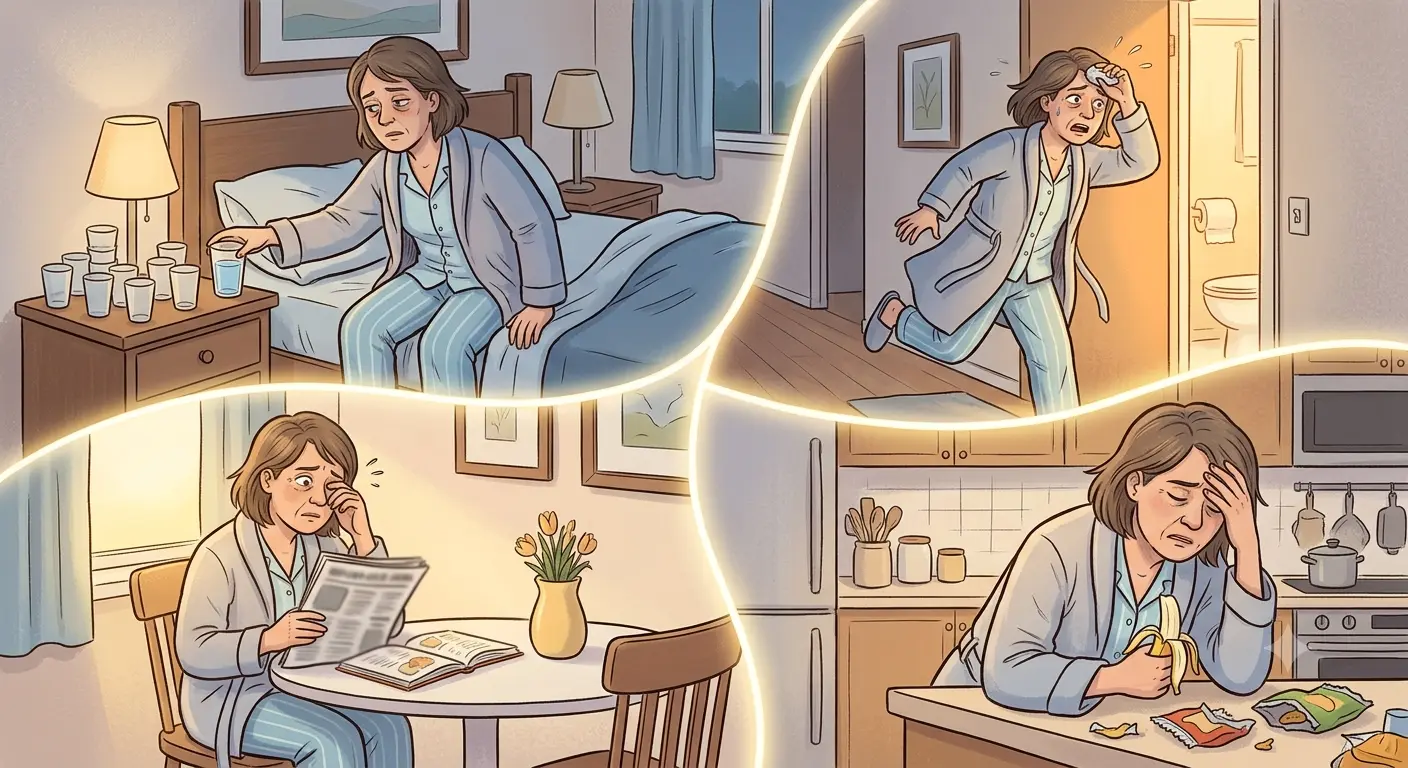

A few years into working as a nutritionist, I had a client tell me she’d been drinking three liters of water a day and still felt parched. She thought it meant she was finally “doing hydration right.” I thought so too, honestly, for about the first ten minutes of that conversation. Then she mentioned the bathroom trips — six, seven times overnight — and the fatigue that no amount of sleep seemed to touch. That’s when the hydration story fell apart and a much less flattering one took its place.
She didn’t have diabetes yet. But she was close enough that her body was already sending flares up, and neither of us had been reading them right.
That’s the thing about early diabetes symptoms — they’re sneaky, aka easy to explain away. You’re tired? You’ve been working too much. Thirsty? It’s summer. Losing weight without trying? Honestly, most people would take that “problem” and say thank you. I get why it slips past people. It slipped past a trained professional sitting across the table from the evidence.
The thirst-and-bathroom loop
This is usually the first domino. When blood sugar runs high, your kidneys work overtime trying to filter and absorb the excess glucose. When they can’t keep up, that sugar spills into your urine and drags water along with it — which is a clinical way of saying you’ll be up at 2 a.m., again, for the third night this week. The thirst that follows isn’t really thirst in the normal sense. It’s your body trying to replace what it’s losing, and it rarely feels satisfied no matter how much water you pour into it.
If this cycle has become your normal and you’ve stopped questioning it, that’s worth questioning.
Fatigue that sleep doesn’t fix
I used to write this one off constantly, in myself and in clients. Everyone’s tired. But there’s a specific flavor of diabetes-related fatigue that’s different from “I stayed up too late” tired. It’s your cells being starved of fuel even though there’s plenty of glucose floating around in your blood — insulin just isn’t shuttling it in properly anymore. You can sleep nine hours and still feel like you’re wading through wet sand by 10 a.m. That disconnect, energy in versus energy felt, is the tell.
Unexplained weight loss
This one gets celebrated more than it gets investigated, which is part of the problem. Losing weight without changing your diet or workouts isn’t a win if your body is doing it because it’s burning muscle and fat for fuel it can’t otherwise access. I had a client genuinely thank his “stress” for a fifteen-pound drop before we figured out what was actually going on. Stress doesn’t usually do that. Uncontrolled blood sugar does.
Blurry vision that comes and goes
High glucose pulls fluid from tissues, including the lenses of your eyes, and changes their shape just enough to blur things. It’s often temporary and reversible in early stages, which is exactly why people ignore it — it seems to fix itself. But it tends to come back, and each time it does, it’s worth treating as a message rather than a coincidence.
Slow-healing cuts and frequent infections
High blood sugar affects circulation and immune response, so wounds that would normally close in a week can linger for two or three. Recurrent yeast infections, gum issues, or skin infections that keep coming back are part of the same pattern. This is the symptom I’ve seen dismissed the most, probably because it feels unrelated to anything metabolic.
Tingling or numbness in hands and feet
This one usually shows up later, once elevated glucose has started affecting nerves — a process called diabetic neuropathy. It doesn’t necessarily mean damage is severe or permanent, but it does mean this has likely been building for a while, silently, before it became a symptom.
Darkened patches of skin
Look at the back of the neck, armpits, or groin. Velvety, darker patches — a condition called acanthosis nigricans — are strongly linked to insulin resistance, which is often the stage right before a type 2 diabetes diagnosis. It’s one of the more visible early markers, and one of the least talked about.
None of these symptoms are a diagnosis on their own. I’m not going to pretend a blog post can tell you what a blood glucose test can. What I will say is this: the body rarely announces big problems loudly on day one. It murmurs first. My client with the water bottle habit went in for bloodwork, got her prediabetes diagnosis, and — this part actually has a decent ending — changed course early enough that “diabetes” never became her permanent story.
Not everyone gets that timing. The only way to improve your odds is to stop explaining the murmurs away and actually go get the test.
You May Also Read: