

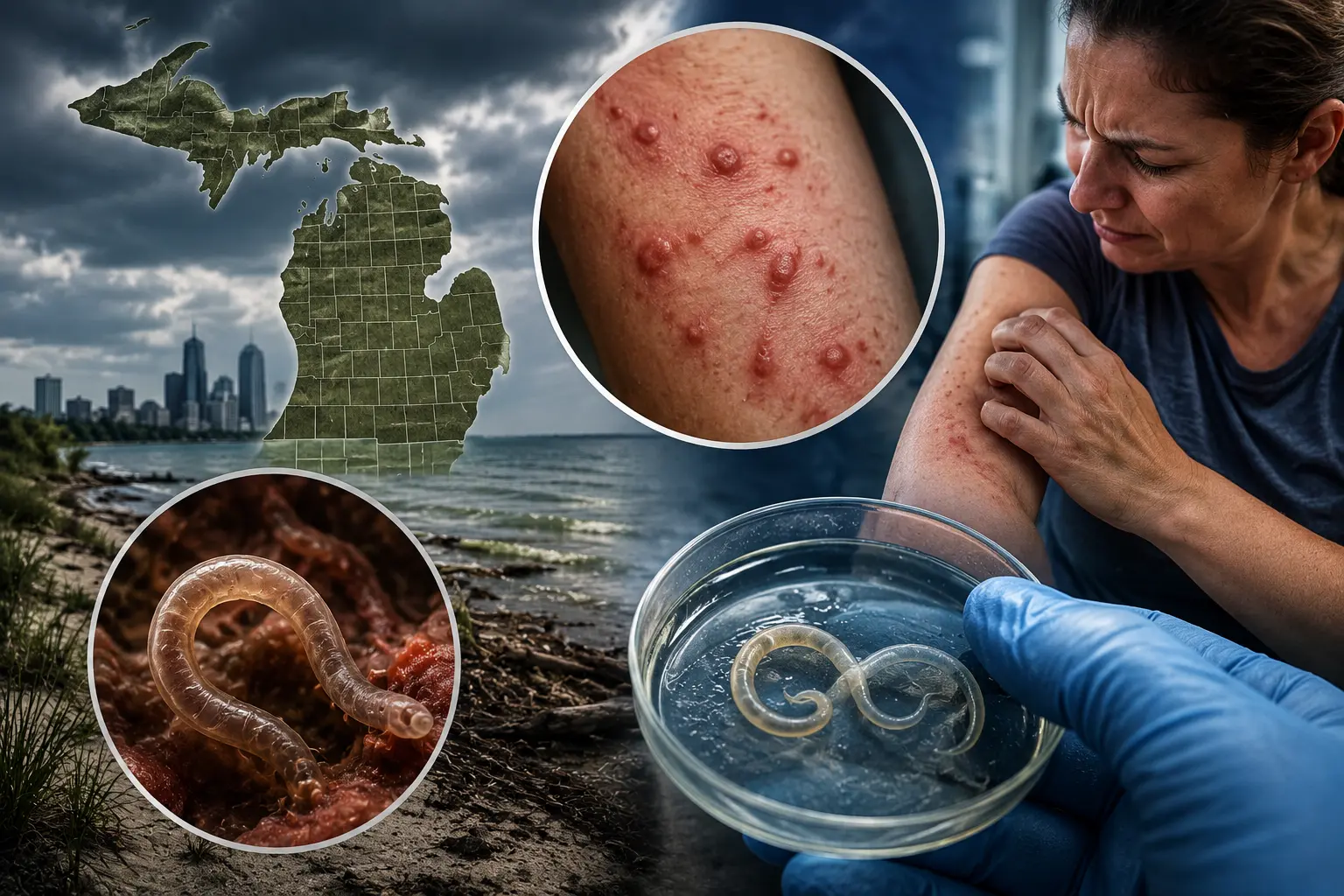

If you live in southeast Michigan and you’ve had stomach trouble that just won’t quit this week, here’s a question worth asking: could it be Cyclospora?
Health officials in Michigan didn’t expect this either. A year ago, the state was averaging around 50 cases of cyclosporiasis a year — a small, predictable number. In the last nine days, that number has already tripled. And it’s still climbing.
Let’s break down what’s happening, why it matters, and what you should actually do about it.
What is cyclosporiasis?
Cyclosporiasis is an intestinal illness caused by a tiny parasite called Cyclospora cayetanensis. You can’t see it, and you definitely don’t want it in your food.
It spreads one way: through food or water that’s been contaminated with feces. It’s not caught from being near a sick person — cyclosporiasis does not spread person to person. In the U.S., outbreaks are almost always traced back to fresh produce, especially in the summer months. Past outbreaks have been linked to things like cilantro, basil, raspberries, snow peas, and bagged salad kits.
What’s happening in Michigan right now
Since June 22, 2026, Michigan has logged more than 170 confirmed cases across southeast Michigan — a number that keeps rising day by day. For context, that’s more than three times what the state normally sees in an entire year.
Here’s the county breakdown as of the most recent update:
- Monroe County: 70 cases
- Lenawee County: 33 cases
- Washtenaw County: 21 cases
- Wayne County: 12 cases
- Jackson County: 7 cases
- Shiawassee County: 7 cases
- Livingston County: cases confirmed
- 24 more cases spread across 11 other counties, including the city of Detroit
The Michigan Department of Health and Human Services (MDHHS) and the Michigan Department of Agriculture and Rural Development (MDARD) are working together to trace the source, but as of now, no single contaminated product has been identified. Investigators are interviewing sick patients about what they ate and where, in an effort to find a common thread.
People affected range in age from 8 to 84, with the typical patient around 41 years old. Officials expect the case count to keep growing as more people get tested and diagnosed.
Is this just a Michigan problem?
No — and this is the part that’s easy to miss if you only read the local headlines.
The CDC has separately been tracking a rise in cyclosporiasis nationwide. As of mid-June, the agency had logged 145 domestically acquired cases across 17 states, including New York, Texas, Louisiana, Florida, Georgia, and others. Of those, 20 people were hospitalized, though no deaths have been reported.
Importantly, the CDC says there’s currently no confirmed evidence that all these cases nationwide are linked to one single source. Michigan’s outbreak is being investigated as its own cluster, separate from — but happening at the same time as — this broader national uptick. Right next door, Ohio’s Toledo-Lucas County Health Department has also reported a recent rise in cases, which suggests the outbreak may not be stopping at Michigan’s border.
One more thing worth knowing: cyclosporiasis is almost certainly under-counted everywhere. Most standard lab tests don’t check for it unless a doctor specifically requests it, so a lot of cases likely get written off as “some stomach bug” and never get properly diagnosed.
What symptoms should you actually watch for?
Symptoms typically show up 2 to 14 days after exposure, which makes it tricky to pin down exactly what caused it. Watch for:
- Frequent, watery diarrhea (sometimes described as “explosive”)
- Loss of appetite and unintended weight loss
- Stomach cramps and bloating
- Nausea (vomiting is less common)
- Low-grade fever
- Fatigue
Here’s the tricky part: if it’s not treated, symptoms can last anywhere from a few days to over a month, and they can fade and then come back. The good news is that it’s very treatable — a course of antibiotics can significantly improve symptoms once it’s diagnosed.
What should you do?
You don’t need to panic, but you also shouldn’t shrug off ongoing stomach issues right now, especially if you live in southeast Michigan. Here’s the practical advice from health officials:
See a doctor if you have sudden, ongoing diarrhea — especially if it’s lasted more than a few days. Mention Cyclospora specifically, since it’s not part of routine testing.
Wash all produce thoroughly under running water before you eat, cut, or cook it — even if you’re planning to peel it.
Scrub firm produce like melons and cucumbers with a clean produce brush before cutting into them.
Report it to your local health department if other people in your household have the same symptoms — that kind of information helps investigators connect the dots.
Stay hydrated if you are sick, particularly with the current heat wave adding extra strain on your body.
This isn’t a five-alarm public health emergency, but it is unusual, and Michigan health officials are calling it exactly what it is: a large and growing outbreak. The source hasn’t been found yet, cases are still climbing, and a similar pattern is showing up in other states at the same time.
If you’ve had stomach issues that don’t quite add up this summer, don’t just wait it out. A simple conversation with your doctor — and the right test — could save you weeks of misery.