
COME JULY, Netflix drops its big summer tentpole, everyone’s timeline fills up with the same three screenshots from the trailer, and somewhere between the fifth “OMG Enola’s getting MARRIED” tweet and the tenth “franchise fatigue” think-piece, I quietly promise myself I’ll watch it opening weekend, aka the same promise I make every single time a sequel drops and somehow never keep.
Every summer, it’s the same ritual: a new installment lands, my group chat splits into two camps — the “still holds up” loyalists and the “it’s just not the same anymore” skeptics — and I end up watching alone at midnight with cold popcorn, trying to decide which camp I belong to.
I went in with a plan for Enola Holmes 3. I was going to watch it the way I watch every franchise threequel: charitably, patiently, ready to defend it in the group chat before I’d even finished the runtime. I’d loved the first two enough to write about them before, in a ranking of every Netflix mystery franchise I did last year, so I figured I already knew what I was signing up for.
The movie, however, had different plans for me.
So, What’s It Actually About
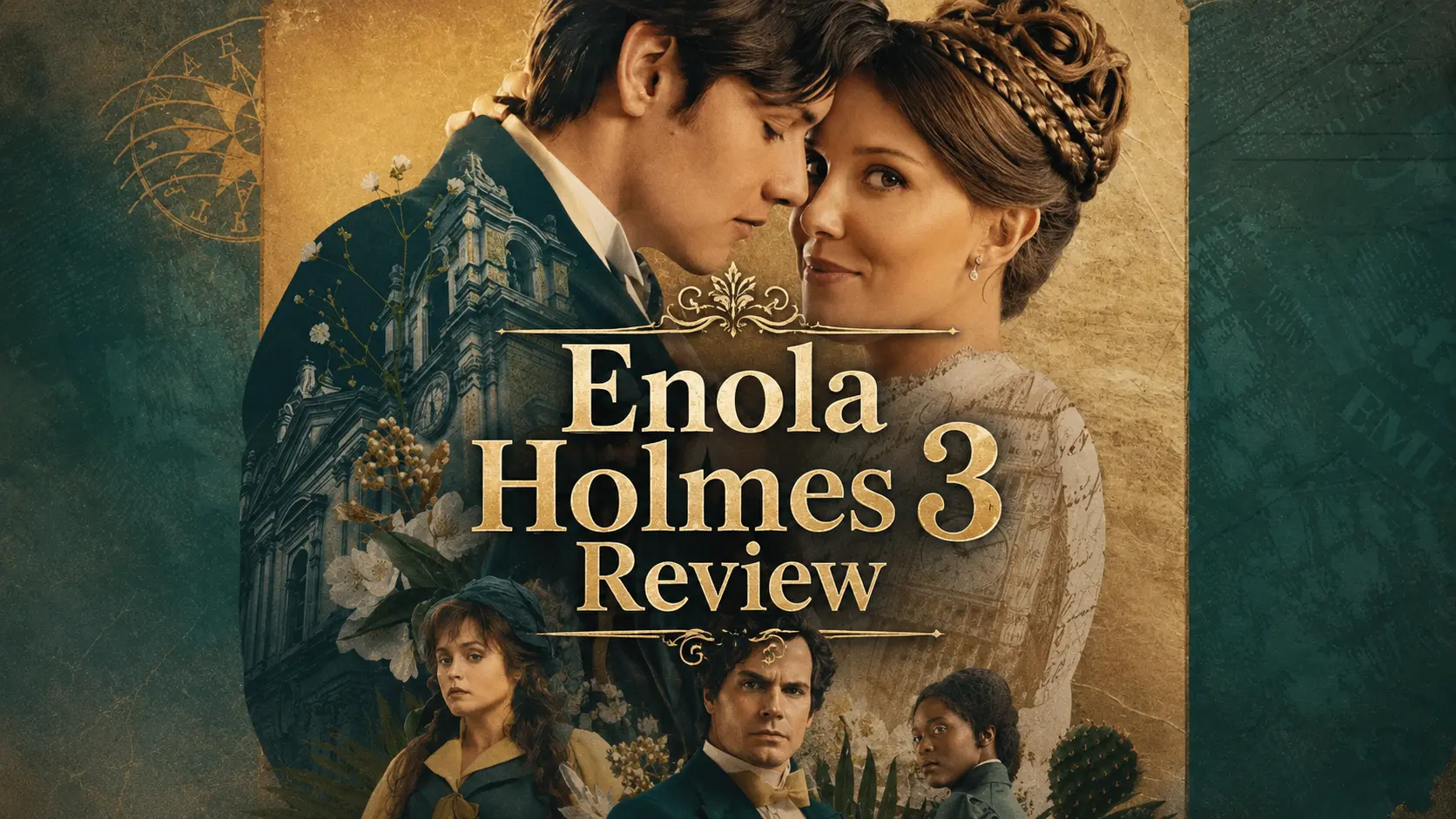
Enola (Millie Bobby Brown, still doing the fourth-wall wink she’s built her whole career on at this point) is standing at the altar in Malta, about to marry Tewkesbury (Louis Partridge, permanently in “devoted and slightly useless” mode), when Dr. Watson shows up to inform her that her brother Sherlock has been kidnapped. Wedding on pause, deerstalker back on. The film trades London’s fog for the Mediterranean sun, and it also trades some of its earlier lightness for a heavier subplot about British colonial rule in Malta — a character coolly informs a local that Enola’s Britishness makes her exempt from local law, and it’s meant to land as commentary, not just set dressing.
Philip Barantini, taking over from Harry Bradbeer, brings a grittier, more grown-up sensibility. You can feel him trying to push Enola into more serious territory: not just “what mystery am I solving” but “what happens to me the moment I say ‘I do.'” That’s actually a good instinct. Twenty-year-old franchise heroines rarely get asked what marriage costs them.
Here’s Where I Have to Be Honest
I wanted to love this one. I really did. And for the first act, I thought I would — the Malta backdrop is gorgeous, Enola’s pre-wedding spiral about giving up her name and her independence felt genuinely earned, and Helena Bonham Carter is, as always, having more fun than anyone else in the frame.
But somewhere around the midpoint, the mystery itself just… stops mattering. Not in a “so twisty I lost track” way. In a “wait, why do I not care who kidnapped Sherlock” way. The film keeps cutting back to flashbacks of scenes I’d literally just watched, like it doesn’t trust me to remember what happened ten minutes ago. For a franchise built entirely on the pleasure of watching someone think, that’s a real problem.
I’m not alone in this. The film landed at 70% on Rotten Tomatoes when it dropped, the lowest of the three — a small but telling stat, because it’s the first Enola Holmes movie that didn’t get a “Certified Fresh” badge. Some critics leaned generous, praising Brown’s continued charm and the film’s willingness to get political. Others were blunter, pointing out that the plotting has gone soft exactly when the themes got heavier, which is its own kind of irony.
What Still Works
I don’t want to bury this one, because it’s not a bad movie, it’s just a tired one wearing a nicer outfit. Brown is still the best reason to watch — she’s grown into the role in a way that makes her earlier scrappiness feel like a different actress entirely, and her comic timing has genuinely sharpened. The Malta setting is a smart swap; it gives the franchise room to breathe outside London’s alleys, even if the plot doesn’t always earn the scenery. And Enola’s internal conflict about marriage — worthy of the Holmes name versus worthy of herself — is the one thread the movie never drops, even when everything around it gets muddled.
The Verdict
Here’s my honest take: if you’re coming for Millie Bobby Brown, for the Enola-Tewkesbury will-they-already-did-they dynamic, or for another two hours in this world, you’ll probably still have a good time. If you’re coming for the mystery — the actual reason this franchise exists — you’re going to leave a little hollow, the way I did.
I sat down expecting to defend this movie in my group chat. Instead I found myself agreeing with the skeptics for the first time in three films. That’s not a franchise-ending problem. But it is the first real crack in something that used to feel unbreakable.
Rating: 3/5 — charming enough to finish, thin enough that you’ll forget the mystery by next week.