
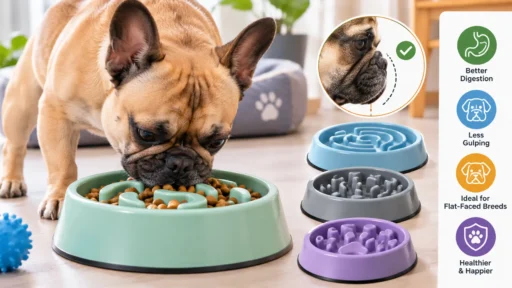
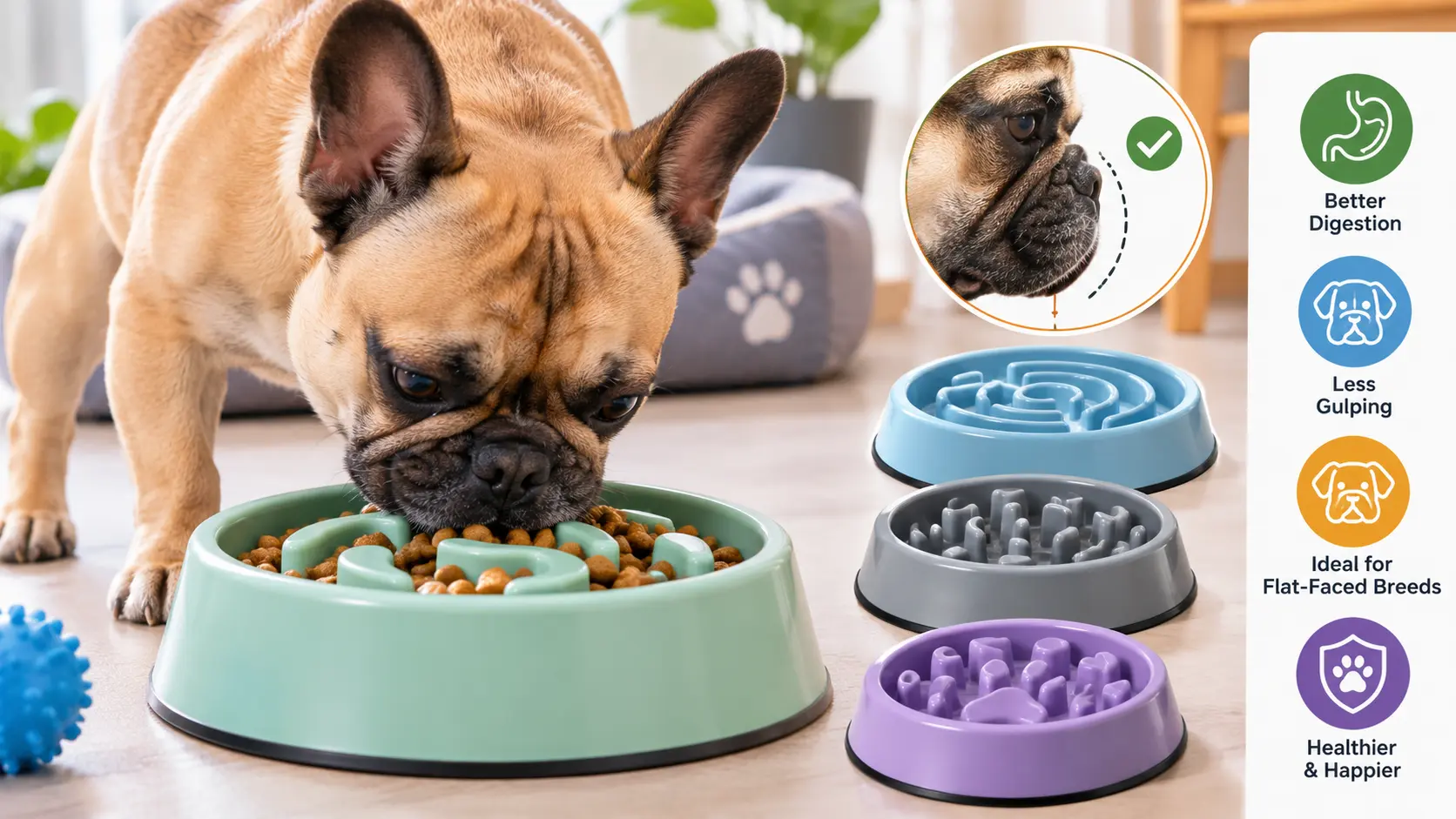

Finding the best slow feeder for flat faced dogs can be frustrating if you end up with a deep maze built for long-nosed breeds. If your pug, Bulldog, or Boston Terrier inhales dinner in under a minute and then coughs, gags, or throws it right back up, a regular bowl is working against your dog’s face shape.The best slow feeder bowl for flat-faced breeds isn’t the deepest maze on the shelf — it’s a shallow, wide-open design built for a short muzzle. Here’s exactly what to look for and which bowls actually fit.
Why Flat-Faced Dogs Need a Different Kind of Slow Feeder
Brachycephalic dog breeds, including Pugs, French and English bulldogs, Boston terriers, Boxers, Shih Tzus, Lhasa Apsos, and Cavalier King Charles Spaniels, are characterized by a short skull and an elongated tongue. This feature makes it difficult for them to remove food from a regular deep bowl.
The majority of slow feeders’ bowls are made for pets with long noses that can reach all corners of a dish. For brachycephalic breeds, such a design causes more frustration than satiety: the pet owner has to watch their dog frantically pawing at the bowl, trying to access the food, turning the bowl upside down, or simply refusing to eat.
Moreover, a fast eating pace can cause the pet to swallow large amounts of air with the food, which is especially dangerous for brachycephalic dogs due to their narrow airways. A properly shaped slow feeder bowl can help the pet achieve a healthy eating pace and avoid choking on air.
What to Look for in a Slow Feeder Bowl for Flat-Faced Breeds
- Shallow depth — aim for under 2 inches. A deep bowl forces an uncomfortable head tilt.
- Wide opening — 6 inches or more across so the dog can approach food from the side, not just straight down.
- Low, rounded ridges — gentle speed bumps, not a tight maze with narrow walls.
- Non-slip base — flat-faced dogs push harder against the bowl while eating, so it needs to stay put.
- Food-safe material — BPA-free plastic, silicone, stainless steel, or ceramic, all easy to clean after every meal.
Best Slow Feeder Bowls for Flat-Faced Breeds
These are the designs that consistently show up as workable for short muzzles, based on their published dimensions and how owners of brachycephalic breeds describe using them.
| Bowl | Depth | Material | Best For |
|---|---|---|---|
| Leashboss Flat Face Feeder | Shallow, wide channels | BPA-free plastic | Pugs, French and English Bulldogs |
| Outward Hound Fun Feeder Slo Tray | Low-profile ridges | Food-safe plastic | Boston Terriers, Boxers |
| SodaPup eTray | Ultra-shallow tray | Rubber/silicone | Severely brachycephalic dogs |
| Frisco Silicone Slow Feeder Mat | About 1.3 inches | Silicone | Wet food and small breeds |
| PawsPik Raised Ceramic Slow Feeder | Shallow, raised base | Ceramic | Senior dogs, elevated feeding |
Leashboss Flat Face Feeder
Built specifically for brachycephalic breeds, with wide, shallow channels instead of a deep maze. It’s a solid first choice if you’re not sure where to start.
Outward Hound Fun Feeder Slo Tray
Uses a low-ridge tray layout instead of tall walls, which keeps food reachable for a short snout while still breaking up each mouthful.
SodaPup eTray
One of the shallowest options available, made from rubber. Good for dogs with the flattest faces, where even a 2-inch bowl feels too deep.
Frisco Silicone Slow Feeder Mat
A mat rather than a bowl, about 1.3 inches deep. Works well for wet or mixed food and for dogs that do better eating from a flat surface.
PawsPik Raised Ceramic Slow Feeder
Pairs a shallow interior with an elevated base, which helps older flat-faced dogs that also deal with neck or joint stiffness.
How to Introduce a Slow Feeder to a Fast Eater
- Set the empty bowl down a few times first so your dog gets used to the new shape.
- Start with half the usual portion and watch whether every section of the bowl is easy to reach.
- Build up to full meals over three to five days rather than switching overnight.
- If your dog still struggles after a week, size up to a wider or shallower model instead of forcing the one you have.
Common Mistakes to Avoid
- Buying a bowl marked “slow feeder” without checking the depth — most are made for long-nosed breeds.
- Choosing a tight maze pattern, which can block a short muzzle completely instead of just slowing it down.
- Ignoring the base material — a bowl that slides across the floor adds stress to every meal.
- Skipping a vet check if gulping continues even with the right bowl; it’s worth ruling out other causes.
Frequently Asked Questions
What makes a slow feeder bowl safe for a flat-faced dog?
A safe slow feeder for a flat-faced dog has a shallow bowl, usually under 2 inches deep, a wide opening of 6 inches or more, and low, rounded ridges instead of a tight maze. This lets a short muzzle reach the food without pressing the nose into deep grooves.
Can a regular slow feeder bowl hurt a pug or bulldog?
A regular slow feeder built for long-nosed breeds can frustrate a pug or bulldog rather than help them. Deep mazes and narrow channels block a short muzzle from reaching food, which can cause the dog to give up eating, paw at the bowl, or flip it over.
Are slow feeder bowls worth it for brachycephalic breeds?
Yes. Flat-faced dogs are prone to gulping air while they eat, which raises the risk of regurgitation and bloating. A properly shaped slow feeder slows down each bite, so the dog chews more and swallows less air.
What bowl depth works best for a French Bulldog or Pug?
Most flat-faced breeds do best with a bowl between 1 and 2 inches deep. Anything deeper forces the dog to dig or tilt its head at an awkward angle, which is uncomfortable for a short airway.
Should I use a tilted bowl or a slow feeder for a flat-faced dog?
Both solve different problems. A tilted bowl helps a dog with a short neck or mobility issues reach food without bending far down. A slow feeder controls eating speed. Some owners use both: a tilted base paired with a shallow slow-feed insert.
How do I introduce a slow feeder to a dog that eats fast?
Start with the dog’s regular food and let the bowl sit empty near mealtime so they get used to it first. Serve half the usual portion at first, watch to confirm they can reach every section comfortably, then move to full meals over three to five days.
Final Thoughts
A slow feeder only works if your dog’s facial structure is suitable for it. Flat-faced dogs have to sacrifice depth and intricacy for breadth and shallowness. Choose one of the shallow, wide bowls from the above list, observe your pet’s feeding behavior for a few meals, and make adjustments for their comfort: it is not the right tool for the job if your dog is uncomfortable using it.