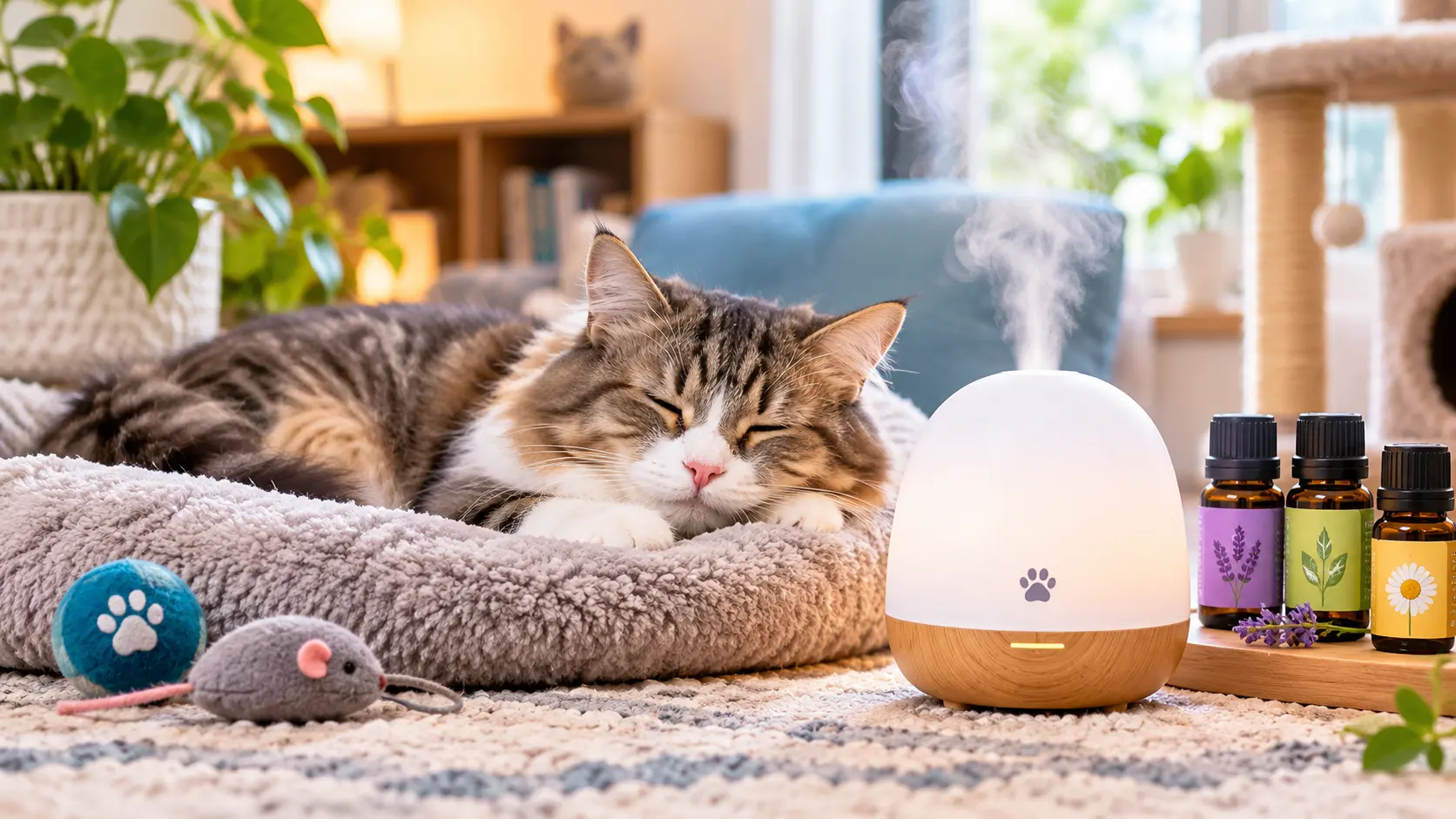

If your cat is hiding under the bed, spraying on the sofa, or meowing relentlessly, you have probably started searching for non-toxic calming diffusers for cats. However, most best-selling diffusers are unsafe. Quick answer: The safest calming diffusers for cats are pheromone diffusers like Feliway, not essential oil diffusers. Most essential oils — even ‘natural’ ones like lavender or tea tree — are toxic to felines.
If your cat is hiding under the bed, spraying on the sofa, or meowing relentlessly when you leave, you have probably started searching for a calming diffuser. However, most of the best-selling calming diffusers are unsafe for cats. Learn what essential oils are safe to diffuse around cats, and what harmful products to avoid.
What Causes Anxiety in Cats?
Quick answer: Change is the biggest trigger — new homes, new pets, loud noises, or even rearranged furniture.
Cats like routine. A small shift in their world — a house guest, a thunderstorm, a trip to the vet — can set off stress. You might notice:
- Hiding more than usual
- Spraying or weeing outside the litter tray
- Scratching furniture
- Over-grooming (bald patches can be a sign)
- Excess meowing or pacing
None of these mean your cat is “being naughty.” They’re stress signals, and a calming diffuser can genuinely help with mild to moderate cases.
Why Essential Oil Diffusers Aren’t Safe for Cats
Quick answer: Cats’ livers can’t break down most essential oils, so even a small amount in the air can build up and cause harm.
This is the part most people miss. Dogs and humans can usually cope with diluted essential oils. Cats can’t. Their livers are missing an enzyme called glucuronyl transferase, which is needed to process many plant oils. Without it, oils build up in their system instead of being cleared out.
The ASPCA and the San Francisco SPCA both list common oils that are risky for cats, including:
- Tea tree
- Citrus (lemon, orange, lime, bergamot)
- Peppermint and spearmint
- Eucalyptus
- Cinnamon and clove
- Lavender (yes, even this one)
- Pine and wintergreen
Signs of trouble include drooling, wobbliness, watery eyes, or trouble breathing. If you plug in an aromatherapy diffuser and your cat starts acting off, unplug it and get in touch with your vet or the ASPCA Animal Poison Control Center straight away.
So if a product markets itself as a “calming essential oil diffuser for cats,” read the label carefully. The genuinely non-toxic option isn’t an essential oil at all — it’s a pheromone.
The Non-Toxic Alternative: Pheromone Diffusers
Quick answer: Pheromone diffusers release a copy of a scent cats already make themselves, so there’s no toxicity risk.
Cats naturally produce ‘happy’ pheromones when they rub their cheek against furniture, doorframes and you, telling other cats and themselves that this is a safe place to be. Pheromone diffusers are plugged into the wall and emit a similar scent to that of the cat’s own happy pheromones – a man made copy, but no essential oils and no strain on the cat’s liver.
According to the Cornell’s Feline Health Centre, this product is a synthetic copy of the natural pheromone a cat produces when marking their territory as safe, and has no effect on humans or other animals in the home. A randomised, placebo controlled trial of over 1000 cats concluded that use of the Feliway Classic Diffuser had significantly reduced unwanted scratching behaviour compared to a placebo group, with several owners reporting a complete cessation of the behaviour by day 28 (see the full study here in the resources below).
Best Non-Toxic Calming Diffusers for Cats
1. Feliway Classic — best for single-cat homes
Mimics the facial pheromone cats release when they feel settled. Good for general stress, hiding, and scratching. Covers around 700 square feet and lasts about 30 days per refill.
2. Feliway Optimum — best for stronger anxiety
A newer pheromone blend aimed at cats with more intense stress responses. Many owners reach for this one during house moves or after a new pet arrives.
3. Feliway MultiCat — best for households with more than one cat
Copies a mother cat’s calming pheromone, which helps ease tension, blocking, and squabbles between cats sharing a home.
4. Comfort Zone Diffuser — best budget pick
A cheaper alternative with a similar pheromone approach. Good if you want to try a diffuser without committing to a premium price first.
5. ThunderEase Calming Diffuser — best for noise-related anxiety
Popular for cats who panic during thunderstorms, fireworks, or building work nearby.
How to Use a Calming Diffuser Safely
- Plug it into the room your cat spends the most time in — not a hallway they rarely enter
- Keep it running continuously; it needs a steady signal to work
- Give it two to four weeks before deciding if it’s helping
- Swap the refill vial monthly and the diffuser head every six months
- Never add essential oils to a pheromone diffuser — they’re not designed to mix
Other Non-Toxic Ways to Help an Anxious Cat
A diffuser works best alongside a few simple habits:
- Keep a consistent daily routine for feeding and play
- Give your cat a hiding spot they can retreat to
- Use vertical space — shelves and cat trees help nervous cats feel safer
- Try calming sprays or collars as a backup, not a replacement
When to See a Vet
If anxiety is severe, sudden, or paired with other symptoms like appetite loss or aggression, book a vet visit. A diffuser can ease mild stress, but it won’t fix an underlying medical issue or deep-rooted trauma on its own.
Quick FAQ
Are pheromone diffusers really non-toxic?
Yes. They don’t use essential oils at all, so there’s no liver-processing risk for your cat.
Is lavender safe for cats in a diffuser?
No. Despite its reputation as calming, lavender is on most vets’ toxic oil lists for cats.
How long before I see results?
Most owners notice a difference within two to four weeks of continuous use.
Can I use a pheromone diffuser with other pets in the house?
Yes — it’s species-specific and has no effect on dogs or humans.