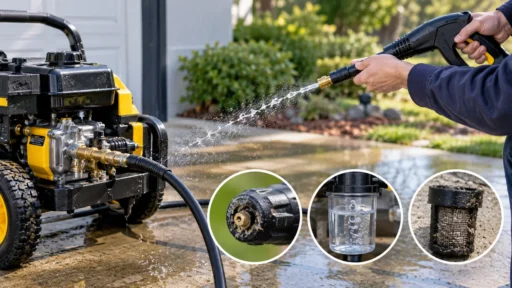
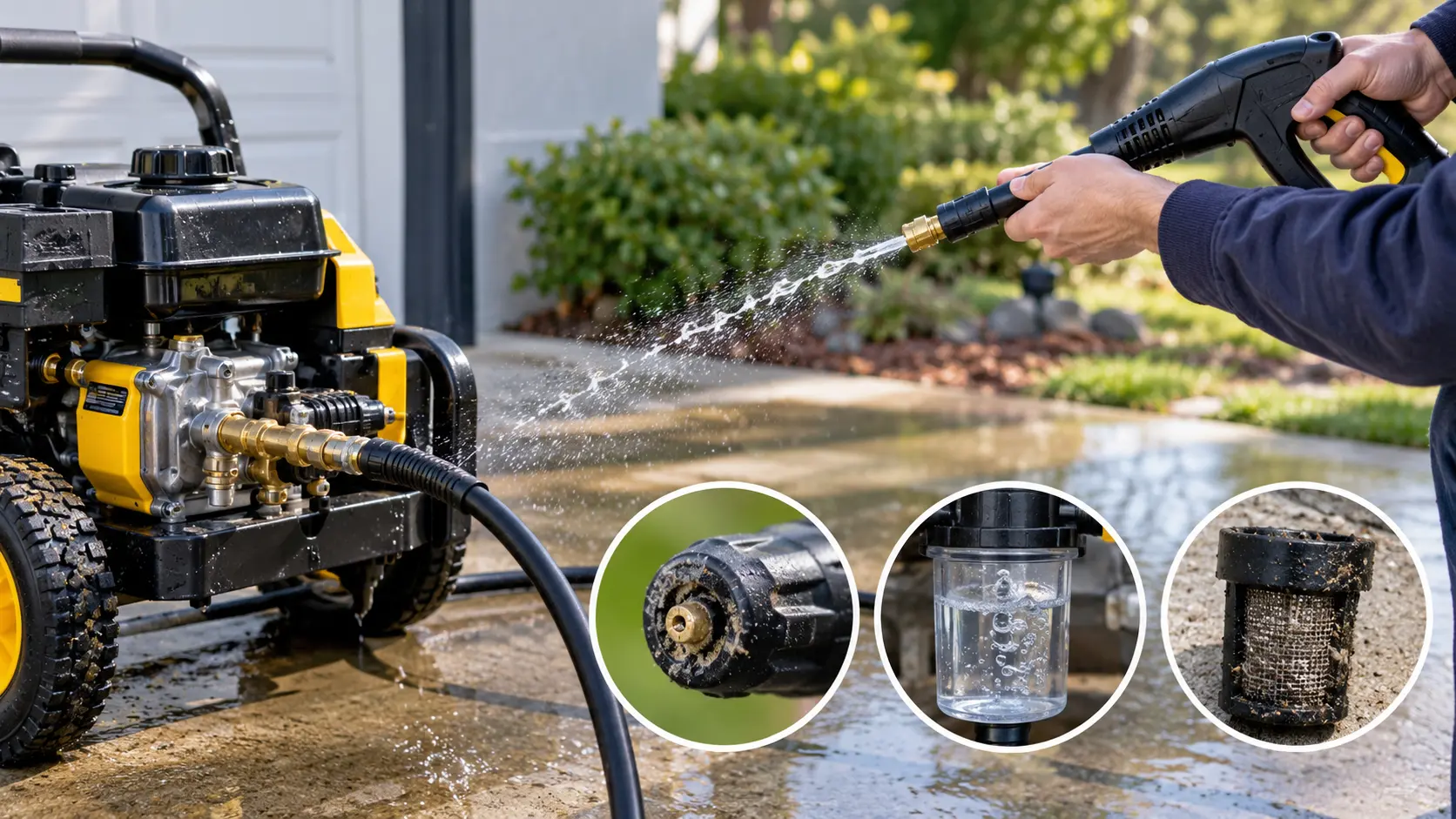

Experiencing a pulsing stream? Dealing with a Pressure Washer Sputtering & Losing Pressure can be frustrating when you’re trying to get work done. When you pull the trigger, get a few strong seconds of spray, and then the stream breaks up into a weak, sputtering mess, it’s one of the most common complaints owners have. In most cases, it’s not the motor or pump giving out—it’s usually something smaller, cheaper, and easier to fix than you’d expect.
What Does Sputtering Actually Mean?
Sputtering and pulsing pressure are often caused by an interruption in a steady, uninterrupted flow of water through the machine’s system. This can come from air getting into the machine, a blockage, or worn-out parts, or insufficient water flow to the machine to begin with. Once you identify what’s going on, it’s typically a simple 15-minute fix.
Common Causes of a Sputtering, Low-Pressure Washer
1. Air Trapped in the Pump or Hose
This is the number one issue reported by new owners that are experiencing sputtering. It is most common for this to happen either during the first few washes when the washer is being broken in or after a period of sitting unused. The culprit is air pockets which form in the pump either as the washer is filling with water or being drained and then get compressed as water rushes past them. Run the washer with the trigger held down for 30-60 seconds without the nozzle attached to purge the air pockets and that should fix the problem.
2. A Clogged or Worn Spray Nozzle
Dirt, mineral deposits, and debris build up inside the nozzle tip over time, narrowing the opening and disrupting flow. A worn nozzle has the opposite problem: the opening gets too wide, and the pump can’t maintain pressure through it. Either way, you’ll see inconsistent spray. Clean the tip with the small nylon pin that usually comes with the machine, or replace the nozzle if it’s more than a season or two old.
3. A Blocked Inlet Filter or Screen
Most pressure washers have a small mesh screen where the garden hose connects. If sediment, sand, or rust from your water supply clogs this screen, the pump starves for water and pulses as a result. Pull the filter, rinse it under a tap, and check it monthly if your home has well water or older pipes.
4. Not Enough Water Flowing In
A pressure washer pump can only output what it receives. If your garden hose is too narrow, too long, or kinked, it restricts the flow and causes the pump to run dry between surges. This is called cavitation, and it can damage the pump over time if ignored. Use a hose that’s at least 5/8 inch in diameter and keep it under 100 feet when possible.
5. Worn Pump Valves or Seals
Inside every pressure washer pump are small check valves that open and close thousands of times per minute. Over years of use, these wear out, crack, or get coated in mineral scale, and the pump loses its ability to build consistent pressure. This is a more serious repair and usually means a pump rebuild kit or a visit to a repair shop.
6. A Failing Unloader Valve
The unloader valve redirects water back to the pump intake when you release the trigger, which protects the system from pressure spikes. When this valve sticks or wears out, it can cause pressure to surge and drop even while you’re actively spraying. If you’ve ruled out air, filters, and the nozzle, this is the next part worth inspecting.
7. A Kinked, Cracked, or Too-Long High-Pressure Hose
The high-pressure hose that runs from the pump to your spray wand can crack internally or develop small leaks at the fittings, letting air into the line. A kink anywhere along its length has the same effect as a clogged filter: it restricts flow and causes pulsing.
Quick Reference: Symptoms and Fixes
| Symptom | Likely Cause | Fast Fix |
| Sputters right after startup | Air in the pump | Run trigger open, no nozzle, 30-60 seconds |
| Spray pattern is uneven or weak | Clogged/worn nozzle | Clean with pin tool or replace |
| Pressure drops gradually over minutes | Blocked inlet filter | Remove and rinse the screen |
| Pump sounds like it’s straining | Insufficient water supply | Use a wider, shorter garden hose |
| Pressure pulses even with full water flow | Worn pump valves | Rebuild kit or professional repair |
| Pressure spikes then drops repeatedly | Failing unloader valve | Inspect or replace the valve |
| Spray weakens only at certain spots | Hose kink or crack | Straighten hose or replace it |
Step-by-Step: How to Fix a Sputtering Pressure Washer
- Turn off the machine and disconnect the water supply. Safety first, every time you work on it.
- Check the garden hose for kinks and confirm it’s at least 5/8 inch wide.
- Remove and rinse the inlet filter screen under running water.
- Reconnect the hose and run the trigger with no nozzle for about a minute to clear trapped air.
- Inspect the nozzle tip for clogs or wear and clean or replace it.
- Check the high-pressure hose for cracks, kinks, or loose fittings.
- If pressure is still inconsistent, inspect the unloader valve and pump intake valves, or take it to a small-engine repair shop.
Most owners never make it past step 4. The nozzle and trapped air cause the vast majority of sputtering complaints.
How to Prevent This From Happening Again
Thoroughly flush the system with clean water after each use, especially after using any detergent. Store the machine in a place where it will not be subject to freezing temperatures, because ice expansion can damage internal seals. Replace the nozzle tip once per season if you use the washer frequently, and inspect the inlet filter before each use if you’re cleaning with sediment-laden water. A pressure washer that is properly cleaned and drained after each use will often last for many years without experiencing pulsing issues.
Frequently Asked Questions
Why does my pressure washer work fine for a few seconds and then lose pressure?
This is almost always trapped air in the pump or hose, especially after the machine has been sitting idle. Running the trigger open with the nozzle removed for about a minute usually clears it.
Can a dirty water source cause sputtering?
Yes. Sediment and mineral buildup from well water or older plumbing can clog the inlet filter and nozzle, which restricts flow and causes pulsing.
Is it safe to keep using a pressure washer that’s sputtering?
You can use it briefly to troubleshoot, but running a pump dry or starved of water for extended periods can damage the internal valves. If pulsing continues after basic checks, stop and inspect the pump.
How often should I clean the nozzle and filter?
Check the inlet filter monthly and the nozzle tip every few uses, or immediately if you notice uneven spray. Regular cleaning prevents most pressure problems before they start.
Does hose length affect pressure washer performance?
Yes. A garden hose longer than 100 feet, or narrower than 5/8 inch, restricts water flow enough to starve the pump and cause pulsing or reduced pressure.
When should I call a repair professional instead of fixing it myself?
If you’ve checked the air, filter, nozzle, and hose and the pressure still surges or drops, the unloader valve or internal pump valves are likely worn. These repairs require disassembly and are usually worth handing to a professional unless you’re experienced with small engines.
The Bottom Line
A sputtering pressure washer is rarely a hopeless case. There are several simple possibilities to try before concluding that the pump is faulty and that a new pressure washer is required. These include checking for air, a dirty filter, a worn nozzle, or insufficient water pressure. Most pressure washer owners can troubleshoot and fix the problem within 20 minutes without spending a penny on new equipment.
Helpful Resources
- Husqvarna: Why Has My Pressure Washer Lost Pressure? Repair Guide
- WebstaurantStore: Pressure Washer Troubleshooting Guide
- Alkota: 9 Reasons Your Pressure Washer Might Be Losing Pressure