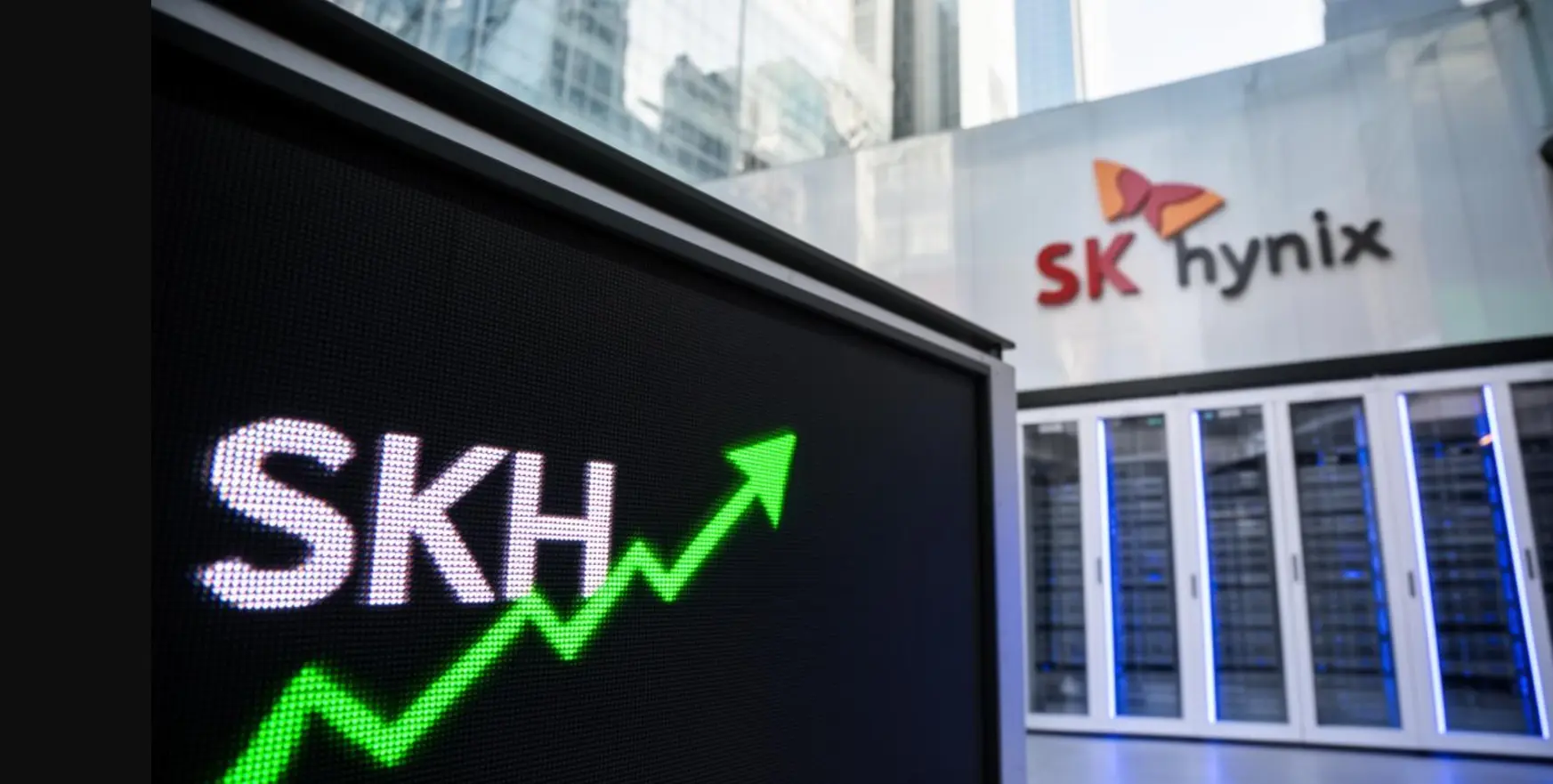

I’ve spent enough years writing about tech and money to know one rule that never breaks: the loudest company in the room is rarely the one making the most of a boom. Everyone’s watching Nvidia. Everyone’s arguing about whether OpenAI’s valuation makes any sense. Meanwhile, a South Korean memory chip maker most people outside the industry couldn’t have named two years ago just pulled off the biggest US listing by a foreign company in history. Bigger than Alibaba. Bigger than Saudi Aramco. $26.5 billion, priced at $149 a share, oversubscribed by more than seven times.
That company is SK Hynix. And if you want to understand what the AI boom is actually doing to the world’s money, this is the story to sit with — not because it’s flashy, but because it’s the opposite. It’s boring, unglamorous memory chips, minting a fortune.
Here’s the thing I keep coming back to: for years, “memory” was the least sexy part of the semiconductor world. It’s not the GPU doing the flashy math. It’s not the branding on the box. It’s the stuff quietly ferrying data back and forth, the kind of component nobody outside an engineering team ever thinks about. And then AI happened, and it turned out those unglamorous chips — specifically high-bandwidth memory, HBM for short — are exactly what every GPU needs to actually function at scale. No HBM, no AI server. SK Hynix makes HBM better than almost anyone alive. Suddenly the boring company was sitting on the good stuff.
That’s the first thread of this story: a company built its whole identity around one narrow, unglamorous specialty, refused to be everything to everyone (unlike Samsung, which makes phones, fridges, chips, half of Korea’s economy), and then watched the market reward precision over breadth. In a year obsessed with AI-obsessed everything, being the best at one crucial thing turned out to be worth more than being decent at all of them.
But here’s where the second thread comes in, and it’s the part that actually made me sit up. SK Hynix didn’t do this listing because it needed to prove a point. It did it because building the future is brutally, unfashionably expensive. A single advanced fabrication plant can run north of $10 billion. South Korea just announced it’s spending more than $500 billion on new chip facilities in the country’s southwest, and SK Hynix is expected to fund a new fab in Yongin and an advanced packaging facility in Cheongju off the back of this raise. This wasn’t a victory lap. It was a company buying itself firepower before the window closes.
And that’s the part financial journalists like me have to keep saying out loud, because the headlines don’t always say it: booms like this one have a shelf life. Memory chip prices have swung from shortage-driven premiums to glut-induced collapses inside 18-to-24-month windows before, more than once. SK Hynix’s stock is up over 220% this year in Seoul. Its market cap crossed $1 trillion back in May, alongside Samsung and Micron — a club that used to be almost exclusively American. Retail investors in Korea have been borrowing at record levels to buy in, some through leveraged ETFs that amplify both the upside and the fall. Regulators there are already nervous about it. I don’t blame them.
So which thread wins? Is SK Hynix the company that correctly bet its future on being the best at one thing, or is it the company that just raised a fortune at the top of a cycle that always, eventually, comes back down? Honestly — probably both, at the same time, which is usually how the biggest financial stories actually work. The $26.5 billion is real. The demand behind it, the AI buildout driving it, that’s real too, at least for now. What’s not settled yet is whether the earnings show up to justify the price, or whether 2027 becomes the year everyone quietly stops talking about SK Hynix jackets as a status symbol.
Because that happened, by the way — an SK Hynix jacket went viral in Korea this year as a symbol of having made it, parodied as a golden ticket to better restaurants and better dates. That’s the tell, honestly. When a memory chip company’s merch becomes a cultural flex, you’re either watching the start of something durable, or the exact moment right before it isn’t.
I don’t have a tidy answer for which one this is. Nobody writing about this honestly does.
You May Also Read: