
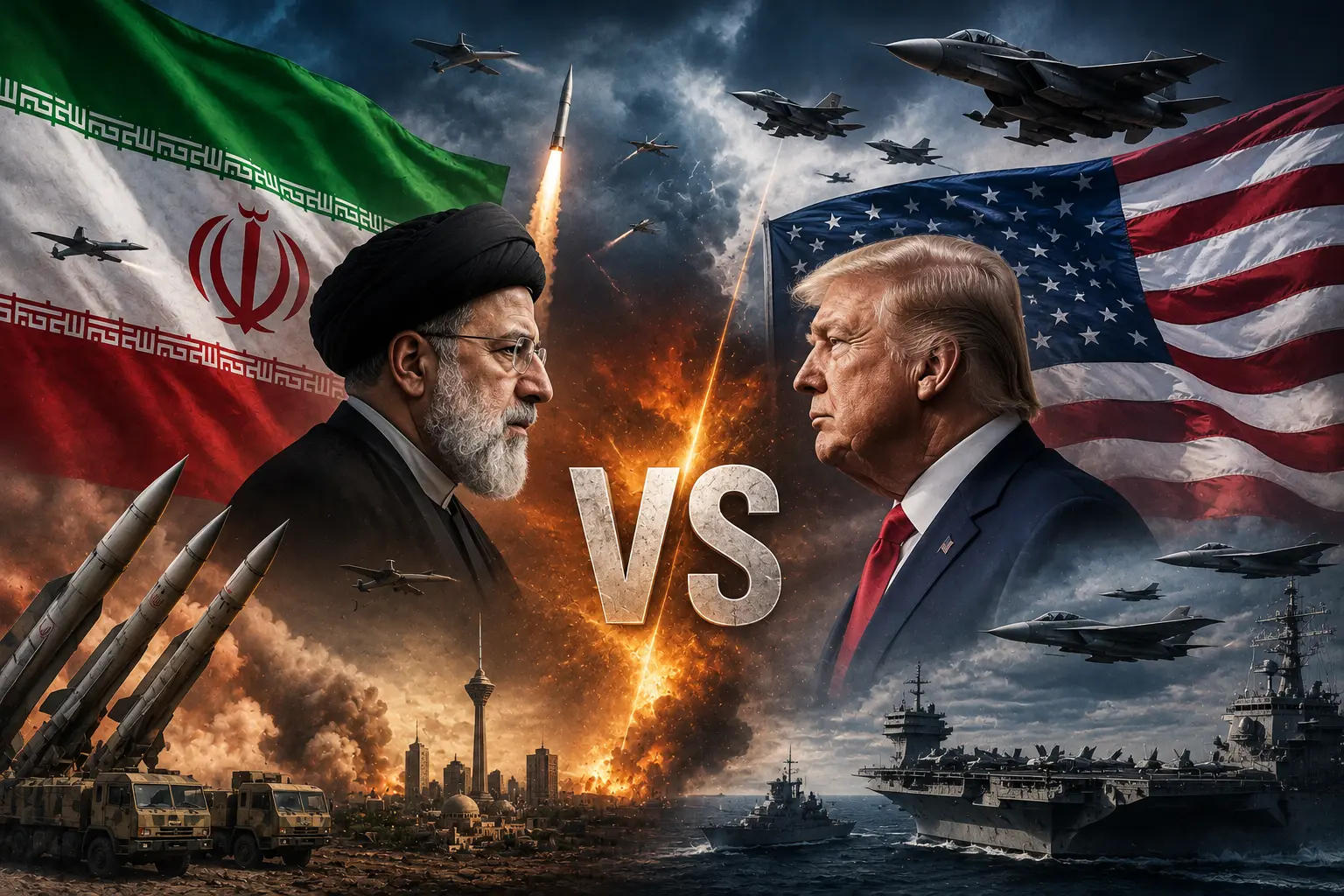

Iran reports fresh explosions in its south for a third straight day, but Washington denies carrying out new strikes. A US official says technical talks with Tehran are still on, even as President Trump calls the ceasefire “over.”
Key Developments
- Fresh blasts reported in southern Iran, including near the Bushehr nuclear facility, Iranian state media say.
- The US denies responsibility for the latest round of explosions. No one has claimed them so far.
- Trump says the door to diplomacy isn’t shut, even after declaring the ceasefire dead earlier this week.
- Iran’s parliament speaker warns Washington: “if you strike, you’ll get hit.”
- Casualties reported in Iran’s Khuzestan province and at an airport in Iranshahr, according to state media.
- Shipping through the Strait of Hormuz has dropped sharply as the region braces for more escalation.
Live Updates
US denies role in new Iran blasts, says talks continue
A US official has told reporters that the American military carried out no new strikes on Iran in the past several hours, even as Iranian state media reported multiple explosions in the country’s south, including in areas close to the Bushehr nuclear plant. No country has claimed responsibility, and Tehran hasn’t pointed the finger at anyone yet either.
The same official said Washington is still pursuing a diplomatic track. Technical-level talks with Iranian negotiators are ongoing, the official said, and the US remains open to a resolution — provided Iran doesn’t cross the nuclear red line.
Trump: door still open, but patience wearing thin
President Trump has spent the past few days publicly venting his frustration with Tehran, at one point declaring the ceasefire “over” while speaking to reporters at the NATO summit in Turkey. He’s used blunt language to describe Iran’s leadership, and he’s warned of further strikes if Tehran doesn’t fall in line.
Even so, Trump has stopped short of shutting the door on negotiations entirely. He’s suggested that talks could still lead somewhere, while making clear his patience with the pace of the process is running out. A US official told reporters that Trump’s frustration boiled over in part because Iranian strikes on shipping in the Strait of Hormuz landed while he was standing on the world stage at NATO.
Iran’s warning: “if you strike, you’ll get hit”
Iranian Parliament Speaker Mohammad Bagher Ghalibaf, who is also leading Tehran’s side of the negotiations, posted a defiant message on X, warning Washington that further aggression would be met in kind. He said the Strait of Hormuz — one of the world’s most critical oil chokepoints — would stay open only on Iran’s own terms, not under American pressure.
It’s the kind of rhetoric that’s defined this latest phase of the conflict: strikes, counterstrikes, and warnings traded in near-real time, even as both sides insist they haven’t fully walked away from the table.
What’s been hit
Over the past 48 hours, Iranian state media have reported strikes and explosions across a wide stretch of the country’s south and north:
- Bushehr — home to Iran’s nuclear power plant. Officials say the perimeter of a nearby military site was hit, but insist the plant itself wasn’t damaged.
- Bandar Abbas, Chabahar, Konarak, Jask — port cities along Iran’s southern coast, several with strategic naval or military value.
- Golestan province, northern Iran — a railway bridge on a key trade line to China and Russia was struck, disrupting train service between Tehran and Mashhad.
- Khuzestan province — at least three people were reported killed, according to state media.
- Iranshahr — a firefighter was reportedly killed at the local airport.
In response, Iran says it targeted US military infrastructure across the Gulf, including sites in Bahrain, Kuwait and Qatar, and fired a barrage of ballistic missiles at a Jordanian military base.
Khamenei laid to rest in Mashhad
The strikes have coincided with the funeral of Iran’s late Supreme Leader, Ayatollah Ali Khamenei, who was killed earlier this year in a US-Israeli strike. His body was carried through Iraq before burial at the Imam Reza shrine in Mashhad, drawing large crowds of mourners even as the fighting continued elsewhere in the country.
Netanyahu: “the war has not ended”
Israeli Prime Minister Benjamin Netanyahu spoke by phone with Trump, with both leaders agreeing to keep coordinating across the region, according to a readout from Netanyahu’s office. Speaking separately at an Israeli air base, Netanyahu said the conflict with Iran isn’t over and that maintaining air superiority remains central to Israel’s security strategy.
The bigger picture: a ceasefire on life support
The fragile truce between Washington and Tehran, first brokered in mid-June, has been unraveling for days. What started with reports of Iranian attacks on commercial tankers in the Strait of Hormuz quickly spiraled into rounds of US strikes, Iranian retaliation against American bases in the Gulf, and now a murky new set of explosions nobody wants to own.
Oil markets have felt the jitters, with prices climbing on each new round of strikes. Shipping traffic through the Strait — a route that handles a massive share of the world’s crude — has slowed considerably as tankers weigh the risk of getting caught in the crossfire.
Whether the “technical talks” US officials keep referencing can actually pull this back from the brink is the open question hanging over the region right now. For now, both sides are doing something they’ve done throughout this conflict: fighting and talking about peace, at the same time.
This is a developing story and will be updated as more details emerge.