

For most of my viewing life, I thought the goal of a “bold” show was to make me uncomfortable in a good way. Say the unsayable. Push a taboo into daylight. Get people arguing at the dinner table.
Super Subbu wants to be that show.
I went in expecting a mess — sex education as sitcom premise, set in a Telangana village, starring a hero who’s spent a decade playing men who trip over their own confidence. I came out with something messier and more interesting: a series that’s half-brave, half-scared of its own subject, and entirely aware of that tension. Which, weirdly, might be the most honest thing about it.
Here’s my full breakdown — story, cast, the internet’s verdict, the actual ratings, and where I land on all of it.
The Story: A Government Job, a Silent Village, and a Father Who Won’t Say the Word
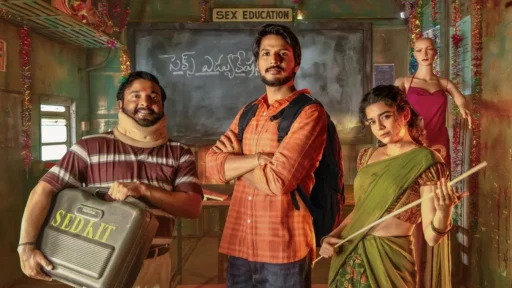
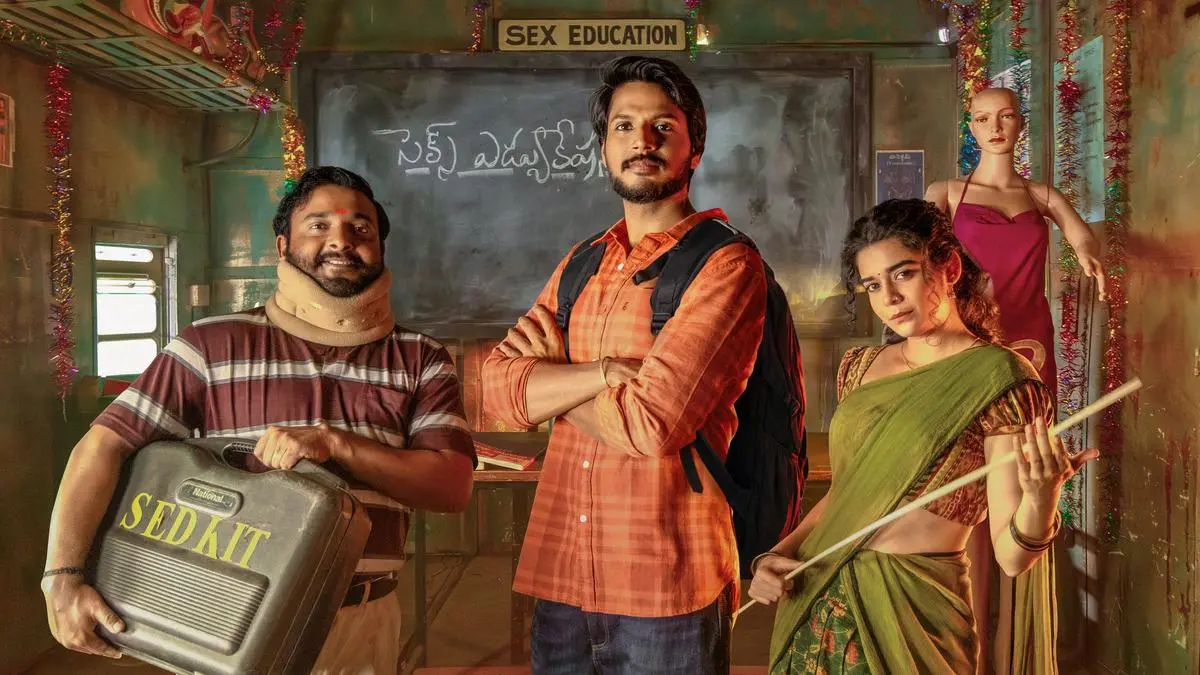
Subramanyam Chilukuri — “Subbu” to everyone, played by Sundeep Kishan — is a small-town guy chasing the most unglamorous dream in Indian cinema: a permanent government job. He’s got a girlfriend he wants to marry. He’s got a temporary teaching post he can barely hold onto. And he’s got a father, Kukkuteshwar Rao (Murali Sharma), a schoolteacher who treats the word “sex” like it might set the house on fire.
Then the twist arrives, and it’s a good one. To make his job permanent, Subbu is handed an assignment nobody wants: Sex Education Officer, posted to Maakipur, a village where the subject is so taboo that even the word for it gets whispered. He has to run awareness sessions on consent, contraception, and menstruation for people who’d rather lash him to a tree than listen. Literally — that happens.
Two threads run side by side here, and that’s the show’s smartest structural choice. One is public: can one underqualified, under-motivated guy shift the mindset of an entire village? The other is private: can he ever have an honest conversation with his own father, the man who represents everything the village believes? The job was supposed to be a means to an end — the marriage, the permanent post. It becomes the actual story. Subbu goes to Maakipur to escape a problem and ends up walking straight into the source of it.
Seven episodes. A slow, deliberate unspooling. And by the finale, the show is less interested in whether Subbu “wins” than in whether he understands what he was actually running from.
Cast Performance: Where the Show Actually Earns Its Keep
If Super Subbu works — and for stretches, it really does — it’s because of the people saying the lines, not always the lines themselves.
Sundeep Kishan carries Subbu as a believable underdog: middle-class, a little cowardly, in over his head, and trying to look like he isn’t. It’s not a flashy performance. It’s a lived-in one. Some reviewers found him a touch limp in the show’s weaker patches — like the character himself keeps apologizing for existing — but I’d argue that’s partly the point. Subbu isn’t supposed to be a hero. He’s supposed to be exactly the kind of reluctant, half-convinced messenger who’d actually get sent on a mission like this.
Mithila Palkar, as a small-town actress navigating her own version of struggle, brings a spark the show leans on more than it probably realizes — she’s sharper and more alive in scenes than the writing sometimes deserves. Murali Sharma, as the father, is doing the hardest job in the cast: making silence and shame legible without turning into a cartoon of a strict dad. He mostly pulls it off.
And then there’s the supporting bench — Brahmanandam, Getup Srinu, Sampoornesh Babu — a trio that could’ve easily hijacked the show for cheap laughs and instead ground it. This is a series about a taboo subject, and comedy is the sugar that gets the medicine down. These three deliver the sugar without diluting the medicine, which is a harder trick than it sounds.
Public Reaction: A Village Argument, Playing Out Online
The internet did what villages do in the show — it argued.
One side calls Super Subbu a genuinely refreshing watch: a mainstream Telugu OTT show tackling reproductive health, consent, and menstruation without turning preachy, wrapping it in enough humor that people who’d normally scroll past a “sex ed” show actually stayed. That’s not nothing. A show that gets a joke about consent trending is doing something a government pamphlet never will.
The other side isn’t as forgiving. The more skeptical read is that the show flirts with its subject rather than confronting it — that for all the setup about sexual repression, it never lets a single scene carry real weight, and settles for the visual grammar of a shy teenager’s first health class rather than an adult drama willing to sit in discomfort. “Aloof” is the word one critic used for Sundeep Kishan’s take on the role, and I get where that’s coming from, even where I don’t fully agree.
Somewhere between those two camps is where most viewers I’ve seen weighing in actually land: glad the show exists, mildly frustrated it doesn’t go further, entertained anyway.
The Ratings: A Show Stuck Between “Important” and “Uneven”
Critic scores have landed all over the place, which tells its own story:
- 3.5/5 from outlets praising it as a refreshing, non-preachy take on sex education
- 2.75/5 from reviewers who liked the intent but flagged weak subplots and a soft climax
- 2.5/5 from the more clinical end — appreciating that it takes the subject seriously without mocking it, while calling out uneven writing and a rushed final stretch
That spread — roughly 2.5 to 3.5 out of 5 — is basically the show in one line. Nobody’s calling it a disaster. Nobody’s calling it essential. It’s a solid, well-intentioned watch that stumbles exactly where you’d expect a first-of-its-kind show to stumble: pacing, an overloaded back half, and a reluctance to fully commit to its own premise.
Here’s my honest take, as someone who’s sat through a lot of “message” entertainment that forgets to entertain: Super Subbu doesn’t forget. The father-son thread genuinely lands. The village setting feels real, not set-dressed. The comedy is doing actual work, not just filling time between lectures.
But I keep coming back to that construction-site kiss that never happens — the moment critics point to as the show flinching right when it should lean in. A series about sexual repression that’s a little too repressed itself is its own kind of irony, and I don’t think Super Subbu is fully in on the joke.
Is it worth your seven episodes? Yes — for the performances, for a subject Indian OTT rarely touches without either moralizing or mocking, and for a father-son relationship that earns its quieter moments. Just don’t expect the show to be as brave as its premise promises. It gets the village talking. It doesn’t quite get itself to finish the sentence.
Whether that’s a flaw in Super Subbu or just an honest mirror of the silence it’s trying to write about — I’m still not sure. Maybe that’s the most fitting ending a show like this could have.
If we leave everything aside and tell you my personal experience, then I really liked this web series. In this web series, we get everything – comedy, emotions, feelings, adventure and suspense. We get to see all this in this web series and the acting of all the actors is very good. I would definitely recommend this web series to everyone, you must watch it, you can enjoy it with your family as well.
You May Also Read: