
I am a writer guy, at least that’s what my work says. But every four years, for about five weeks, I turn into someone else entirely. Someone who wakes up at odd hours to catch a group-stage game between two countries whose flags I couldn’t have drawn from memory a month earlier. Someone who has opinions about back-three formations. Someone who, if you’d asked me in June, would not have predicted that by mid-July I’d be writing a few thousand words about a 39-year-old man’s chances of lifting a trophy he’s already won.
That’s the thing about World Cups, though. They don’t ask permission. They just arrive, and they take over, and by the final everyone is an expert, everyone has a prediction, and everyone is lying a little bit about how calm they are.
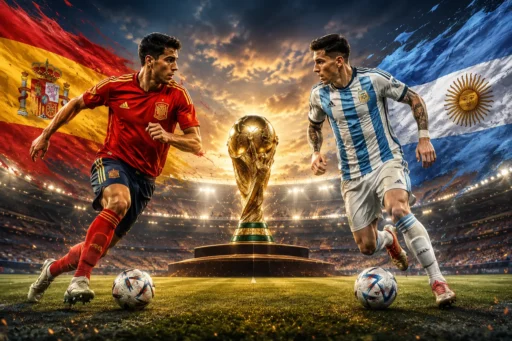
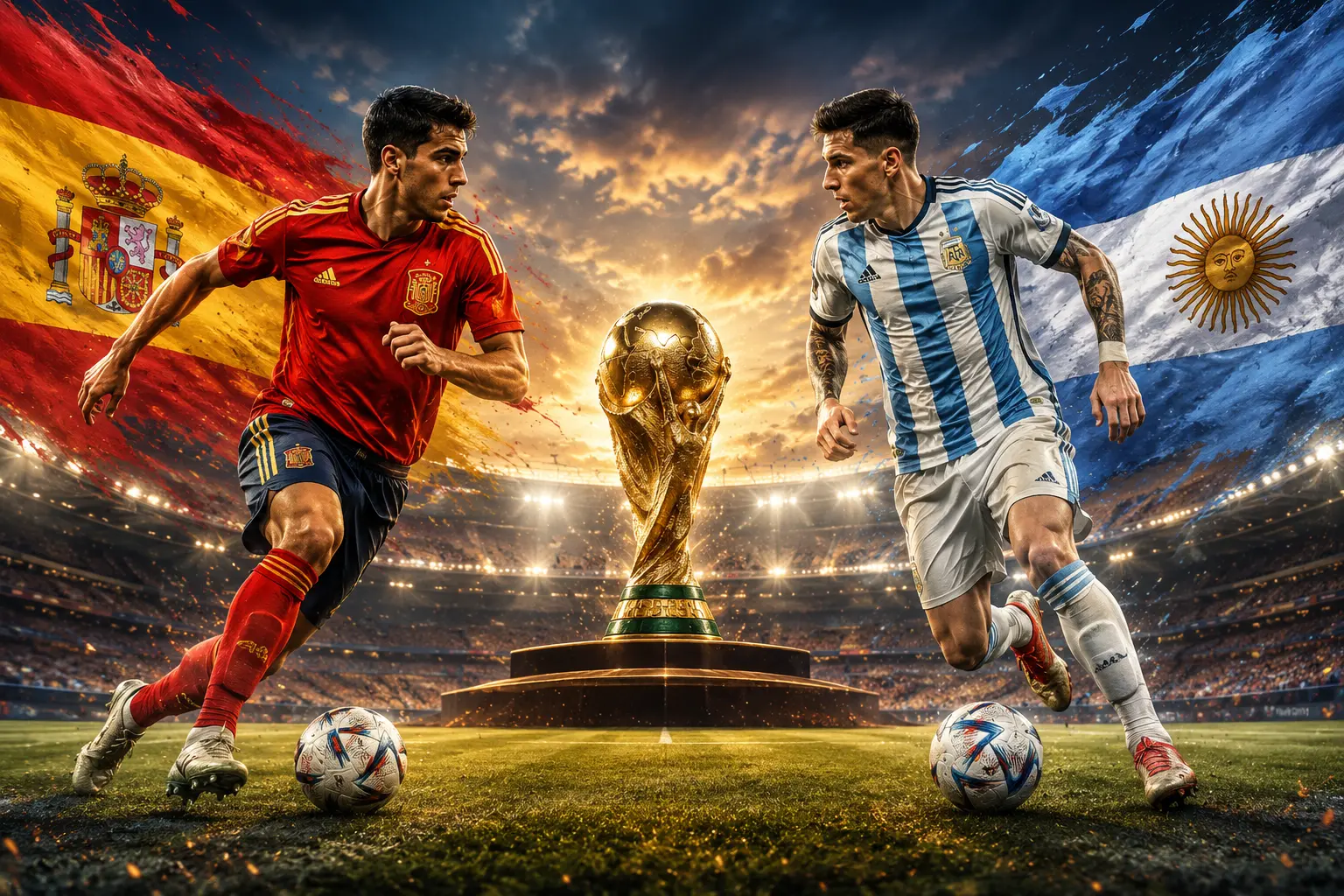
So here’s mine. Sunday, July 19, MetLife Stadium, New Jersey. Spain against Argentina. La Roja against La Albiceleste. A team that has looked, for five weeks, almost bored by how easy this has been, against a team that has spent the entire tournament finding the exact edge of the cliff and then, somehow, not falling off it.
And in the middle of it, Lionel Messi. Again.
Two very different roads to the same stadium
If you only watched the score lines, you’d think Spain and Argentina were playing two different sports.
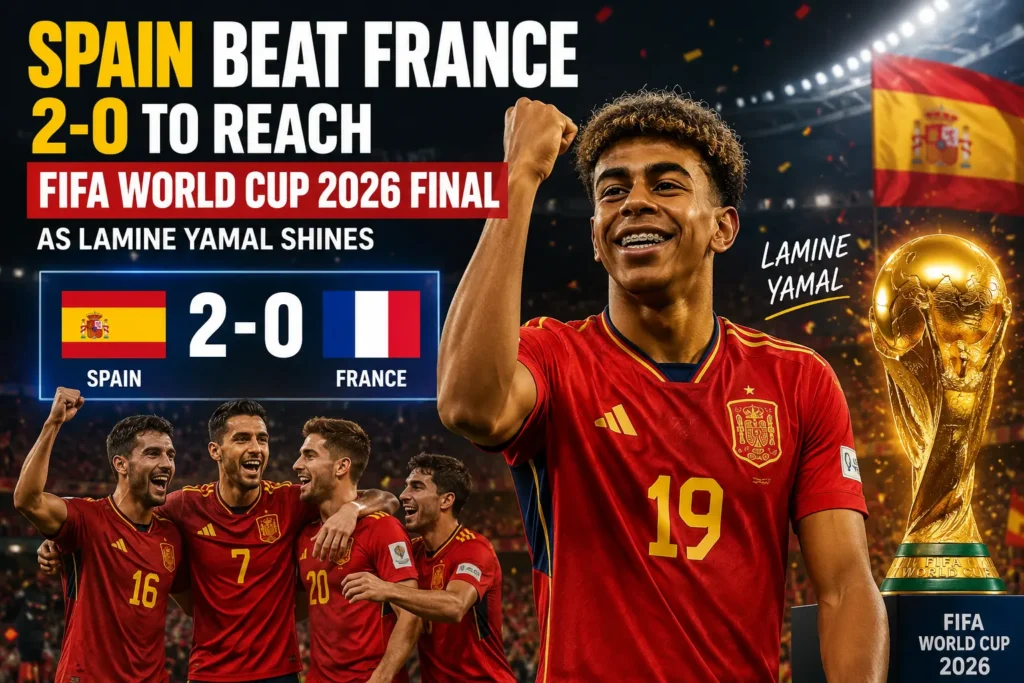
Spain has been, statistically, the most dominant team of this World Cup. They’ve outscored their seven opponents 13-1 across the tournament, posting six clean sheets along the way — including a shutout of a French side that came into the semifinal with sixteen goals to its name. Kylian Mbappé managed just three shots and none on target in that game. That’s not a performance. That’s a team taking away an opponent’s entire identity for ninety minutes.
Luis de la Fuente’s side arrives at the final on a 37-game unbeaten run, and after that semifinal win, the manager wasn’t shy about how his team is feeling right now: unbeatable. It’s the kind of thing coaches say before finals. The difference is, this time, the match so far backs it up.
Argentina’s road has been the opposite of serene. This is a team that has needed extra time three separate times, that came back from two goals down against Egypt in the round of 16, that trailed Cape Verde before winning in extra time, that went behind against England in the semifinal before scoring twice in the final ten minutes to win it. Somehow, in a World Cup that also includes Spain’s surgical dismantling of everyone in front of them, Argentina have still managed to score three or more goals in four straight matches — tied for the longest such streak in World Cup history.
Two teams, two completely different personalities, one final.
The Messi of it all
I want to try to write about this final without making it entirely about one player, and I don’t think I can, because nobody else can either.
Messi is 39 years old and he is the leading scorer of this World Cup. Not “one of.” The leading scorer, outright — he broke Miroslav Klose’s all-time World Cup goals record earlier in the tournament and has kept adding to it since, sitting on the Golden Boot lead alongside Mbappé heading into the final weekend. He has scored in six consecutive World Cup knockout matches, a record nobody else holds. He has more career World Cup goal contributions than any player in the last sixty years. He is, at an age when most professional footballers are commentating on the tournament rather than playing in it, still the single most dangerous attacking presence on the pitch.
None of that is nostalgia talking. Those are just the numbers this July.
If Argentina win on Sunday, they become just the third nation ever to defend the World Cup — joining Italy’s 1934/1938 teams and Brazil’s 1958/1962 sides — and Messi becomes the first man since Cafu to appear in three separate World Cup finals. If he lifts it, it isn’t a sentimental farewell lap. It’s arguably the single most improbable chapter of an already absurd career, played out at an age when the sport is supposed to have finished with you.
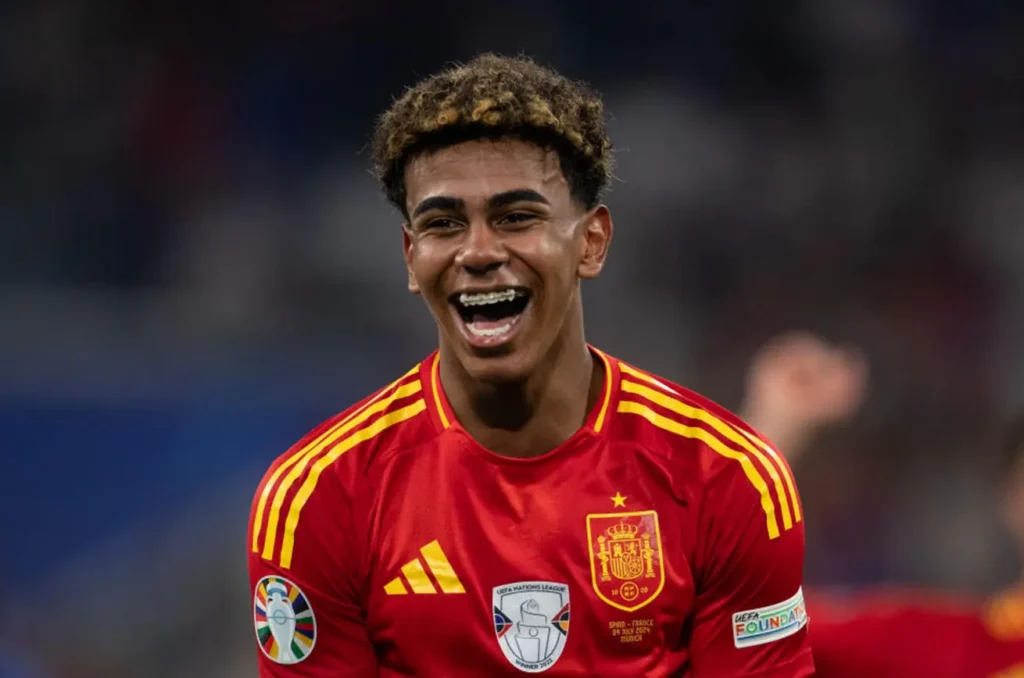
And on the other side of the pitch is Lamine Yamal, who is nineteen, who met Messi as an infant back when their careers weren’t even in the same universe, and who is now the face of the team standing between Messi and history. Yamal has had a quieter tournament by his own standards — one goal, no assists, still working his way back from a hamstring issue — but he’s a European champion already, and Spain haven’t needed him to be spectacular because everyone around him has been.
That, right there, is the story FIFA didn’t have to write. It wrote itself.
What actually decides this game
Strip away the narrative for a second, because as a viewer I love it, but as someone trying to predict a football match, I have to.
Spain’s whole identity is control. Rodri and Pedri dictate tempo, the fullbacks push high, and the team is comfortable enough in possession that it can suffocate an opponent without needing to take risks. They’ve conceded exactly once this entire tournament. If Argentina try to play a slow, patient buildup game against that midfield, they will likely spend long stretches chasing the ball, the way France did in the semifinal.
Argentina’s best moments this tournament haven’t come from control. They’ve come from chaos — from matches that get stretched, that go to extra time, that open up in the final fifteen minutes when legs are tired and discipline slips. Lionel Scaloni’s team has scored eight goals from the 76th minute or later this World Cup, tied for the most of any team in a single edition in seventy years. If this final is still level with twenty minutes to go, I would not want to be the team defending against Messi, Julián Álvarez, and Lautaro Martínez with tired legs.
So the game inside the game is this: Spain wants ninety calm, structured minutes. Argentina wants the final quarter of the match to turn into anarchy.
Whoever gets what they want probably wins.
My prediction
I’ll say this honestly: if I’m judging this purely on the balance of the tournament, Spain should be favorites. Nobody has been more clinical, more composed, or more difficult to break down. A team that hasn’t conceded from open play all tournament is not a team you bet against lightly.
But finals are not the sum of five weeks. They’re ninety minutes (or more), and Argentina has now proven twice in the last two tournaments that it has a version of Messi and a version of this squad that specifically shows up when the stakes are at their absolute highest. This group doesn’t panic when it falls behind, and I’m not sure any team left in the world handles a knockout match going to extra time better than they do.
My call: a tight, low-scoring game that Spain leads for large stretches, before Argentina finds a way to drag it into the final twenty minutes and steal it late — 2-1, maybe after extra time, with Messi either scoring or setting up the winner. I don’t think Spain’s brilliance disappears. I think Argentina’s habit of surviving everything catches up with them one more time.
I could be wrong. I’ve been wrong about bigger things than a football match. But if you’d told me in 2014, watching a heartbroken Messi walk past the trophy he couldn’t touch, that twelve years later I’d be writing about whether he could win a second World Cup at 39 — I don’t think I would have believed that either.
Football, like most things worth paying attention to, has a way of making fools of anyone who claims to know exactly how it ends.
Kickoff for the 2026 FIFA World Cup Final between Spain and Argentina is Sunday, July 19, at MetLife Stadium in New Jersey.
You May Also Read: