
I sat down on Thursday night to write about Joe Root breaking Virat Kohli’s record.
I had the headline half-typed before I’d even watched the highlights. Root, 99 not out, chasing down India at Sophia Gardens, Cardiff. The kind of innings that gets filed under “statement.” I knew the story I wanted to tell — old king, new king, the changing of the guard.
I had the headline half-typed before I’d even watched the highlights. Root, 99 not out, chasing down India at Sophia Gardens, Cardiff. The kind of innings that gets filed under “statement.” I knew the story I wanted to tell — old king, new king, the changing of the guard.
Although I admire Viral Kohli a lot, after Sachin and MS Dhoni, he is the only name that is very popular among cricket fans in India and the world. But whether it’s cricket or any other sport, there are no fixed records.
Every player has a time, and so do their records. Every few days, a new player emerges and sets new records. The same thing is happening in cricket too, so I’m here today to talk about Root.
Root didn’t break Kohli’s chasing record. Nobody did. What actually happened was smaller, quieter, and — if I’m honest — a lot more interesting.
Then I actually looked into it. Let’s start from the beginning.
A Series That Needed Rescuing
England arrived at this three-match ODI series against India already bruised. They’d lost 4-0 in the T20Is beforehand and then dropped the first ODI at Edgbaston by six wickets, their first defeat there since 2014. Shubman Gill’s unbeaten 80 did the damage, with Axar Patel finishing things off in style — 57 not out and 4 for 62, good enough to be named Player of the Match. Root had scored 76 not out in that game, one of the only things England could be proud of in a total of 258 that never really threatened.
So when the two sides reconvened at Cardiff two days later, England were 1-0 down and running out of series to save.
Ninety-Nine, Not a Hundred, and Somehow Better For It
Root walked out after just one ball of the innings. England had lost a wicket first up — Jasprit Bumrah, doing what Jasprit Bumrah does, striking with the very first delivery of the chase, something no Indian bowler had managed against England before. From there, Root simply refused to leave.
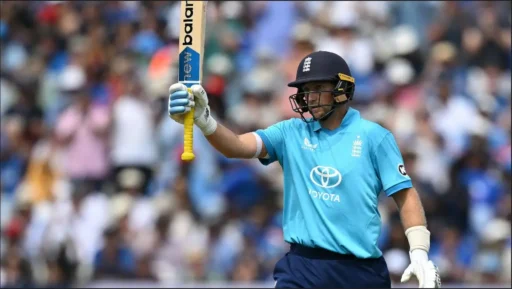
He batted 133 balls. Nine boundaries, no six, nothing flashy. England wobbled to 8 for 2 early and needed someone to just stand there and absorb pressure while the required rate ticked along in the background. That’s what he gave them. His 99 not out — his 67th score of fifty or more in ODIs, his fifth consecutive half-century — carried England to 235 for 6, a four-wicket win with more than five overs unused.
He was left stranded one run short of a century when Gus Atkinson pulled the winning boundary. Root, by his own account, wasn’t fussed. Scrappy wins over pretty numbers, apparently. “Getting the win was the important thing,” he said afterwards. “Conditions were difficult to bat on. Sometimes you have to scrap for it and win ugly.”
That’s the whole innings in one sentence, really.
Where the Record Story Actually Went
Here’s the part I got wrong before I’d done my homework. In the post-match press conference, someone asked Root about players reading the tempo of a 50-over innings — himself, Kohli, Shubman Gill — in an era obsessed with strike rates. And Root didn’t take the opportunity to plant a flag. He did the opposite.
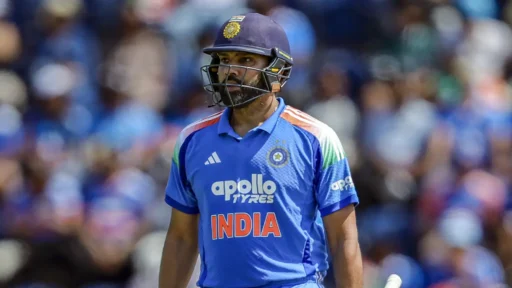
He called Virat Kohli “the best chaser that’s ever played the game.” Not close to it. The best, full stop. He credited Kohli and Rohit Sharma with moving the goalposts for an entire format, and admitted that watching them over the years had been an education for him too.
So the innings that I’d assumed was Root taking something away from Kohli turned out to be Root, in his own words, tipping his cap to him instead.
I think that’s a better story than the one I almost wrote. A “changing of the guard” narrative is easy and it’s everywhere — it’s the lazy default setting for how sports writing talks about ageing greats and their heirs apparent. What actually happened at Cardiff was two players from different eras, at different points in their careers, in the same must-win match, and one of them going out of his way to say the other redefined what he does for a living. That’s rarer than a record.
The Numbers, For What They’re Worth
None of this is to say the Root-Kohli comparison isn’t worth having — it clearly is, and people have been running the stats for years. Root got to milestones like 3,000 and 4,000 ODI runs faster than Kohli did at the same stage.
But zoom out to their full careers and the picture tilts hard the other way: Kohli’s ODI average sits around 58 to Root’s high-40s, and in successful run chases specifically, Kohli’s numbers — the volume of centuries, the average, the strike rate — are in a different weight class. Kohli isn’t just good at chasing; by the numbers, he’s arguably the best there’s ever been at it. Which, of course, is exactly what Root said out loud on Thursday.
Where It Leaves the Series
The scoreline now reads 1-1, and it comes down to Lord’s on Sunday. England will need Root to do it again, or somebody else to finally share the load — Harry Brook was out cheaply in Cardiff, and the middle order hasn’t fired much beyond him and Atkinson’s late cameo. India, for their part, will be looking at Shreyas Iyer’s 66 and Kohli’s run-a-ball fifty and wondering why a total of 233 wasn’t enough, especially with six overs unused in the bowling innings.
I don’t know how Sunday goes. Nobody does yet. But I’m glad I didn’t publish the version of this piece I sat down to write on Thursday night — the one with the tidy, wrong headline. Sometimes the record isn’t broken. Sometimes the more honest story is just two very good players, in the same game, being honest about each other.