
Your bathroom cleaner probably smells like a chemistry lab. If the fumes make you cough, or you just don’t want bleach sitting under the sink where your kids or pets can get to it, hydrogen peroxide is the easiest swap you’ll ever make. It’s cheap, it’s probably already in your medicine cabinet, and it breaks down into plain water and oxygen once it’s done working.
This guide walks you through a simple non-toxic bathroom cleaner with hydrogen peroxide, how to use it on every surface from the toilet bowl to the mirror, and the safety rules worth knowing before you start spraying.
What Makes Hydrogen Peroxide a Good Bathroom Cleaner?
Hydrogen peroxide (H2O2) is made by adding an extra oxygen to a water molecule. This makes it very reactive and causes the oxygen to break away from the molecule and react with what ever it can find such as soap scum, grime and mildew stains. This causes the slight bubbling effect you see when pouring onto a stain. Due to it easily breaking down to form oxygen and water, there is no harsh residue or fumes left behind like with bleach products (CDC’s Agency for Toxic Substances and Disease Registry).
3% hydrogen peroxide can be bought from any drugstore. It is the perfect strength to use for domestic cleaning. There’s no need to dilute it.
What You’ll Need
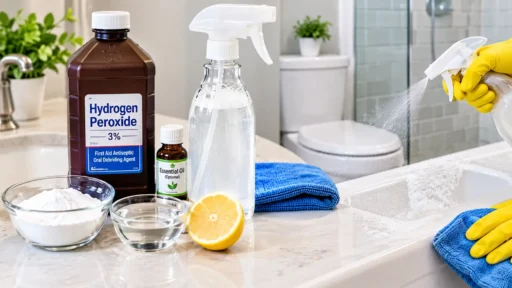
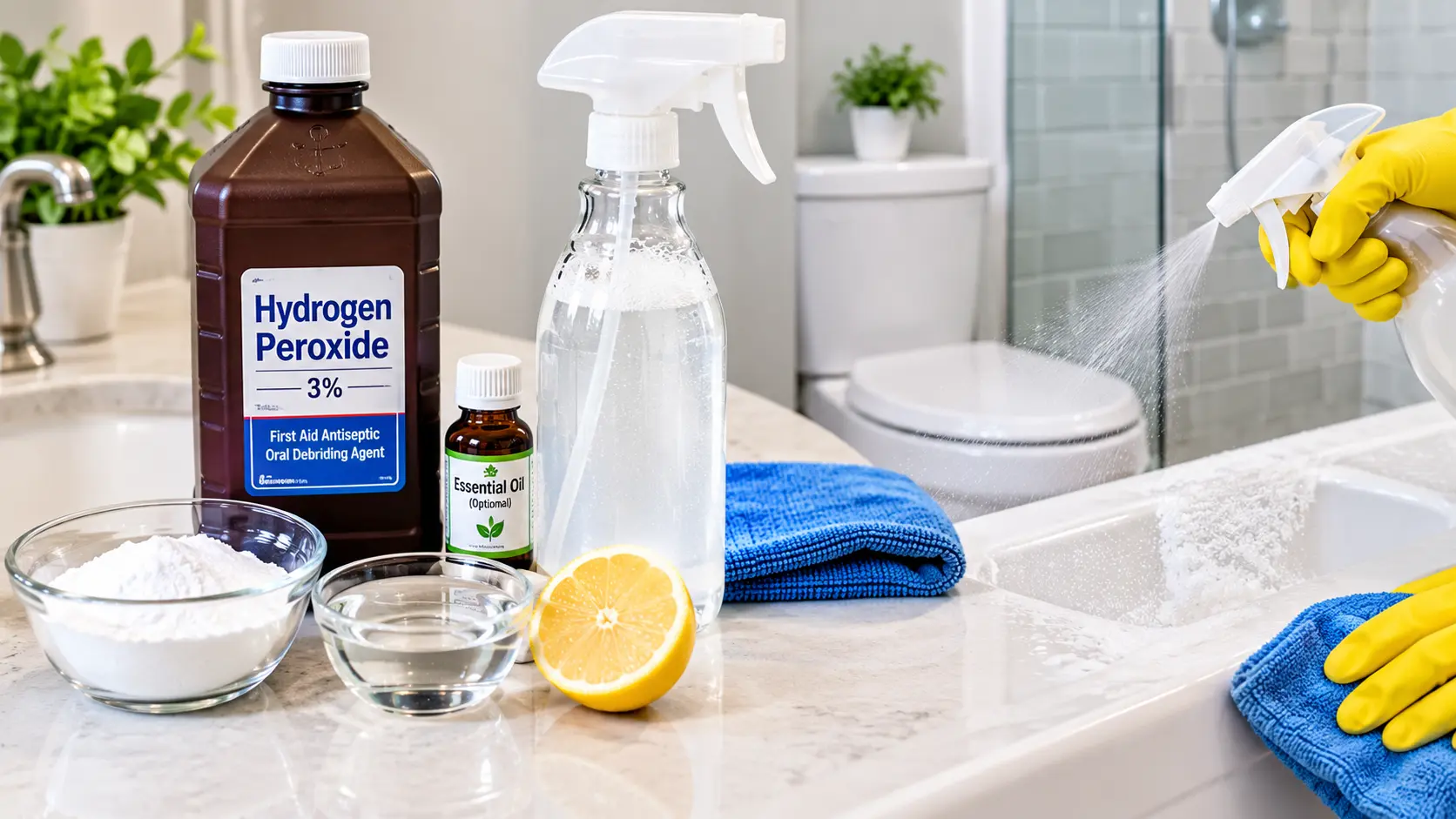
- 3% hydrogen peroxide (the brown bottle from the drugstore)
- A dark or opaque spray bottle
- 1 teaspoon liquid dish soap (optional, for cutting grease and oily soap scum)
- 10-15 drops tea tree, lemon, or lavender essential oil (optional, for scent)
- A microfiber cloth and a scrub brush or old toothbrush
How to Make a Non-Toxic Bathroom Cleaner With Hydrogen Peroxide
This takes about two minutes and makes enough to last several weeks.
- Pour the hydrogen peroxide straight into a dark spray bottle. 3% is already the correct strength, so skip the water.
- Add a teaspoon of liquid dish soap if you’re tackling greasy grime or built-up soap scum.
- Drop in 10-15 drops of essential oil if you want a scent. This step is completely optional.
- Screw on the cap and swirl gently. Don’t shake hard; it creates too much foam.
- Label the bottle “Hydrogen Peroxide Cleaner” with the date you mixed it, and store it in a dark cabinet.
How to Use It on Different Bathroom Surfaces
| Surface | How to Apply | Wait Time | Finish |
| Toilet bowl | Pour 1 cup directly in | 20 minutes | Scrub, flush |
| Tub & tile | Spray surface evenly | 5-10 minutes | Scrub, rinse |
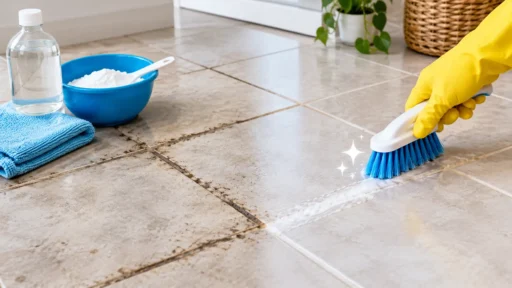
| Grout lines | Spray undiluted, let it fizz | 10 minutes | Scrub with old toothbrush |
| Mirrors & glass | Light mist | None | Wipe with microfiber cloth |
| Sink & faucet | Spray, let sit | 5 minutes | Wipe clean, buff dry |
Hydrogen Peroxide vs. Vinegar vs. Bleach: Which One Should You Use?
| Hydrogen Peroxide | Vinegar | Bleach | |
| Smell | None | Sharp, sour | Strong, sharp |
| Safe around kids/pets | Yes, with normal care | Yes | No, needs ventilation |
| Best for | Stains, mildew, soap scum | Mineral deposits, odors | Heavy disinfecting |
| Safe to mix with others | Never with vinegar at once | Never with bleach | Never with ammonia or peroxide |
Safety Tips Before You Start
- Never combine hydrogen peroxide and vinegar in the same bottle at the same time. Together they form peracetic acid, which is corrosive and can irritate skin, eyes, and lungs. Use one, rinse the surface, then follow with the other if you want the combined cleaning power.
- Keep the bottle out of direct sunlight. Light speeds up the breakdown of hydrogen peroxide, which is why it’s sold in an opaque bottle in the first place.
- Spot-test colored grout, dyed caulk, or natural stone before treating the whole area. Peroxide can lighten some dyes and is not recommended on marble or limestone.
- Store it out of reach of children. Household-strength 3% peroxide is mild, but swallowing it or getting it in the eyes still needs attention. If that happens, call Poison Control at 1-800-222-1222.
- Work in a ventilated bathroom, especially if you’re scrubbing a small, enclosed shower stall.
How Long Does a Hydrogen Peroxide Bathroom Cleaner Last?
Unopened, 3% hydrogen peroxide will last approx 3 years in an airtight dark bottle. Once opened, however, it will begin to degrade more quickly with exposure to light & air. So, you should aim to use your homemade spray within a few months. If you have added dish soap or essential oil, then it’s best to use it within 2-3 weeks. A quick way of telling if it has gone bad is that if it no longer fizzes on contact with a stain then it’s no good anymore. You’ll need to make a new batch.
Frequently Asked Questions
Does hydrogen peroxide disinfect a bathroom, or does it just clean it?
Hydrogen peroxide is naturally anti-microbial. Specific products containing hydrogen peroxide are registered with the EPA and can be used as disinfectants in commercial and domestic environments. However, a simple 3% hydrogen peroxide spray will not be registered with the EPA and therefore should be considered to be a powerful natural cleaning agent. To ensure your environment is disinfected, such as after someone has been ill in your home, use an EPA registered product and make sure you follow the instructions on the packaging.
Can I mix hydrogen peroxide with baking soda for tough bathroom stains?
Yes. Mix hydrogen peroxide with baking soda until it forms a paste, spread it over rust rings, hard water stains, or built-up soap scum, let it sit for about 15 minutes, then scrub. Only mix what you plan to use right away, since the fizzing reaction uses up the peroxide fast.
Will hydrogen peroxide damage my bathroom tile or grout?
Plain 3% hydrogen peroxide is safe on sealed tile, porcelain, and standard grout. It can lighten dark-colored grout or dyed caulk with repeated use, so spot-test an inconspicuous spot first. Skip it on natural stone such as marble or limestone, since the mild acidity can etch the surface over time.
Is a homemade hydrogen peroxide cleaner safe around kids and pets?
Yes, and that’s the main reason people switch to it. At 3%, hydrogen peroxide breaks down into water and oxygen, and it doesn’t release the fumes that bleach or ammonia-based cleaners do. Still, store the spray bottle out of reach, and don’t let pets lick a freshly cleaned, still-wet surface.
Why does the spray bottle need to be dark or opaque?
Light speeds up the breakdown of hydrogen peroxide into water and oxygen, so a cleaner stored in a clear bottle on a sunny windowsill loses its cleaning power within days. A dark brown or opaque bottle kept in a cabinet keeps it working for weeks instead.
The Bottom Line
No need to dig out your bucket of cleaning products! This simple mixture will create a natural, non-toxic bathroom cleaner using hydrogen peroxide. Simply mix together your brown bottle of hydrogen peroxide and a spray bottle for 5 minutes to create a powerful cleaning solution that removes soap scum, stains and won’t leave your bathroom smelling like a swimming pool. Create your own today and see the difference it makes on your tub or toilet bowl.
Helpful Resources
CDC / ATSDR – ToxFAQs for Hydrogen Peroxide
MedlinePlus – Hydrogen Peroxide Poisoning (U.S. National Library of Medicine)