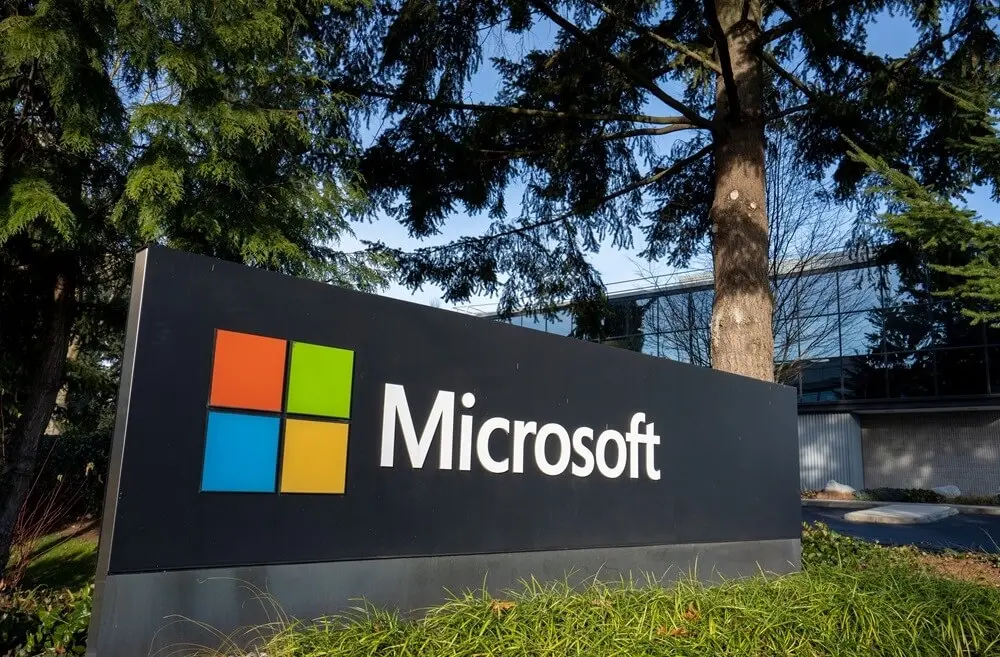

Change is never easy, even when it comes wrapped in good news about a company’s future. This week, Microsoft made headlines again for a reason that has become painfully familiar across the tech world: job cuts. As reports of another round of layoffs swept through newsrooms, one thing became clear — the era of AI isn’t just changing how we work. It’s changing who gets to keep working.
For thousands of Microsoft employees, the news landed like a gut punch. For the industry at large, it confirmed what many analysts have been predicting for months. Microsoft layoffs in 2026 are no longer an isolated event. They’re part of a much bigger story about how artificial intelligence is quietly rewriting the rules of corporate America.
According to reporting from Business Insider and GeekWire, Microsoft is preparing to cut thousands of jobs, with the reductions expected to touch its Xbox division, sales teams, and consulting units. The cuts are expected to affect less than 2.5% of Microsoft’s global workforce, which stood at roughly 220,000 employees as of last year.
This isn’t Microsoft’s first major workforce reduction in recent memory. Back in July 2025, the company cut nearly 4% of its staff while continuing to pour money into AI infrastructure. Earlier this year, Microsoft also rolled out a voluntary retirement program aimed at longer-tenured employees, offering severance and benefits to those who chose to step away rather than face a more abrupt exit later.
Put simply: Microsoft is trimming certain parts of its workforce while simultaneously spending more than $100 billion on AI infrastructure. It’s a pattern that’s becoming the norm, not the exception, in Big Tech.
At the heart of this Microsoft restructuring is a simple, if uncomfortable, business reality. Companies across the tech sector are shifting resources away from traditional roles and toward AI development, cloud computing, and automation.
Microsoft CEO Satya Nadella has described the layoffs as the uncomfortable side of a company that’s performing well financially while remaking itself for an AI-driven future. That framing matters. This isn’t a company in crisis — Azure revenue reportedly grew more than 30% in a recent quarter. Instead, it’s a company recalibrating where it wants to invest its money and its people.
Notably, engineers working on Azure OpenAI Service, GitHub Copilot, and Microsoft’s core AI research teams have largely been shielded from these cuts. The roles most affected tend to sit in enterprise infrastructure, operations, sales, and consulting — areas where automation and AI tools can now handle tasks that once required larger teams of people.
Impact on Employees
Behind every statistic is a person whose life just changed. For many Microsoft employees, a layoff notice doesn’t just mean losing a paycheck. It means losing routine, community, and often a piece of professional identity built over years, sometimes decades.
Working at Microsoft has long been seen as a career milestone, a sign that someone had truly “made it” in tech. That makes these cuts especially hard to process. Long-tenured employees, many with mortgages, families, and deep roots in their teams, now face the uncertainty of job hunting in a market that’s shifting faster than most people can keep up with.
There’s also a quieter cost: morale. Employees who remain often describe a workplace clouded by anxiety, waiting to see if more bad news is coming. That kind of uncertainty can weigh heavily, even on people whose jobs are safe for now.
Microsoft is far from alone. Tech layoffs have surged in 2026, with U.S. tech companies announcing over 123,000 job cuts so far this year, up sharply from the same period in 2025, according to outplacement firm Challenger, Gray & Christmas. Across sectors, AI adoption has become the most commonly cited reason for downsizing.
Amazon confirmed 16,000 corporate job cuts this year, following 14,000 cuts last October. Meta restructured with roughly 10% layoffs while shifting thousands of employees toward AI initiatives. Oracle’s workforce shrank by 13% in its most recent fiscal year, largely tied to AI adoption. Even Salesforce, a company built on cloud software, trimmed jobs connected to its push into AI-driven tools.
The pattern is unmistakable: AI workforce changes are reshaping not just Microsoft, but the entire technology sector.
What Experts Are Saying
Financial outlets including Yahoo Finance and Business Insider have tracked this shift closely, and their reporting paints a consistent picture. Companies are spending unprecedented sums, with Alphabet, Amazon, Microsoft, and Meta together expected to invest around $700 billion in AI, according to Morgan Stanley estimates cited by Reuters. That capital has to come from somewhere, and for many companies, it’s coming from headcount.
Economists have also pointed out something unusual about Microsoft’s approach. Rather than relying solely on abrupt layoffs, the company has leaned on early retirement-style buyout programs, a strategy more commonly associated with legacy industrial companies than fast-growing tech giants. It’s a sign that Microsoft is trying to manage this transition carefully, even if the outcome still means fewer jobs.
It’s easy to talk about restructuring in terms of percentages and press releases. It’s harder to sit with what it actually means for the people involved. A software engineer who spent fifteen years building their career at Microsoft doesn’t experience this as a “strategic pivot.” They experience it as a Tuesday morning phone call that changes everything.
At the same time, it’s worth acknowledging the other side of this story. AI is enabling real breakthroughs, faster software development, smarter tools, and new kinds of jobs that didn’t exist a few years ago. The challenge isn’t that technology is advancing. It’s that the human cost of that advancement often falls unevenly, and support systems haven’t always caught up.
Microsoft’s latest round of job cuts is a reminder that we’re living through one of the most significant workforce transformations in recent history. AI isn’t a distant, futuristic concept anymore. It’s actively reshaping org charts, budgets, and career paths at some of the world’s biggest companies right now.
For employees, this moment calls for adaptability and support. For companies, it calls for transparency and care in how these transitions are handled. And for all of us watching from the outside, it’s a clear signal that the future of work is already here, whether we feel ready for it or not.
What happens at Microsoft rarely stays at Microsoft. As one of the most influential companies in tech, its choices tend to ripple outward, shaping how other businesses think about AI, automation, and the people caught in between. The real question isn’t whether AI will keep changing the workplace. It’s whether companies and workers alike can navigate that change with the humanity it deserves.