
| Quick Answer Yes, brain-eating amoeba is fatal in more than 97% of cases, according to the CDC. The organism, called Naegleria fowleri, lives in warm fresh water and causes a rare brain infection called PAM. It only infects people when contaminated water is forced up the nose, not by swallowing it. You can lower your risk by keeping your head above water, using a nose clip, and avoiding warm, still fresh water during hot weather. |
If you are wondering is brain-eating amoeba fatal, the short answer is yes—Naegleria fowleri causes a rare brain infection called PAM that has a mortality rate of over 97%. Understanding how it spreads and taking basic precautions can easily protect you and your family during summer water activities.
Every summer, headlines about “brain-eating amoeba” cause a wave of worry, and it’s easy to see why — the name alone sounds like something from a horror film. But how dangerous is it really, and what can you actually do about it? Let’s break it down in plain terms, using real data from the CDC and other health researchers.
What Exactly Is Brain-Eating Amoeba?
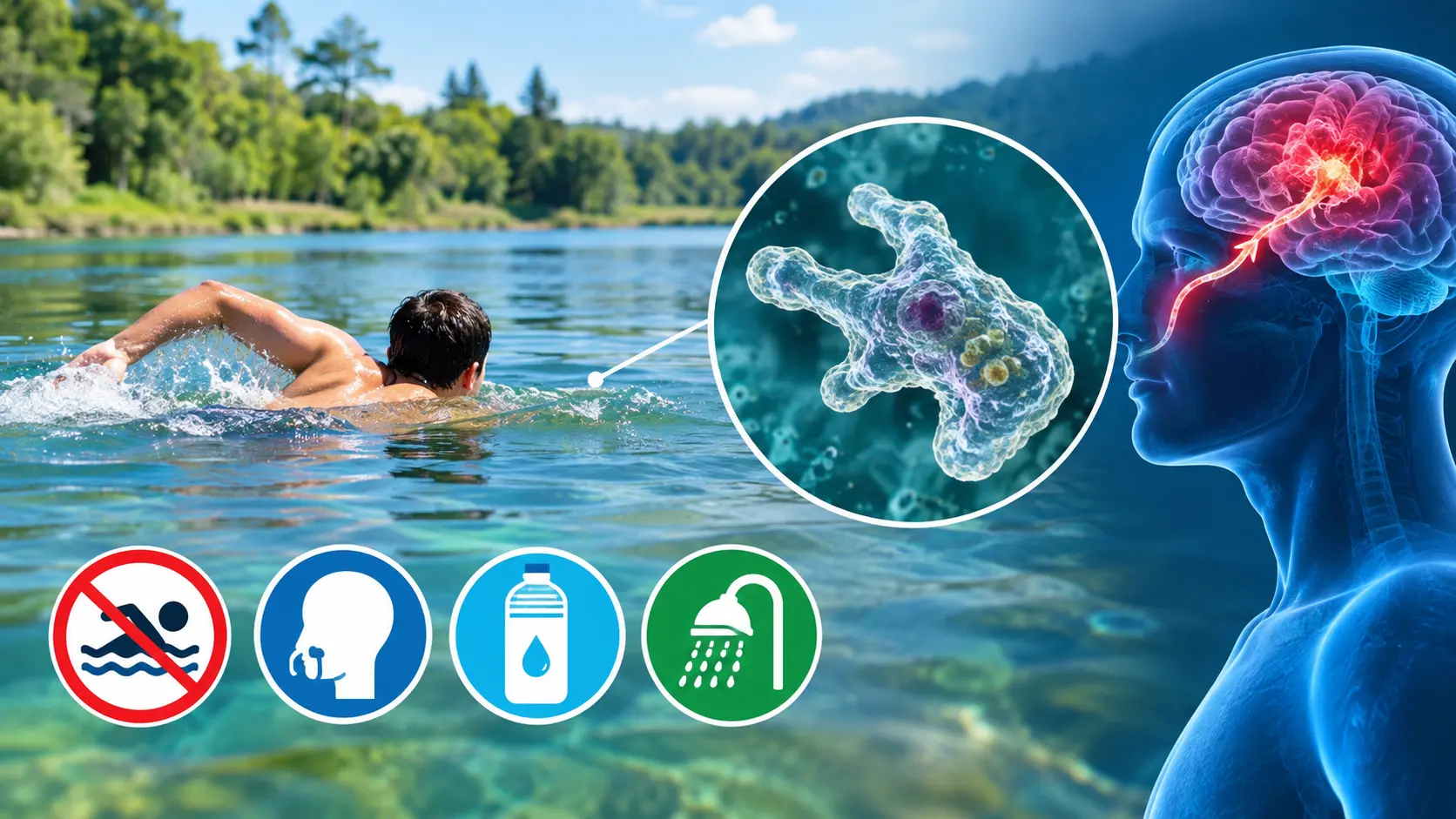
The organism, which causes the scary headlines, is called Naegleria fowleri. It is a type of single celled organism that can be found naturally in warm freshwater such as lakes, ponds, rivers, hot springs and the soil. It is not a bacterium. It’s an amoeba, which is a simple unicellular organism that does not require a host to sustain its life.
In most cases it does not pose any danger to the human being. The dangerous scenario occurs only when the amoeba enters the body through the nasal cavity with enough force to penetrate the brain, most probably during swimming or diving.
Is Brain-Eating Amoeba Fatal?
In short, yes, the answer is almost always yes. When an amoeba gets to the brain, it causes primary amebic meningoencephalitis (PAM), which, according to the CDC, is almost 100% fatal, even with treatment. In numbers, from 1962 to 2024, there were 167 cases of PAM in the United States, and apparently, only four patients survived.
Typical symptoms are like headache, fever, nausea, stiff neck, which may appear from one to twelve days after contact. Then, the patient may experience confusion, seizures, loss of motor skills, and balance. Moreover, it is mentioned that the disease progresses rapidly, and most patients die within 5 days of the first symptoms.
It is terrifying to know that such a deadly infection can exist. I understand that it is scary to learn about such illnesses, but in reality, there is almost no danger. According to the CDC, the number of PAM cases in the United States is less than ten per year on average. Moreover, the number of drowning accidents is significantly more significant. Therefore, there is no reason to panic – the chances of getting infected with amoebiasis are close to zero, even if you spend your summer vacations in freshwater reservoirs.
How Do People Actually Get Infected?
This is the part that trips a lot of people up. You cannot get infected by drinking water that contains the amoeba. Infection only happens when contaminated water goes up the nose with enough pressure to reach the brain through the nerve tissue at the top of the nasal cavity.
Common ways this happens include:
- Jumping or diving into warm lakes, ponds, or rivers
- Swimming with your head underwater in warm, still fresh water
- Using tap water in nasal rinsing devices, such as neti pots, without properly treating it first
- Stirring up sediment at the bottom of a lake or pond while swimming
Importantly, there’s no risk from swimming in the sea. No one in the United States has ever contracted PAM from salt water. The amoeba also cannot spread from person to person, so you can’t catch it from someone who’s infected.
Who’s Most at Risk?
According to research conducted by the CDC, the largest number of cases involve children and teenagers, most of whom are boys due to risky behavior such as playing and diving in shallow water for extended periods of time. Moreover, most cases are reported from tins states such as Texas, Florida, and Virginia, which experience periods of extremely hot weather throughout the summer, which peaks in July and August. During these months, temperatures in inland states can skyrocket on a daily basis, while water levels remain relatively low.
How to Prevent Infection in Fresh Water
The good news is that a few simple habits dramatically cut your risk:
- 1. Assume the amoeba could be present. The CDC recommends treating all warm fresh water — lakes, ponds, rivers, and hot springs — as if Naegleria fowleri could be there, since it’s impossible to test water in advance.
- 2. Keep your head above water. This is the single most effective thing you can do, especially in shallow, warm, slow-moving water.
- 3. Use a nose clip. If you’re diving, jumping in, or doing water sports where your head goes under, a simple nose clip stops water from being forced up your nasal passages.
- 4. Avoid stirring up sediment. The amoeba tends to concentrate near the bottom of lakes and ponds, so try not to dig or stir up mud and sand while swimming.
- 5. Never use untreated tap water for nasal rinsing. If you use a neti pot or sinus rinse, always use distilled, sterile, or previously boiled and cooled water — never straight from the tap.
- 6. Choose treated pools and water parks. Properly chlorinated and maintained pools are considered safe, since the disinfectant kills the amoeba.
- 7. Be extra cautious during heatwaves. Warmer water and lower water levels both increase the amoeba’s numbers, so risk rises during long hot spells.
Key Takeaways
- Brain-eating amoeba (Naegleria fowleri) infection is almost always fatal, but it’s also extremely rare
- Infection only happens through the nose, never by drinking water or from another person
- Salt water carries no known risk
- Keeping your head above water and using a nose clip are simple, effective precautions
- Never use tap water for nasal rinsing without treating it first
Frequently Asked Questions
Is brain-eating amoeba fatal in every case?
Not every single case, but very nearly. The CDC reports a fatality rate above 97%, with only four known survivors among 167 U.S. cases between 1962 and 2024.
Can you get brain-eating amoeba from drinking water?
No. Infection only occurs when contaminated water is forced up the nose. Swallowing water containing the amoeba does not cause infection.
Can brain-eating amoeba spread from person to person?
No. There have been no confirmed cases of person-to-person transmission of Naegleria fowleri.
Is it safe to swim in the sea?
Yes. No one in the United States has ever developed PAM from salt water exposure.
What are the first symptoms of brain-eating amoeba infection?
Early symptoms often resemble meningitis, including headache, fever, nausea, and a stiff neck, typically appearing one to twelve days after exposure.
How common is brain-eating amoeba infection in the United States?
It’s very rare. The CDC reports fewer than 10 cases per year nationwide, far lower than many other water-related risks like drowning.