
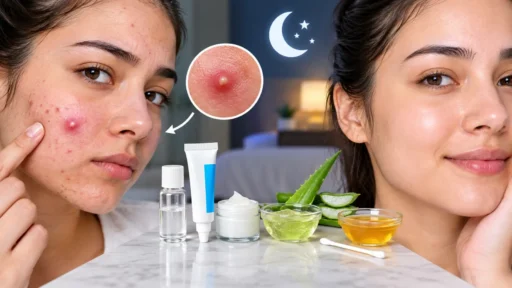
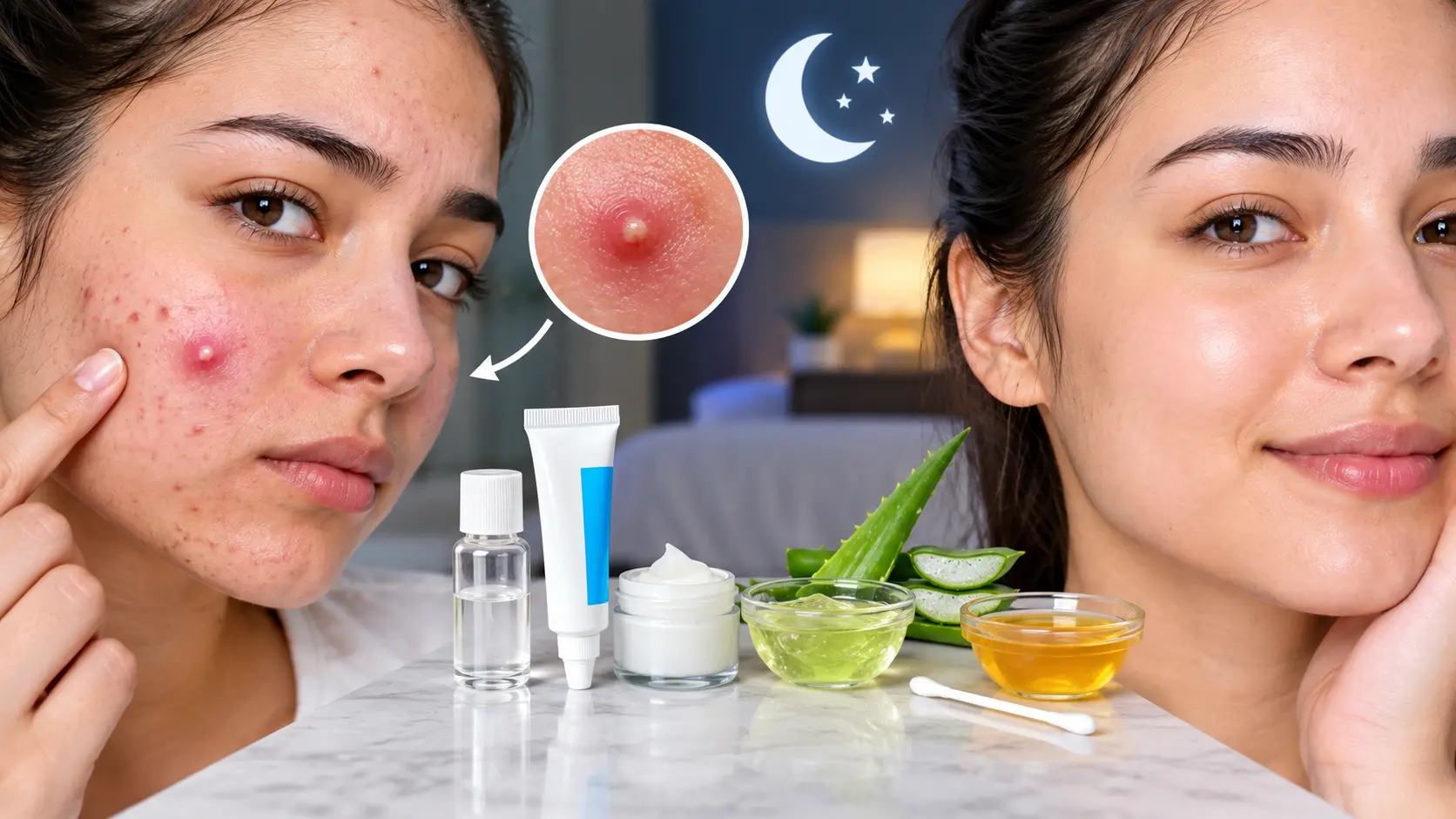

| Quick Answer You can’t erase a spot completely overnight, but you can shrink it and calm it down fast. Cleanse your skin, dab on a thin layer of benzoyl peroxide (2.5–5%) or salicylic acid (2%), then cover it with a hydrocolloid spot patch before bed. By morning, the redness and swelling are usually much less noticeable. Never use toothpaste, lemon juice, or your fingernails — they make things worse. |
Learning how to get rid of acne overnight is essential when a sudden breakout appears right before an important event. While you cannot completely erase a pimple in just a few hours, using proven dermatological spot treatments can calm redness and significantly reduce swelling while you sleep.
This article will present and explain those ingredients.
Why Spots Seem to Appear Overnight
A pimple does not appear in a single night; it appears through time, as bacteria, oil, and dead skin cells combine into an impaction in a pore, and the body’s defense mechanism attempts to rid itself of it, resulting in the telltale red bump on the skin. A pimple only appears as a visible mark on the skin when the process has completed itself, hence why it may seem as though it appeared out of nowhere. Therefore, knowing this can help people realize that overnight treatments do not necessarily have time to work, since the pimple has already gone through the process of appearing.
The Emergency Treatments That Actually Work
1. Benzoyl Peroxide for Red, Inflamed Spots
Benzoyl Peroxide – this is an actively studied acne ingredient that most dermatologists are familiar with. It helps to kill acne-causing bacteria and shed the top layer of the skin, removing the clog. Interestingly enough, studies have found that 2.5% has shown no significant difference with 10%, but causes less dryness and irritation to the skin. So, there is no point in paying more for a higher concentration.
The application is simple; after cleansing and patting your skin dry, use a cotton bud to apply a small amount of benzoyl peroxide directly to the acne spot. A little goes a long way. Let it dry overnight. Oh, and never use any fabrics that can be lightened by peroxide; go for white linen instead.
2. Salicylic Acid for Whiteheads and Blackheads
If your spot has a visible white or dark centre, rather than a red angry looking bump then you’re better off with salicylic acid.
Salicylic acid is oil soluble so it works by penetrating down into the pore to remove the blockage from inside.
How to use it: Apply a 2% salicylic acid gel or treatment directly onto the spot before bed. Don’t use it with benzoyl peroxide on the same spot at the same time as this can leave your skin feeling overly dry and uncomfortable.
3. Hydrocolloid Patches for Everything Else
These little dots of glue have become a real star in the skincare world, and there’s a good reason for that. They form a moist, protective film over the spot, drawing away fluid and preventing you from touching or picking at it while you sleep, which is often the root cause of spot aggravation. Patches are most effective on pimples that have a head and least effective on deep, sore bumps beneath the skin.
How to use it: Clean and thoroughly dried skin is essential for patches, which won’t adhere to greasy or wet skin. Apply one patch over the spot and leave it on overnight, you’ll often find that it has become cloudy or white by morning, indicating that it has drawn away fluid from the spot.
4. Ice for Sudden Swelling
If a spot has popped up and is visibly puffy, wrapping an ice cube in a clean cloth and holding it against the area for a minute or two can calm the swelling and redness before you apply any treatment. Never put ice directly on bare skin, as it can cause damage.
5. Hydrocortisone Cream for Painful, Deep Spots
A very thin layer of over-the-counter 1% hydrocortisone cream can calm down a painful, swollen spot temporarily by reducing inflammation. This isn’t a long-term acne solution and shouldn’t be used daily, but as an occasional emergency measure, it can take the edge off before an event.
What to Avoid (Even Though the Internet Says Otherwise)
Social media is full of “quick fixes” that dermatologists consistently warn against:
- Toothpaste — the menthol and baking soda can burn and irritate skin rather than heal it.
- Lemon juice — far too acidic for your skin’s natural balance and can cause dark marks.
- Rubbing alcohol — strips your skin’s protective barrier and often makes breakouts worse in the long run.
- Popping or squeezing — this pushes bacteria deeper into the skin, which is one of the biggest causes of scarring.
If it sounds like a kitchen ingredient rather than a proper skincare product, it’s best left in the kitchen.
A Simple Overnight Routine, Step by Step
Wash your face off with a gentle cleanser. Do not rub your skin, just make light motions.
Pat your skin dry.
Determine the type of pimples you have: red and inflamed pimples or pimples with a white or black head.
Put benzoyl peroxide on the site of inflamed pimples and salicylic acid on the site of pimples with a white or black head. Do not use these treatments together.
Once the topical treatment is fully absorbed, put a hydrocolloid patch on the pimples. Let it stay there for the whole night.
In the morning, wash your face off again and put a light moisturiser on your skin.
When to See a Dermatologist
Emergency treatments are great for the occasional spot, but they’re not a substitute for proper skincare if breakouts keep happening. See a dermatologist if:
- Over-the-counter treatments haven’t helped after 8–12 weeks of regular use
- You’re getting deep, painful cystic spots
- Your acne is leaving scars or dark marks that don’t fade
- Breakouts are affecting your confidence day to day
A dermatologist can offer options that aren’t available over the counter, including prescription retinoids, antibiotics, or a quick cortisone injection that can flatten a painful cyst within a day.
Frequently Asked Questions
Can you really get rid of a spot overnight?
Not completely, but you can significantly reduce redness and swelling with the right treatment, so it’s far less noticeable by morning.
Is benzoyl peroxide or salicylic acid better for overnight use?
Benzoyl peroxide works best on red, inflamed spots, while salicylic acid is better suited to whiteheads and blackheads. Avoid layering both on the same spot at once.
Do hydrocolloid patches actually work?
Yes, particularly on spots that already have a visible head. They protect the area, absorb fluid, and stop you from picking, which speeds up healing.
Why shouldn’t I use toothpaste on a spot?
Toothpaste contains ingredients like menthol and baking soda that can irritate and burn your skin rather than treat the acne underneath.
How long before I see results from acne treatment?
Overnight treatments can visibly reduce a single spot by morning, but for acne-prone skin overall, most ingredients take 6 to 12 weeks of consistent use to show full results.
Resources and Further Reading
- American Academy of Dermatology — https://www.aad.org
- Cleveland Clinic — Hydrocolloid Dressings and Wound Healing — https://my.clevelandclinic.org
- Healthline — Salicylic Acid vs Benzoyl Peroxide — https://www.healthline.com/health/beauty-skin-care/salicylic-acid-vs-benzoyl-peroxide