
“Learning how to remove water stains from unsealed granite countertop surfaces is essential because granite is a porous natural stone that quickly absorbs moisture.”
| Quick answer: Mix baking soda with a little water (or 3% hydrogen peroxide) into a thick paste, spread it over the water stain, cover it with cling film, and leave it for 24 hours. Wipe away with a damp cloth. For light marks, warm water and a drop of washing-up liquid is often enough. |
Granite, as a countertop material, is one of the strongest, but there is one detail that many house owners learn the hard way. This detail is that granite is a porous material, which means that various liquids and other substances may penetrate its structure. Luckily, water is typically the easiest type of stain to remove, and the tools needed to do it can be easily found in most kitchens.
Why Is It Important to Know How to Remove Water Stains From Unsealed Granite Countertop Surfaces?
Granite is a naturally occurring stone which has numerous tiny pores that are invisible to the naked eye; a good sealant fills these pores, preventing any liquid from penetrating the stone. Failing to do so allows any liquid to penetrate the pores and eventually, the stone itself.
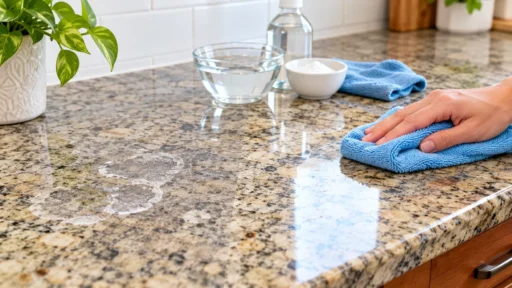
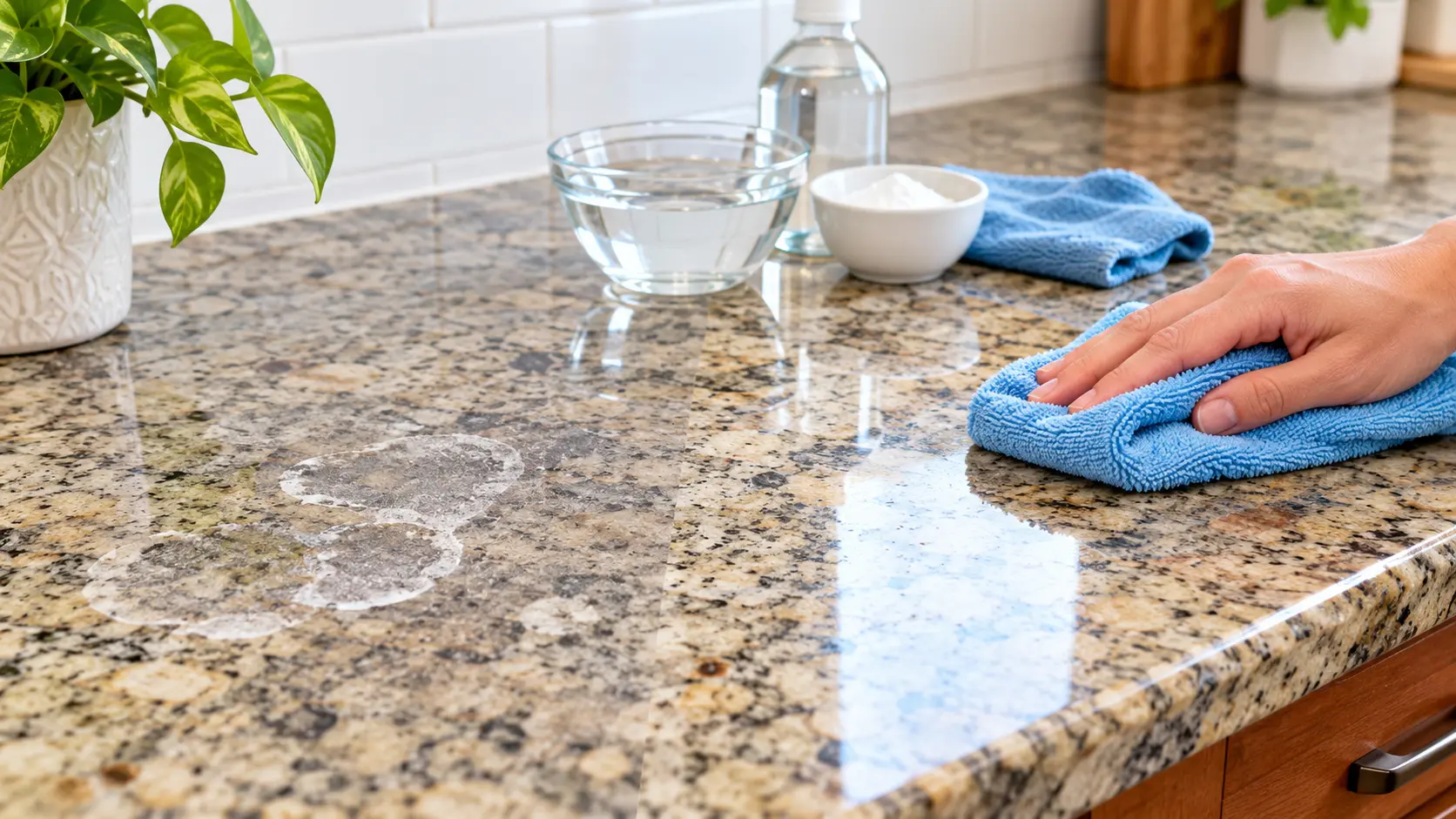
Any kind of beverage left over on the counter overnight, a leaky plant, or splash back from the sink can leave a cloudy ring or spot, and should dissipate after a while in most cases. If not, then it’s a sign of needing to be treated as soon as possible.
What You’ll Need
- Warm water
- Mild washing-up liquid (dish soap)
- Baking soda
- 3% hydrogen peroxide (optional, for tougher marks)
- Cling film (plastic wrap)
- A soft cloth or sponge
- Masking tape (optional, to protect the edges of the stain area)
Steer clear of anything acidic or abrasive — no vinegar, lemon juice, bleach-based bathroom sprays, or scouring pads. Acids can etch granite permanently, and rough pads can dull the polish. Home Depot’s granite cleaning guide and most stone suppliers agree on this point.
Step 1: Try the Simple Fix First
Most fresh water marks, including the ones left by condensation from a cold glass, come out with almost nothing:
- Wet a soft cloth with warm water and a small drop of washing-up liquid.
- Wipe the stained area in gentle, circular motions.
- Rinse with a clean, damp cloth.
- Dry thoroughly with a towel — don’t let the area air-dry, as that can leave new marks behind.
This sorts out light rings and splashback in a couple of minutes. If the mark is still visible once the counter is completely dry, move on to the poultice method below.
Step 2: Make a Baking Soda Poultice for Stubborn Stains
A poultice is simply a paste that draws moisture (and whatever’s dissolved in it) back out of the stone, rather than pushing more liquid in. It’s the method stone restorers and countertop brands recommend for anything that won’t shift with soap and water alone.
- In a small bowl, mix baking soda with a little water (or swap the water for 3% hydrogen peroxide if the stain is older or darker) until you get a thick, spreadable paste — think peanut butter, not pancake batter.
- Spread the paste over the stain, about a quarter-inch thick, slightly overlapping the edges of the mark.
- Cover with cling film and poke a few small holes in it. This slows down evaporation, giving the paste time to pull moisture out rather than just drying on the surface.
- Leave it for 24 hours. Resist the urge to check on it — the poultice needs time to work.
- Remove the cling film and scrape away the dried paste with a plastic or wooden scraper (never metal).
- Wipe the area with a clean, damp cloth, then buff dry.
For older or deeper stains, one round often isn’t enough. That’s normal — repeat the process two or three times rather than reaching for something stronger.
Step 3: Dealing With Hard Water Rings
ep 3: Dealing With Hard Water Rings
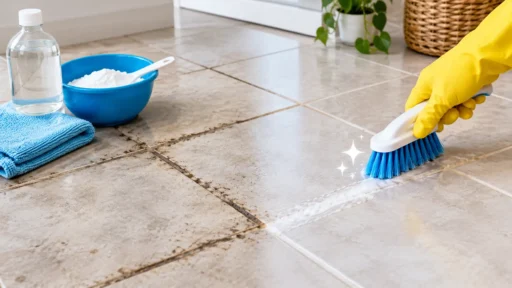
If your water stains are on the edge of a sink, kettle, or coffee maker, then it’s due to hard water minerals (calcium and magnesium) and not just moisture. They’re slightly rougher or more chalky than a soft water stain. The above baking soda poultice works well here too but only for a few hours (not a full day). For heavy mineral build-up, a specialist granite spot and ring remover like the one below is needed,
Rock Doctor’s guide to hard water stains, can finish the job without risking the polish.
What to Avoid
- Vinegar or lemon juice — these are acidic and can etch granite, leaving a dull patch that’s harder to fix than the original stain.
- Bleach in large amounts — occasionally fine in small, diluted doses, but risky for everyday use.
- Scouring pads or steel wool — they’ll scratch the surface long before they shift a water mark.
- Letting the stain sit — the longer water sits on unsealed granite, the deeper it soaks in, and the more poultice treatments it’ll need.
How to Stop Water Stains Coming Back
The real fix isn’t a cleaning trick — it’s sealing the stone. A sealant fills granite’s natural pores so water sits on top long enough to wipe away instead of sinking in.
The water test: pour a small amount of water onto the counter and watch it. If it beads up and sits there, your seal is doing its job. If it soaks in or darkens the stone within five minutes, it’s time to reseal. Marble.com’s guide to removing water stains and most fabricators recommend checking this every six to twelve months, depending on how heavily the counter gets used.
Sealing is simple enough to do yourself with a granite sealer from any hardware shop:
- Clean and completely dry the countertop first — sealing over a stain locks it in.
- Apply the sealer in a thin, even coat following the product instructions.
- Let it sit for the recommended time (usually a few minutes), then buff off any excess with a dry cloth.
- Avoid using the counter for several hours while it cures fully.
Quick FAQs
Will a water stain on granite go away by itself?
Often, yes — if it’s a fresh, light mark, it usually fades within a day or two as the moisture evaporates from the stone.
How long should I leave a baking soda poultice on granite?
Twenty-four hours is standard for a proper water stain. Lighter marks may clear in just a few hours.
Is it safe to use hydrogen peroxide on granite?
Yes, 3% hydrogen peroxide is widely recommended for water-based stains and is gentler than bleach, though it’s best to test a small, hidden spot first.
Can I use vinegar to clean granite?
No. Vinegar is acidic and can etch and dull granite over time, even though it’s a popular natural cleaner for other surfaces.
How often should unsealed granite be sealed?
Most granite needs resealing every six to twelve months. Run the water test above to check whenever you’re unsure.
Further Reading
Home Depot: How to Clean Granite Countertops
Rock Doctor: How to Remove Hard Water Stains and Rings From Granite