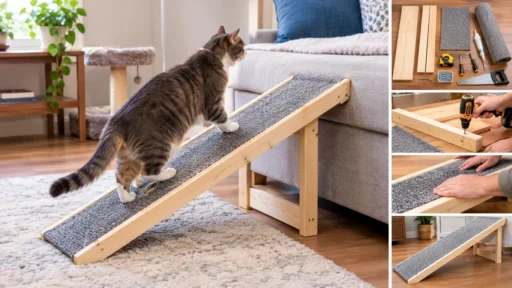
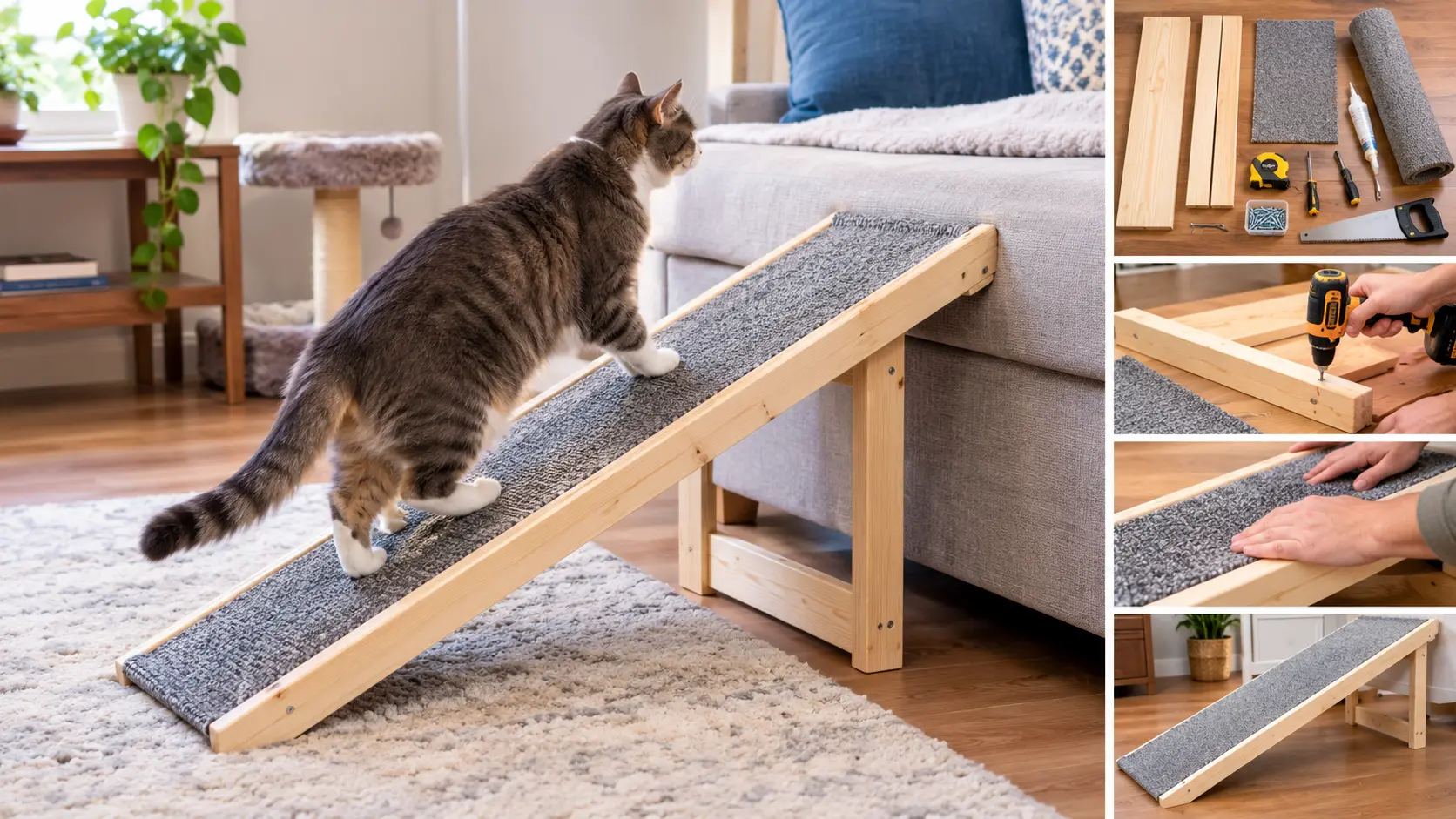

“Watching an old cat sit and stare up at the bed, too sore to jump, is hard. Building a DIY Indoor Cat Ramp for Arthritic Cats is a simple, loving solution that can give your pet their favorite spots back without a single painful leap.”
How to Build a DIY Indoor Cat Ramp for Arthritic Cats
Quick answer: Look out for reduced jumping activity, stiffness when waking up, avoiding the litter box, and lack of grooming: these are the telltale signs of cats with stiff joints that visit the vet.
Arthritis is much more prevalent in cats than most owners realize. According to the Cornell Feline Health Center, nine out of ten cats aged twelve and older showed signs of degenerative joint disease on x-ray, and one in every five cats over the age of one has some form of arthritis (via GoodRx). Moreover, cats are masters at masking their pain, so stiff joints and decreased mobility often seem to be normal parts of aging to owners, when in fact, they are signs of a treatable medical condition (via Healthline).
Why a Ramp Beats Stairs for a Sore Cat
Quick answer: A ramp is one steady slope, so your cat never has to push off a sore hip or knee the way they would climbing separate steps. For real arthritis, that difference matters.
Stairs still require a cat’s back legs to push its whole body up and over each step. With a ramp, this same motion is distributed out over a gradual slope, which is much easier on stiff joints, say pet mobility researchers at Aging Cat Care. I say, if your cat has issues, forget stairs and get building. You can always put in a small step for your cat to pause and catch its breath halfway up the ramp if you want to encourage a more strenuous workout.
What Angle Should a DIY Cat Ramp Be?
Quick answer: Aim for an 18 to 20 degree slope. Go no steeper than 25 degrees, or you’ll undo the whole point of building a ramp.
The maths sounds complicated, but it isn’t. A gentler slope just needs a longer ramp. As a rule of thumb, make the ramp about three times as long as the height it needs to reach. Here’s a quick reference so you don’t need a calculator:
| Height to Reach | Gentle Slope (18°) | Space-Saving Slope (25°) |
| 18 inches (low bed) | ~55 inches long | ~38 inches long |
| 24 inches (standard bed) | ~74 inches long | ~52 inches long |
| 30 inches (sofa back/shelf) | ~92 inches long | ~65 inches long |
Short on floor space? A 25-degree slope still works for cats with mild stiffness, and it cuts the ramp’s length by roughly a third. Save the gentlest 18-degree option for cats with more serious joint pain.
Materials You’ll Need
| Material | Why You Need It |
| 3/4-inch plywood board | The ramp’s base. Strong enough not to flex under your cat’s weight |
| Low-pile outdoor carpet or rubber shelf liner | Grip for sore paws. Avoid loop carpet, as claws catch in it |
| Wood glue and screws | Holds the frame together so the ramp doesn’t wobble |
| Thin wood strips (optional) | Low side rails, so a wobbly cat doesn’t step off the edge |
| Non-slip rubber pads | Stops the ramp’s base from sliding on wood or tile floors |
| Staple gun | Fixes the carpet or liner neatly to the board |
Total cost usually lands under $35 to $45 if you’re starting from scratch, and less if you already have offcuts of plywood or old carpet lying around.
Step-by-Step: Build the Ramp
1. Measure the height from the floor to the bed, sofa, or windowsill your cat wants to reach.
2. Pick your angle (18-20 degrees for serious arthritis) and use the table above to work out the ramp’s length.
3. Cut your plywood to length. Keep it at least 10 inches wide so your cat has room to turn around safely.
4. Sand down any rough or sharp edges, especially along the sides your cat will brush past.
5. Staple or glue the carpet or rubber liner firmly over the whole surface, pulling it tight so there are no loose folds to trip on.
6. Attach low side rails if your cat is wobbly or visually impaired. About 1.5 inches high is usually enough.
7. Stick non-slip rubber pads to the base so the ramp can’t slide out from under your cat mid-climb.
8. Rest the top edge securely against the bed frame or sofa arm. Press down hard on the ramp to check it doesn’t rock or shift before letting your cat near it.
Getting Your Cat Used to the New Ramp
Quick answer: Leave the ramp flat on the floor first, add treats along the slope, and let your cat explore at their own pace. Most cats take to it within a week.
Don’t angle the ramp against the bed on day one. You want to let them walk on it while it’s laying on the floor for two or three days so they get used to walking on it. Once they’re comfortable with it being on the floor, you can angle it up and lay some treats halfway up the ramp. Try not to encourage them to go on it themselves. It might take them longer to figure it out themselves, but most cats will eventually learn how to use it if they have to.
Quick Answers
What angle should a DIY cat ramp be for an arthritic cat?
Aim for an 18 to 20 degree slope. This is gentle enough for sore hips and knees. Anything steeper than 25 degrees starts to put strain back on the joints you’re trying to protect.
How long should a cat ramp be for a bed or sofa?
As a simple rule of thumb, make the ramp three times as long as the height it needs to reach. A 24-inch-high bed needs a ramp around 70 to 75 inches long for a gentle 18-degree slope.
What is the best non-slip surface for a cat ramp?
Low-pile outdoor carpet or rubber shelf liner both work well. Avoid loop carpet, since claws can catch in the loops. Rubber grips best for cats with real joint pain, while carpet feels more natural underfoot.
How do I know if my cat has arthritis?
Watch for less jumping, stiffness after rest, skipping the litter box, reduced grooming, and spending less time on high surfaces. Cats hide pain well, so these small behaviour changes are often the first clue.
Will my cat actually use a ramp?
Most cats will, with patience. Leave the ramp flat on the floor for a few days first, add treats or catnip along the slope, and let your cat explore it at their own pace before angling it against furniture.
Is a ramp better than stairs for an arthritic cat?
Usually, yes. A ramp uses one continuous slope, so your cat never has to push off with a sore joint the way they would climbing individual steps. Stairs can work for mild stiffness, but a ramp is gentler for real arthritis.