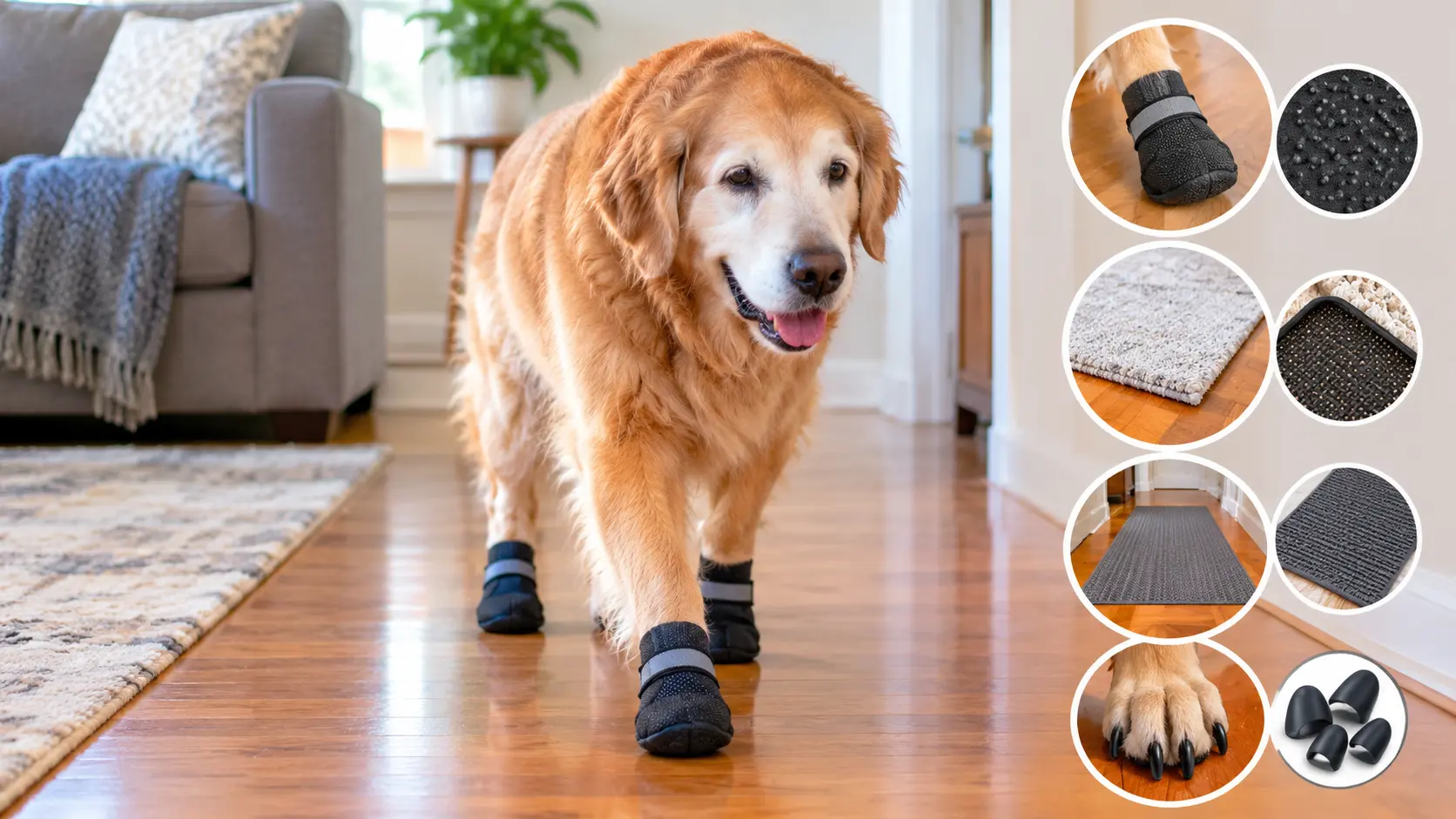

Watching your old dog’s legs splay out on the kitchen floor is scary. One second they’re trotting toward you, the next they’re scrambling for grip, panicked, and sometimes falling hard. If your senior dog slipping on hardwood floors has become a daily worry, you’re not alone — and the fix is usually simpler than you’d think.
Why Do Senior Dogs Slip on Hardwood Floors?
Dogs’ paws are used to grip grass, dirt, and rocks, but not hardwood floors. As pets age, three things happen to exacerbate the situation. The large muscle groups in the hips and legs weaken, giving the dog less power to right himself if he begins to slip. Arthritis makes the joints stiff, reducing the dog’s ability to take quick, sure steps. The nails on the feet, which tend to grow longer in older dogs who avoid walking on rough surfaces, then push up and away from the sensitive skin on the pad of the foot, reducing adhesion.
Compounding the problem are loss of eyesight common to many senior dogs, leaving them fearful of the very floorboards they once confidently navigated.
Signs It’s More Than Just the Floor
A slip here and there isn’t an emergency. But watch for these warning signs:
- Hind legs giving out, even on carpet
- Reluctance to walk into certain rooms
- Yelping or whining when getting up
- Noticeable muscle loss in the back legs
These can point to arthritis, hip dysplasia, or a neurological issue. A quick vet visit rules out pain as the real cause before you spend money on floor fixes.
9 Ways to Stop Your Senior Dog From Slipping
1. Trim the Nails and the Paw Hair
Long nails push a dog’s paw pad up off the ground, so there’s nothing but hard nail touching wood. Trim nails every 2-3 weeks, and clip the hair that grows between the pads on fluffy breeds. This one habit alone fixes a surprising amount of slipping.
2. Lay Down Runner Rugs on Main Paths
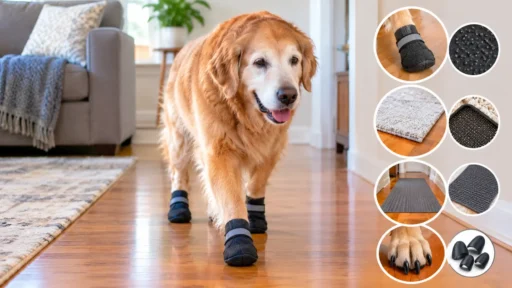
You don’t need to carpet the whole house. Rubber-backed runner rugs along the routes your dog uses most — bedroom to food bowl, living room to back door — give them a safe lane to walk on.
3. Try Interlocking Foam Mats
Foam agility mats, the kind used at dog training gyms, are affordable and easy to wipe clean. They grip the floor and give paws something to dig into, and the cushioning helps sore joints too.
4. Put Grippy Socks or Boots on Your Dog
Dog-specific socks with rubber soles (not human socks, which are too slick) add instant traction. Most dogs need a day or two to get used to wearing them, so start with short practice sessions indoors.
5. Try Paw Wax or Traction Grips
Paw waxes create a slightly tacky layer on the pad itself. Toe grips — small rubber rings that slide onto each nail — work well for dogs who hate wearing socks. They’re built to give dogs instant traction on hardwood or tiled floors.
6. Keep Floors Dry and Clean
Cleaning sprays can leave a slick film behind. Switch to a hardwood-safe, non-slip cleaner, and wipe up water or drool spots right away — a single wet patch is enough to send an unsteady dog sliding.
7. Use a Support Harness on Rough Days
A rear-support harness with a handle lets you steady your dog’s back end as they cross tricky stretches of floor, especially helpful right after they wake up, when joints are stiffest.
8. Add Night Lights Near Slippery Zones
If your dog’s eyesight is going, dim lighting makes the floor feel even more unpredictable. A few plug-in night lights near hallways and stairs can cut down on hesitant, off-balance steps.
9. Ask Your Vet About Joint Support
Weak, painful joints make every step less stable. Ask your vet about joint supplements, weight management, or pain medication — stronger, more comfortable legs mean better balance on any surface.
A Quick Word on Flooring Choices
If you’re renovating anyway, matte-finish hardwood, cork, or rubber flooring all grip better than glossy wood or tile. You don’t need to rip out your floors just for this — rugs and mats solve most of the problem for a fraction of the cost.
FAQ: Senior Dogs and Slippery Floors
Why has my old dog suddenly started slipping when they never used to?
Sudden slipping usually points to a new issue — arthritis flaring up, nails that have grown too long, or early vision loss. A vet check is worth it to rule out a medical cause.
Are dog socks actually effective on hardwood?
Yes, as long as they have rubber grip pads on the bottom. Plain fabric socks with no grip will make slipping worse, not better.
Do rugs really help, or do dogs just slide the rug too?
Use rugs with a rubber backing or non-slip pads underneath. Without that grip layer, a rug can slide across hardwood just as easily as your dog can.
Is slipping painful for senior dogs?
A slip itself might just be startling, but repeated falls can strain joints, pull muscles, or cause real injury, especially in dogs with arthritis or hip problems.
Can I train my dog to stop slipping?
Not fully, but you can build confidence with slow, supervised walks across the problem areas, paired with treats. This won’t fix weak grip, but it helps reduce fear-based freezing.
One Last Thing
Most senior dog slipping on hardwood floors cases improve within a week or two of adding traction (rugs, trimming nails, maybe some grip socks). Start with the free stuff, then move on to the gear. Dogs don’t need new floors, they just need a little more traction and a little more confidence.
Helpful Resources
Dr. Buzby’s ToeGrips – Dog Slipping on Floor Guide