
| Quick Answer measles symptoms typically starts with a high fever, cough, runny nose, and red, watery eyes, but not the rash that many people might expect. The rash will appear three to five days after the initial symptoms, and it will start on the face and move down the body. The U.S. is currently experiencing a record number of measles cases with 3,470 confirmed cases in 2026, across 47 states, with Texas, Pennsylvania, and several other states having outbreaks. Cases are also rising in England, with more than 700 cases reported so far this year in England and Wales, with London, the West Midlands, and the North West of England being the most affected areas. The UK has officially lost its measles elimination status as of January 2026. |
You’ve probably seen measles in the headlines again, and it’s fair to wonder what’s actually going on. Is it as bad as it sounds? What should you watch for? And is it happening near you? Let’s break it down in plain, everyday language.
What Are the Early Signs of Measles?
Here’s the thing most people get wrong: measles doesn’t start with a rash. It starts with symptoms that look a lot like a bad cold or flu, which is exactly why it’s easy to miss at first.
According to the CDC, the early signs usually show up seven to fourteen days after someone is exposed to the virus, and they include:
- A high fever, sometimes climbing above 104°F (40°C)
- A persistent cough
- A runny nose
- Red, watery, light-sensitive eyes (doctors call this conjunctivitis)
A couple of days into the illness, tiny white spots called Koplik spots can appear inside the mouth, usually on the inside of the cheeks. These are one of the clearest early clues that it’s measles and not just a regular cold.
When Does the Measles Rash Actually Show Up?
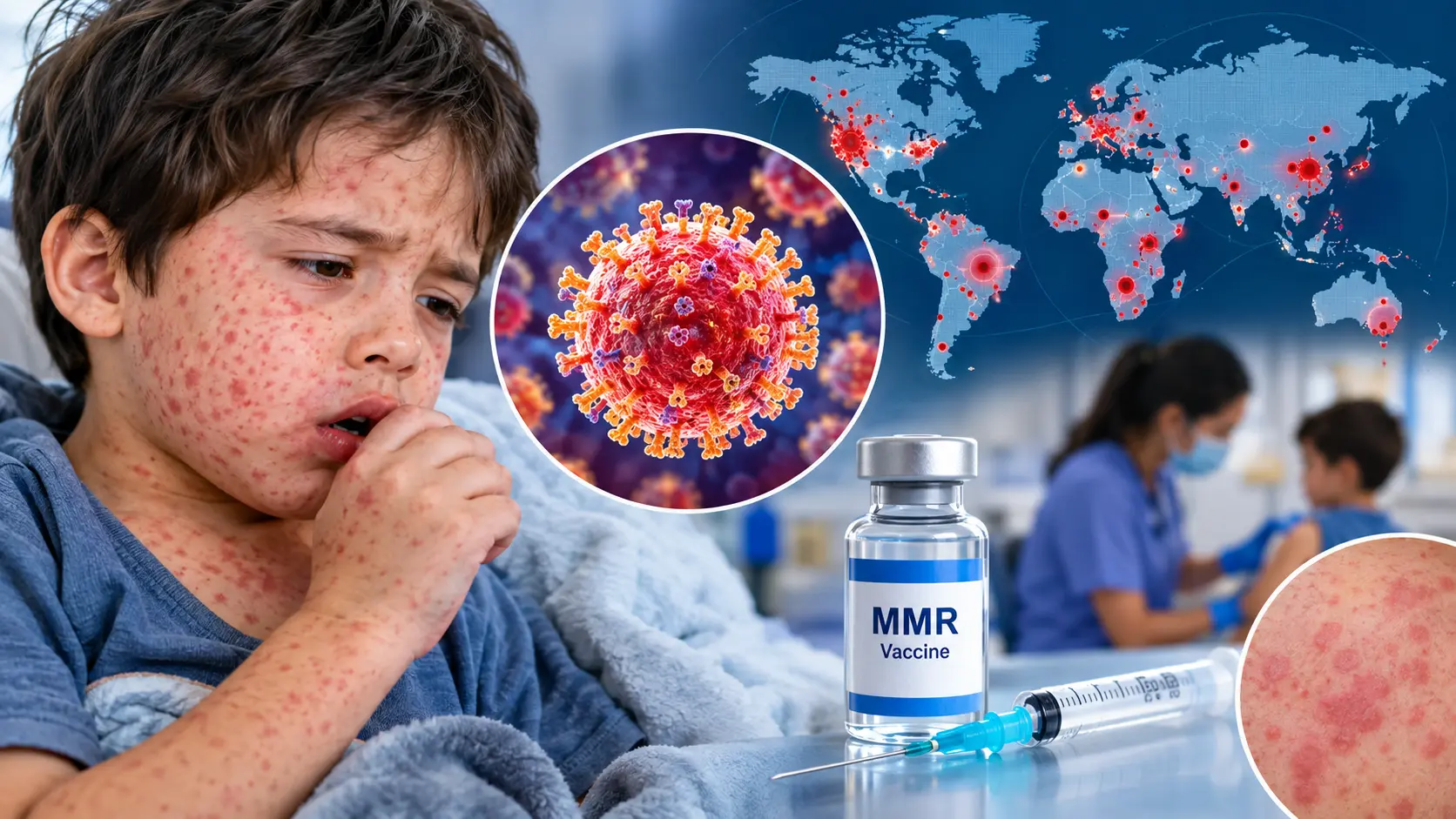
The rash – the telltale sign of measles – is, in fact, one of the final symptoms to appear. It usually erupts three to five days after the start of the first signs of measles.
The rash begins as small red bumps on the face and hairline and then spreads down the neck, trunk, arms, and legs over the next several days. A high fever may peak when the rash first appears, signaling the height of the infection.
The reason it takes this long is that a person can pass on the infection to someone else for four days before the rash appears and up to four days after
Therefore, it is possible for a person to pass on the infection without even knowing it. This accounts for most measles outbreaks in measles-endemic countries with insufficient vaccination coverage.
Where Are New Measles Cases Being Reported Right Now?
This is the part that changes week to week, so treat these numbers as a snapshot rather than the final word. Both the CDC and UKHSA update their figures regularly, and we’ve linked their live trackers below.
United States
As of the week beginning September 15, 2026, the CDC has reported more than 3,470 individual cases of measles in 47 states and territories this year alone. This is the highest number of cases seen in the US in more than three decades. There have already been 39 outbreaks of the disease in 2026, and 95% of all cases reported this year are part of an outbreak, not separate, isolated incidents.
Health officials have particularly raised concern about outbreaks in Texas, New Mexico, Pennsylvania and Virginia, where the latter state saw its first measles-related deaths in 35 years.
Due to outbreaks constantly appearing in different areas, it’s best to check the CDC’s up-to-date measles case map, shown below, for more information on whether the disease is present in your area.
United Kingdom
The situation in England is similar in many ways. As of the latest update from the UK Health Security Agency (UKHSA), more than 700 cases of laboratory-confirmed measles have been reported in England since the beginning of 2026, compared to 959 for the whole of 2025. London remains the epicenter of the outbreak, followed by the West Midlands and the North West, though all regions in England have at least one case this year.
This is not a minor incident, either. The UK has lost its measles elimination status for the first time since 2000, in January this year, after a steady rise in infections since 2023. Tragically, two children in England have died from measles-related causes so far this year.
Why Are Measles Cases Rising Again?
The main reason is vaccination rates. Measles requires a 95% vaccination rate in a given community to achieve herd immunity and prevent outbreaks. There are areas where the vaccination rate of the MMR (measles, mumps, and rubella) vaccine is below this level, which makes entire schools, neighborhoods, and age groups vulnerable to the spread of the disease.
Measles is regarded as one of the most contagious illnesses in the world. The virus can remain airborne and infectious for two hours in a closed room where an infected person has recently been. This means that one person who was exposed to the virus overseas could be responsible for an entire outbreak if they are not vaccinated or do not have natural immunity.
How to Protect Yourself and Your Family
The good news is that protection is simple and well established:
- Check your MMR vaccination status. Two doses of the MMR vaccine are about 97% effective at preventing measles.
- Vaccinate children on schedule. The CDC and UKHSA both recommend the first dose around 12 months old, with a second dose before school age.
- Watch for symptoms after travel. If you’ve recently visited an area with an active outbreak and develop a fever alongside cold-like symptoms, call your GP or healthcare provider before turning up in person, so they can prepare to see you safely.
- Don’t wait on the rash. If you suspect measles, seek advice as soon as the early symptoms appear rather than waiting to see if a rash develops.
Frequently Asked Questions
What are the very first symptoms of measles?
The first symptoms are usually a high fever, cough, runny nose, and red, watery eyes, appearing seven to fourteen days after exposure — before any rash is visible.
How long after exposure does the measles rash appear?
The rash typically appears three to five days after the first symptoms start, so roughly ten to fourteen days after exposure to the virus.
Where are the newest measles outbreaks in the US?
As of September 2026, active outbreaks and case clusters have been reported across dozens of states, with the CDC’s live measles map showing the most current jurisdiction-by-jurisdiction breakdown.
Where are the newest measles outbreaks in the UK?
London, the West Midlands, and the North West of England currently have the highest case numbers, though cases have been confirmed in every English region in 2026.
Is measles contagious before the rash appears?
Yes. A person with measles can spread the virus starting about four days before the rash appears and continuing until about four days after it shows up.
Can adults get measles, or is it just a childhood illness?
Adults can absolutely catch measles, especially if they were never vaccinated or only received one dose. In both the US and UK, a meaningful share of 2026 cases have been in teenagers and adults.
Resources
- CDC – Measles Cases and Outbreaks
- CDC – Measles Signs and Symptoms
- UKHSA Measles Dashboard
- Johns Hopkins US Measles Tracker
- CBS News – 2026 Measles Outbreak Maps
This article is for general information only and is not a substitute for medical advice. If you think you or your child may have measles, contact your doctor or GP surgery before visiting in person.