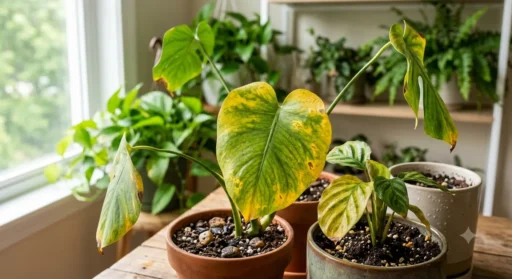
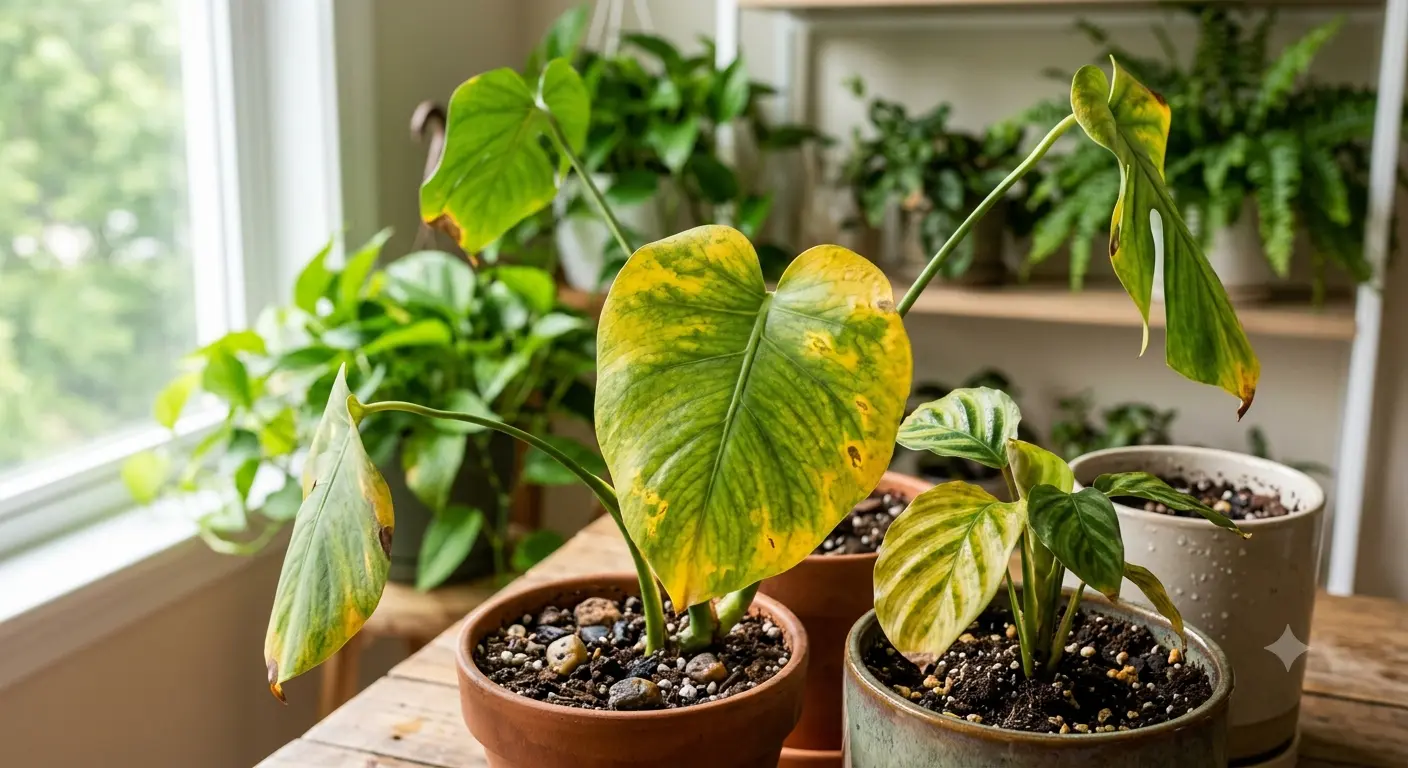

I recently lost a pothos I’d kept alive for four years.
Four years. Through two apartment moves, one brutal winter with a broken heater, and a two-week vacation where I forgot to ask anyone to water it. That plant survived all of it. And then, out of nowhere, it just… started yellowing. Leaf by leaf. Like it had simply decided it was done.
I did what everyone does. I panicked, then Googled “why are my plant leaves turning yellow,” then panicked some more when I realized there were about eleven different possible answers and none of the articles agreed with each other.
So I want to save you that spiral.
I’ve been gardening — badly at first, less badly now — for about fifteen years, and if there’s one thing I’ve learned, it’s that yellow leaves are not one problem. They’re a symptom with a dozen possible causes, and the plant is basically handing you a clue if you know how to read it.
Let’s actually read it.
First, Yellow Leaves Aren’t Always Bad News
Before you spiral like I did, know this: some yellowing is completely normal.
Plants shed their oldest leaves as part of natural aging. If it’s a single lower leaf, on an otherwise healthy plant, going yellow and dropping off — that’s not a crisis. That’s just the plant reallocating energy to new growth. I ignore one yellow leaf. I only start investigating when it’s multiple leaves, or when the yellowing is spreading upward through the plant.
That distinction alone would’ve saved me a lot of unnecessary stress over the years.
The Most Common Culprit: Overwatering
I’ll be honest — overwatering is the reason behind probably 70% of the “help, my plant is yellow” messages I get from friends. It was almost certainly what killed my pothos, if I’m being honest with myself.
Here’s the thing nobody tells beginners: overwatered leaves and underwatered leaves can look nearly identical. Both go yellow. Both can go a little limp. The difference is in the soil.
Stick your finger about two inches into the soil. If it’s soggy or the pot feels heavy and the drainage holes are clogged, you’ve got a watering problem, not a nutrient one. Overwatered roots essentially drown — they can’t access oxygen, they start to rot, and a rotting root can’t deliver water or nutrients to the leaves no matter how much you water it. Which is the cruel irony: people see yellow leaves, assume the plant is thirsty, and water more. That’s exactly the wrong move.
Fix: let the soil dry out properly between waterings, and if you suspect root rot, take the plant out of the pot and check. Rotted roots are brown and mushy, not white and firm. Trim off what’s dead.
Underwatering Does It Too — Just Differently
If the soil is bone dry and pulling away from the edges of the pot, and the yellow leaves feel dry or crispy rather than soft, you’re on the other end of the spectrum.
Underwatered plants usually yellow from the edges inward, and the leaves often curl before they discolor. It’s a more predictable, gradual decline — not the sudden, mushy yellowing you get with overwatering.
Fix: water deeply and consistently rather than little splashes here and there. A thorough soak that reaches the full root ball beats a daily light sprinkle every time.
Nutrient Deficiency — Nitrogen Is the Usual Suspect
This one surprised me when I first learned it. If your older, lower leaves are yellowing uniformly while new growth still looks green and healthy, that’s often a nitrogen deficiency. Nitrogen is mobile within the plant, meaning the plant will actually pull it from older leaves to support new growth when supply runs low. Clever, in a slightly ruthless way.
If instead you’re seeing yellowing between the veins while the veins themselves stay green — almost like a stained-glass pattern — that’s usually an iron or magnesium deficiency instead, and it tends to show up on newer leaves first.
Fix: a balanced liquid fertilizer during the growing season usually resolves nitrogen issues within a couple of weeks. For iron or magnesium, look for a fertilizer that specifically lists micronutrients, not just N-P-K.
Too Much or Too Little Light
I once moved a peace lily into what I thought was a “bright, lovely spot” by a south-facing window. Within a week, it was yellow and crispy at the tips. Too much direct sun had scorched it.
Light issues are often about intensity. Too much direct sun bleaches and yellows leaves, especially on plants that evolved for filtered light beneath a forest canopy — think pothos, philodendrons, peace lilies. Too little light, on the other hand, causes a slower, duller yellowing as the plant struggles to photosynthesize enough to sustain all its leaves.
Fix: know your plant’s native habitat. Most houseplants labeled “low light tolerant” still want bright, indirect light — not a dim corner. Adjust position gradually; moving a plant is a bit of a shock, so give it a few weeks before judging the result.
Temperature Stress and Drafts
This is the one people forget. Plants sitting near an AC vent, a drafty window, or a heating unit can develop yellow, sometimes blotchy leaves purely from temperature swings, even if watering and light are perfect.
Most common houseplants are happiest in a fairly narrow band, and sudden shifts stress them more than you’d expect. I learned this the hard way with a fiddle leaf fig that sat a little too close to a winter windowsill.
Fix: keep plants away from vents, radiators, and drafty doors. Consistency matters more than perfection here.
Pests You Might Be Missing
Sometimes the plant isn’t unhappy with its environment at all — something is actively feeding on it. Spider mites, aphids, and scale insects can all cause yellow speckling or patchy yellowing, and they’re small enough to miss on a casual glance.
Check the undersides of leaves and along stems. Fine webbing usually points to spider mites; sticky residue on leaves often means aphids or scale.
Fix: isolate the plant from others immediately, then treat with insecticidal soap or neem oil, reapplying every week or so until the pests are gone.
So, How Do You Actually Diagnose It?
If I’m being honest, the real skill isn’t memorizing every cause — it’s learning to read the pattern:
- One lower leaf, occasionally → normal aging, don’t worry
- Soggy soil, mushy yellow leaves → overwatering
- Dry soil, crispy yellow leaves → underwatering
- Older leaves yellow uniformly, new growth fine → nitrogen deficiency
- Yellowing between green veins → iron or magnesium deficiency
- Scorched, crispy patches in direct light → too much sun
- Near a vent or drafty window → temperature stress
- Speckled or sticky, undersides suspicious → pests
My pothos, in hindsight, had all the signs of overwatering. I’d gotten complacent after four years of it thriving, and I just kept sticking to the same watering schedule without checking the soil first. Plants change their needs with the seasons; we don’t always adjust with them.
The One Habit That Actually Helps
If there’s one thing I’d tell anyone starting out, it’s this: check the soil before you do anything else. Not the calendar, not your gut feeling — the soil. Most yellow-leaf mysteries solve themselves the moment you actually feel what’s going on beneath the surface.
Plants aren’t subtle once you know what to look for. They’re just talking in a language most of us were never taught to read.
You May Also Like: