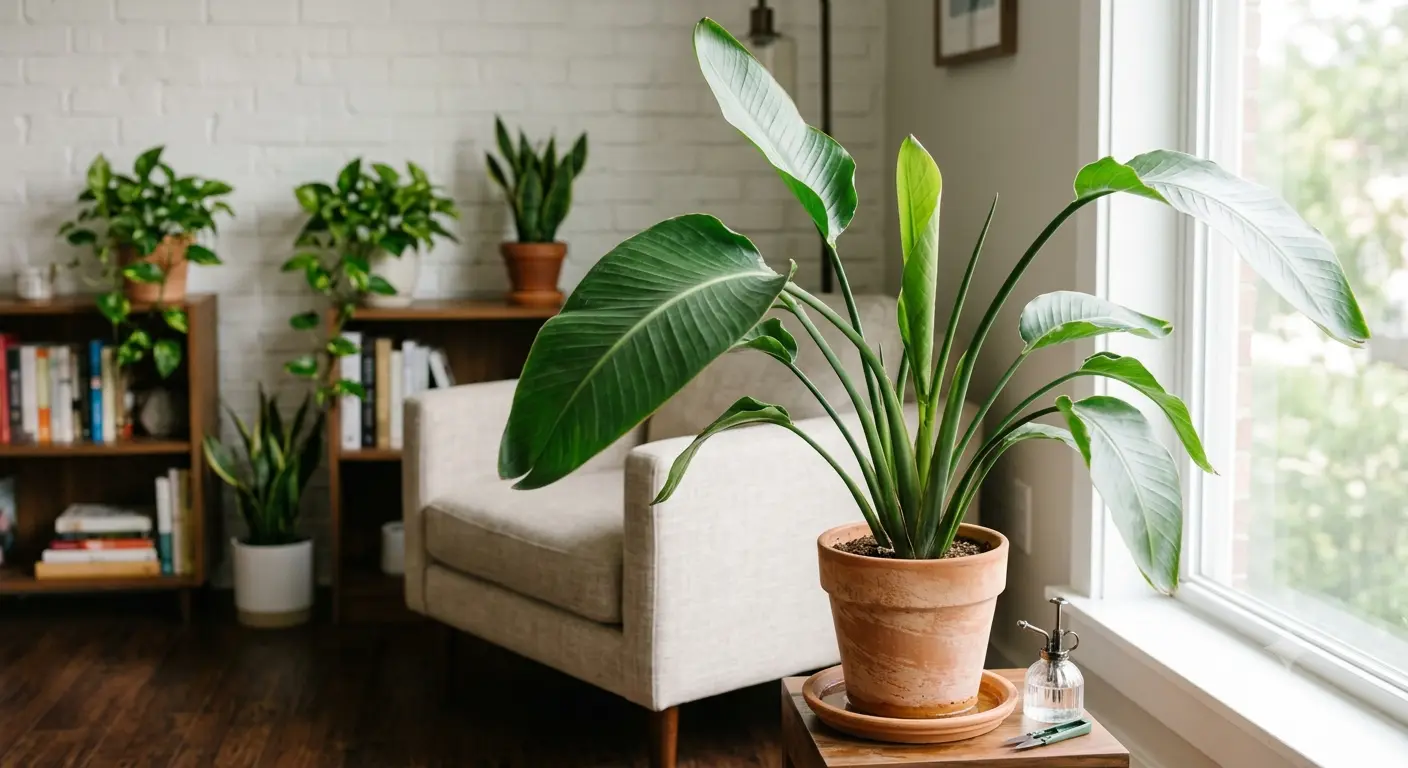

How to Care for a Bird of Paradise Plant? I met a friend of mine a few days ago, though he is much older than me but still he is my friend. When I went to his house I heard about Paradise Plant in great detail. Then I remembered that there is another person whom I know, he is also crazy about Paradise Plant. Then I started researching on it and talked to many people around me. After that I did some research which I am sharing here. If you are also interested in Bird of Paradise Plant then you must read this.
I know a guy — I’ll call him “Bloomless Bruce” in my head, since I’ve never actually asked his name — who has owned the same Bird of Paradise for six years. Six years. He waters it religiously, he’s repotted it twice, he even talks to it, which I respect. And every single time I see him, he says some version of the same thing: “It’s never going to bloom. Some plants just don’t.” He’s said this so many times, with such conviction, that I used to believe him. I figured his plant was defective, or cursed, or one of those unlucky specimens that exists purely to produce leaves and disappoint people.
Then I actually looked into it, and it turns out Bruce’s plant isn’t cursed. It’s just young, underlit, and probably a little too comfortable in a giant pot. A Bird of Paradise (Strelitzia reginae, if you want to sound fancy at your next dinner party) will often take three to five years of steady growth before it’s mature enough to flower at all, and that’s assuming the light and root conditions are actually pushing it toward blooming instead of just surviving. Bruce isn’t cursed. Bruce is impatient, and so, if I’m honest, was I.
Here’s the part I don’t love admitting: I killed my first Bird of Paradise. Not dramatically — no wilting, no drama, no funeral. It just sat there for two years, producing pale, floppy leaves, until I finally accepted it wasn’t thriving and gave it away to a friend with a sunnier apartment. Within a year, in her south-facing window, it tripled in size. That’s when it clicked for me that this plant isn’t difficult, exactly. It’s just honest. It shows you, leaf by leaf, exactly how happy it is with the conditions you’ve given it, and it will not fake enthusiasm it doesn’t feel.
Give It More Light Than You Think It Needs
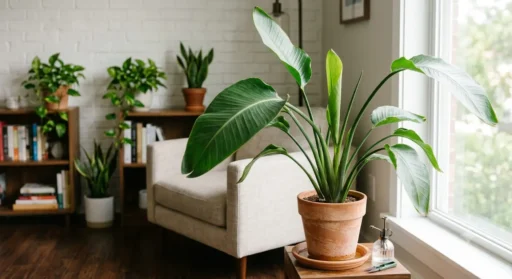
Bird of Paradise plants are native to South Africa, where they grow in full, unapologetic sun. Indoors, that translates to the brightest spot in your home — a south- or west-facing window, ideally with a few hours of direct sun. If your plant is producing tall, thin leaves that flop over like they’ve given up, that’s usually a light complaint, not a watering one. I moved mine from a “bright-ish” corner to a spot that got direct afternoon sun, and the difference in leaf size within a few months was almost embarrassing. It made me wonder how many years I’d spent apologizing to a plant that just wanted a better window.
Water Deeply, Then Actually Leave It Alone
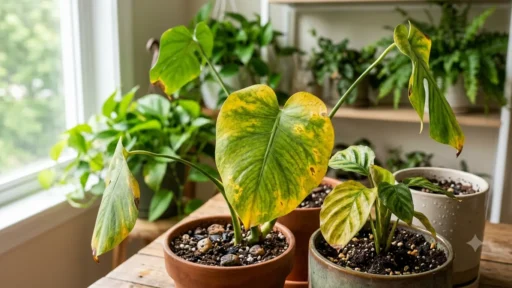
This is where I overcorrected for a while. I treated my Bird of Paradise like a tropical plant that needed constant moisture, and it responded by developing yellow leaves and, at one point, a genuinely upsetting smell near the base. The truth is these plants like a good, thorough soak, followed by a real dry-down — let the top two to three inches of soil dry out before you water again. In winter, when growth slows, stretch that even further. If you’re someone who likes a routine, this is not the plant that will reward you for watering on a fixed schedule. It rewards you for checking.
Feed It During the Growing Season, Then Stop
From spring through late summer, when the plant is actively pushing out new growth, a balanced liquid fertilizer every four to six weeks helps it build the size and energy reserves it needs to eventually flower. Some growers swear by a bloom-boosting formula (higher phosphorus) once the plant is mature, and I’ve started doing this too, though I’ll admit I can’t fully separate the effect of the fertilizer from the effect of finally giving it enough light. Either way, feeding through fall and winter is mostly pointless — the plant isn’t growing enough to use it, and you’re just feeding the soil.
Let It Get a Little Root-Bound Before You Repot
This one surprised me. I assumed, like most people do with houseplants, that a bigger pot meant a happier plant. With Bird of Paradise, it’s closer to the opposite. These plants tend to flower more reliably when their roots are somewhat snug in the pot, which seems to trigger the plant into reproductive mode rather than just producing more leaves. Repotting into a container that’s only slightly larger — a couple of inches, not a dramatic upgrade — every two to three years is usually enough. Bruce, for what it’s worth, repotted his into something enormous the first year he had it. I think that’s part of why he’s still waiting.
Keep It Warm and Skip the Cold Drafts
Bird of Paradise plants are not fans of temperatures below 50°F (10°C), and they’ll let you know with dropped or blackened leaves if they’ve been sitting near a drafty window or an air conditioning vent. If you’re growing yours outdoors in a warm climate (USDA zones 9–11), it can live outside year-round; everyone else should plan on bringing it in before nights get cold, and giving it the sunniest indoor spot available for the winter.
Blooming Is a Reward for Patience, Not a Guarantee of Effort
Here’s the honest, slightly deflating truth: doing everything right doesn’t guarantee flowers on any particular timeline. Maturity matters as much as care. A young plant, no matter how perfectly you treat it, generally won’t bloom before it reaches a certain size and age — usually when it has produced enough leaves and stored enough energy to support a flower stalk. What good care actually does is make sure that when your plant is ready, nothing is standing in its way. I used to think blooming was something you caused. Now I think it’s something you stop preventing.
I still don’t know if Bruce’s plant will ever bloom. I’ve thought about telling him what I learned — the light, the root-bound thing, the patience — but some part of me suspects he’d just find a new reason it’s not working. Maybe that’s not really about the plant either.
You May Also Like: