
I’ve spent a good chunk of my career watching newsrooms make decisions I’d never be trusted to make myself — what leads the broadcast, what gets buried, what gets skipped entirely. You learn, after enough years around this business, that the biggest editorial decision a network ever makes is often the one it doesn’t announce with a press release. It’s just… absence. A show that airs where it always airs, at the time it always airs, as if nothing unusual were happening four channels over.
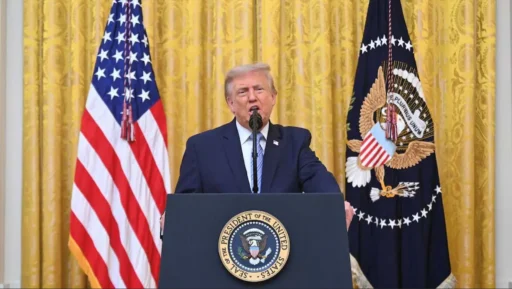
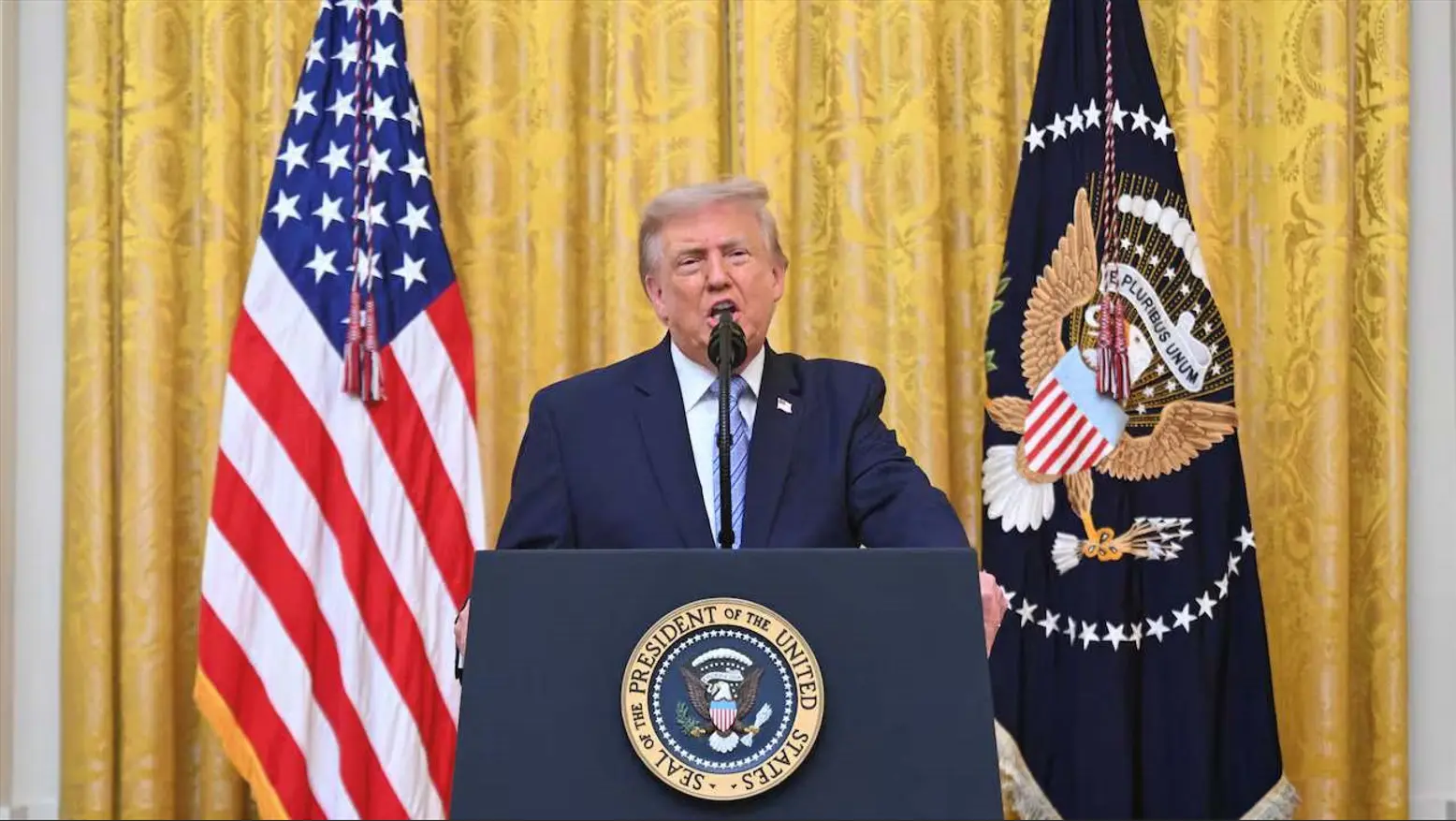
That’s roughly what happened on the evening of July 16, 2026. President Trump delivered a prime-time address from the East Room of the White House on “election security.” ABC and NBC didn’t carry it live on their main broadcast channels. CNN skipped its flagship cable feed too, routing coverage instead to paid digital platforms that reach a fraction of the audience. Fox News aired it. So did C-SPAN, and streaming arms like ABC News Live and NBC News NOW picked it up for anyone willing to go find it. But if you were someone who still turns on channel 4 or channel 7 at eight o’clock because that’s just what you do, you missed it. Or rather, the decision was made for you.
I want to be careful here, because this is the kind of story that gets flattened into a headline before anyone reads past the second paragraph — “networks silence Trump” on one side, “Trump spreads more election lies” on the other. Neither version is quite right, and neither is quite wrong either. Let me walk through what actually happened, because I think the real story is more interesting than either slogan.
What Trump Actually Said
The speech ran about 25 minutes. Trump announced he was declassifying intelligence documents he said revealed “shocking vulnerabilities” in U.S. election infrastructure. The centerpiece claim: that China, beginning around the 2020 election cycle, carried out what he called the largest compromise of election data in American history, allegedly acquiring voter files on roughly 220 million Americans across 18 states. He also cited a Department of Homeland Security figure claiming around 278,000 non-citizens turned up on state voter rolls, and alleged that intelligence officials had buried findings about the China operation rather than briefing him while he was in office.
What he didn’t do, and this matters, was offer specific evidence that any vote, in any state, was actually altered. That’s not my editorializing — it’s the throughline in the reporting from NPR, ABC News, and CNN, all of whom noted that the speech repeated years-old claims about a “stolen” 2020 election without new proof attached to that particular allegation.
It’s also worth knowing that the U.S. intelligence community’s own declassified 2021 assessment found no indication any foreign actor altered the technical process of voting, counting, or reporting results in 2020 — and concluded China had actually chosen not to interfere, out of concern about damaging the broader U.S.-China relationship. Trump’s speech directly contradicts that prior assessment, which is exactly why outlets like CNN flagged the gap between what he said Thursday night and what his own government’s declassified findings have said before.
None of that means the underlying data-security claims are fabricated. Voter registration data breaches are a real and recurring problem, and cybersecurity researchers have documented state voter database intrusions for years. What’s contested isn’t whether data can be vulnerable. It’s whether that vulnerability adds up to the sweeping “stolen election” narrative Trump has been building since November 2020 — and on that, the speech offered assertion, not verification.
Why the Networks Balked
Here’s the part I actually find more journalistically interesting than the speech itself: the networks’ calculus.
Broadcasters aren’t obligated to air a presidential address. That’s settled law — they have editorial discretion, same as any publisher. And this isn’t unprecedented, either direction. In 2022, ABC, CBS, and NBC all declined to air a Biden speech on threats to democracy, on the grounds that it read as more campaign rhetoric than urgent national update. Trump’s own April address on Iran got full broadcast carriage. His July 4th National Mall speech, billed more as a rally, didn’t.
So the pattern isn’t partisan reflex. It’s a judgment call networks make speech by speech: is this news the public needs, or is this a candidate’s closing argument dressed up as an Oval Office moment, four months before a midterm election where control of the House is genuinely in play? Reporting ahead of Thursday’s speech suggested network executives worried this address would land squarely in the second category — especially once word got out that Trump might revive unfounded 2020 fraud claims live, on their air, without a real-time fact-check mechanism built in.
There’s a second layer here too, and it’s the one that made me sit up: this is happening against a backdrop where the administration has been leaning hard on broadcasters generally. ABC’s parent company is facing FCC inquiries. Trump has spent months publicly needling NBC’s parent, Comcast — he’s taken to calling it “Concast” — and has said outright that networks declining to carry his addresses should risk their broadcast licenses. Declining to air Thursday’s speech wasn’t a free decision. It was a decision made knowing it would provoke exactly that kind of response, and it came anyway.
The Part I Keep Coming Back To
I’ve watched, across two decades of doing this work, gatekeeping shift from something visible and singular — the six o’clock broadcast, the one paper on the doorstep — into something quieter and more distributed. Nobody “banned” this speech. It was still available, technically, to anyone with a laptop and the patience to find the right stream. But availability and reach aren’t the same thing, and every editor knows it. Putting something on a paid digital feed instead of a broadcast signal isn’t censorship. It’s also not nothing.
That’s the tension I don’t think either “silenced!” or “just more lies” fully captures. The networks made an editorial call they’re entitled to make, using a standard they’ve applied before, under real political pressure they knew they’d absorb either way. The president made claims that go beyond what his own government’s prior intelligence findings support, using a platform built for exactly that kind of unchallenged reach. Both things happened Thursday night. I’m not sure either institution comes out of it looking as clean as its supporters want to believe.
I don’t have a tidy conclusion for you here, and I’m not going to manufacture one. This story isn’t over — the White House says more documents are coming, Senate Democrats are already asking the intelligence community to weigh in, and there’s a midterm election in November that all of this is very obviously circling. I’ll be watching where it lands. I’d suggest you do too, on whichever channel you can actually find it.
You May Also Read: