

“S&P 500 Market Movement Explained: If you’ve checked the news lately, you’ve probably seen the index mentioned more than once. It’s been a bumpy few weeks. Prices go up, then down, then up again, and it’s easy to feel like you’re missing something important. You’re not. This guide breaks it down in plain English, using real numbers from the last few days, so you know exactly what’s going on and what (if anything) you should do about it.”
What Is the S&P 500, Anyway?
Quick Answer: It’s a list of 500 of the biggest companies in the US, and it’s the number most people mean when they say “the stock market.”
The S&P 500 can be seen as a large basket that contains shares from 500 well known American companies such as Apple, Microsoft and Visa. This is what people usually refer to when they say ‘the market is up/down’. Whilst not perfect it is a decent representation of how well large US businesses are performing.
What’s Been Happening to the S&P 500 Lately?
Quick Answer: It’s been choppy. The index touched a record high near 7,845 points in October, then slipped, then bounced back, then dipped again after some mixed earnings reports.
Here’s the short version of the last two weeks:
- The S&P 500 closed at a fresh record of 7,818.93 points in early October, helped by strong tech stocks and falling bond yields.
- By late October, it had pulled back a touch after a run of disappointing chip-stock results, then rallied again when Anthropic filed paperwork for a stock market listing, which cheered up tech investors.
- On 28 October, the index rose for a third day in a row to 7,743.98 points, as the Federal Reserve held interest rates steady and software giant Oracle jumped 11% on strong results.
- Just a day later, the index dipped again after Alphabet (Google’s parent company) posted weak earnings, even though most individual stocks in the index were still rising that day.
In plain terms: the big picture is calm, but the ride underneath has been bumpy, with a handful of giant tech firms pulling the index around in both directions.
Why Is the Market Moving Like This?
Quick Answer: Three things, mainly: interest rates, Big Tech earnings, and nerves about how much money companies are spending on AI.
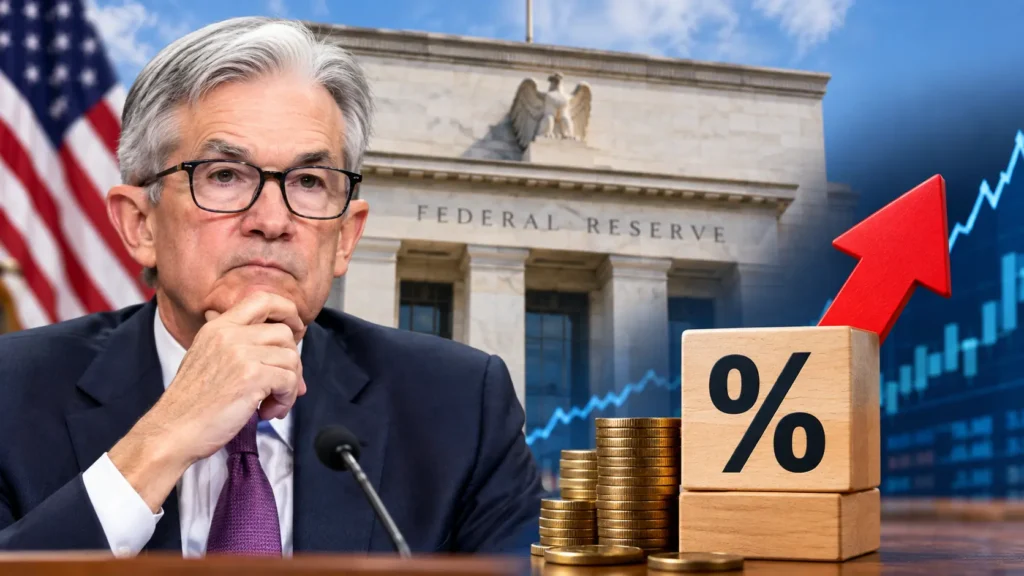
Interest Rates – Following the Federal Reserve voting to keep rates unchanged at 3.75%-4%, two of the committee members would have liked rates to be increased. This indicates that there are still concerns regarding inflation. Traders are currently viewing the possibility of an increase in rates in December as high, sitting above 70% in market tools. An increase in rates will usually mean companies have to pay more to borrow money which can cause share prices to fall.
Big Tech Results – A handful of large technology stocks (Apple, Microsoft, Alphabet, Amazon etc.) make up a large portion of the S&P 500. If any of these stocks report surprising results it can take the index with it. Alphabet reported disappointing results causing it to fall significantly in one day.
AI Concerns – Investors are increasingly asking whether tech companies are over investing in AI with little evidence to show they will make money. This concern has caused chip stocks and AI stocks to be more volatile. Some chip stocks have fallen around 25% from their highs this Autumn.
Should You Be Worried?
Quick Answer: Short-term ups and downs are normal. They’re not usually a reason to panic or change your long-term plan.
Here’s something worth remembering: even with all this back-and-forth, the S&P 500 has still delivered strong gains over the past decade, averaging well above 10% a year. Some analysts at RBC Capital Markets have even said a 5% to 10% pullback wouldn’t be unusual or alarming, just a normal part of how markets breathe after a long run higher.
If you’re investing for something years away, like retirement, a few weeks of choppy headlines matter far less than they feel like they do in the moment.
What Should Investors Actually Do?
Quick Answer: Stay calm, stay diversified, and don’t make big decisions based on one day’s headline.
A few simple, sensible habits tend to serve investors well during periods like this:
- Don’t check your portfolio every single day. Daily swings are mostly noise.
- Avoid putting all your money into one or two “hot” stocks, even famous ones. Spreading your money around (diversifying) softens the impact when any one company has a bad day.
- Keep an eye on the bigger trends, like interest rates and company earnings, rather than single headlines.
- If you’re unsure what any of this means for your own situation, speak to a qualified, regulated financial adviser. This article is general information, not personal financial advice.
Frequently Asked Questions
Is the S&P 500 going to crash?
Quick Answer: Nobody can say for certain. Some pullback is normal after a strong run, but that’s different from a crash.
Why did the market fall after Alphabet’s earnings?
Quick Answer: Alphabet is a large part of the index, so when its shares dropped sharply after weak results, it pulled the overall index down too, even though most other stocks rose that day.
Will the Fed raise interest rates again?
Quick Answer: Markets currently expect a strong chance of a rate rise in December 2026, based on futures pricing, though nothing is confirmed yet.
Is now a good time to invest in the S&P 500?
Quick Answer: That depends on your own goals, timeline, and comfort with risk. For long-term investors, short-term dips are often less important than steady, regular investing over time.
Helpful Resources
- CNBC Markets – daily stock market updates — https://www.cnbc.com/markets/
- Yahoo Finance – live index prices and company earnings — https://finance.yahoo.com/
- Federal Reserve (official site) – official interest rate announcements — https://www.federalreserve.gov/