
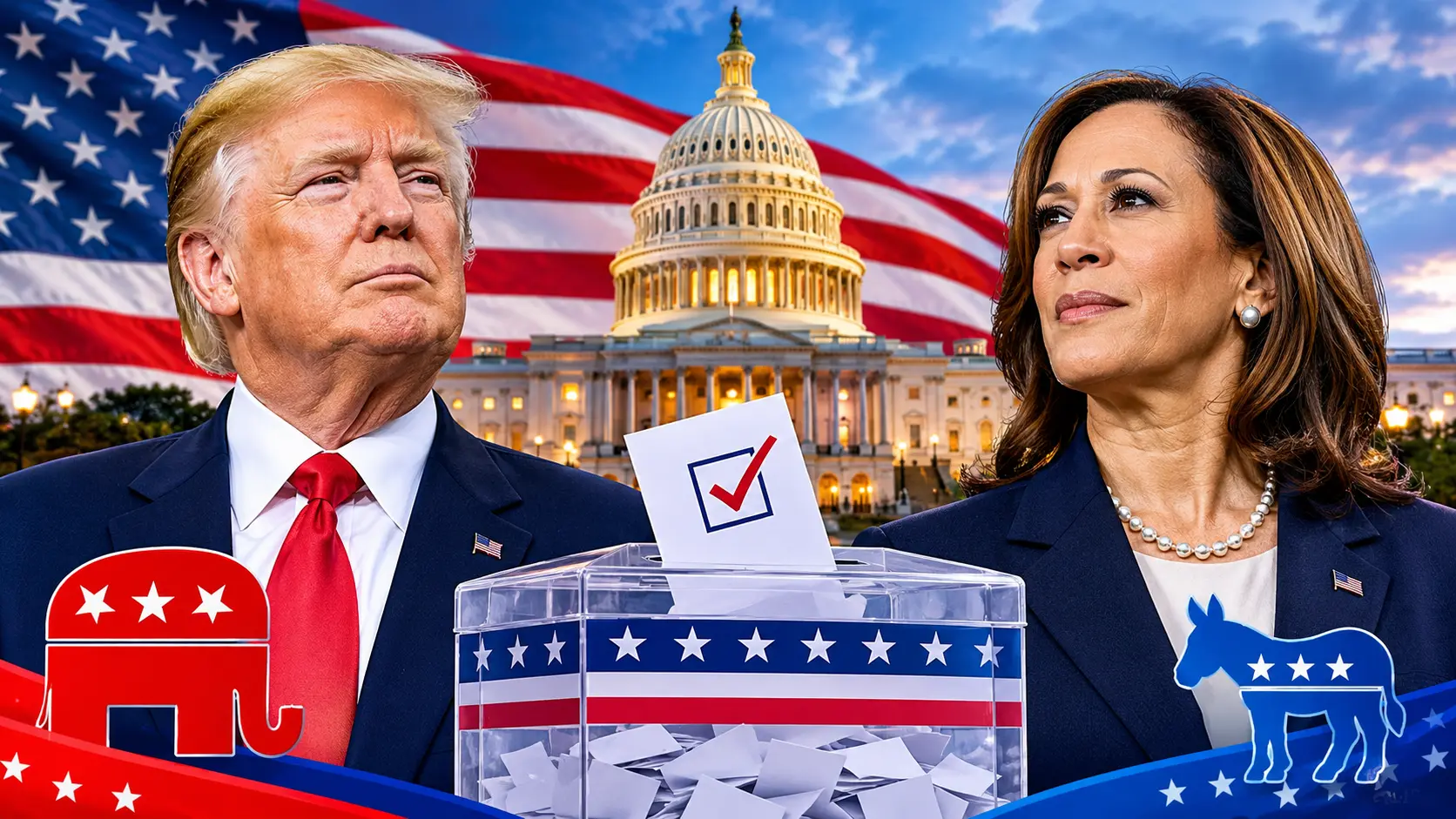

| Quick Answer On 3 November 2026, Democrats won back control of both the US House of Representatives and the US Senate. News networks, including CNN, CBS News and MS NOW, called the results within hours of polls closing. The win ends full Republican control of Congress and sets up two years of divided government under President Trump. |
Election nights can feel confusing, even for people who follow the news closely. Numbers change by the hour, networks “call” races at different times, and everyone seems to have a different opinion on what it all means. This guide breaks down the 2026 US election results in plain terms — what happened, who won, and why it matters for the next two years and beyond.
What Actually Happened on Election Day?
The 2026 mid-term elections took place on Tuesday, 3rd November. All seats within the House of Representatives were contested, along with approximately one-third of the Senate. Midterms are an indicator of how the current president (in this case Donald Trump) is doing roughly halfway into their term.
Overall, there was a clear shift towards supporting the Democratic Party. According to CBS News and MS NOW, the House was won by the Democrats before 10pm Eastern Time. Shortly after this, CNN confirmed that the Senate flipped. By early Wednesday morning, the Associated Press confirmed that the Democrats have taken control of both chambers of Congress for the first time since 2023.
Why Call It a “Blue Wave”?
Analysts are using the term “blue wave” because the size of the swing went beyond what most forecasters expected. Democrats didn’t just win the close races — they flipped several seats in states that had leaned Republican for years.
Who Won the Key Senate Races?
The Senate flip didn’t happen by accident. Several high-profile races went the Democrats’ way, including a few genuine surprises:
- Iowa: Democrat Josh Turek defeated Republican Representative Ashley Hinson.
- Maine: Troy Jackson unseated long-serving Republican Senator Susan Collins.
- Ohio: Sherrod Brown returned to the Senate after winning back his old seat.
- North Carolina: Roy Cooper beat Michael Whatley.
- Michigan: Abdul El-Sayed defeated Mike Rogers, becoming the first Muslim senator in US history.
- New Hampshire: Chris Pappas beat former Senator John Sununu, becoming the first openly gay man elected to the Senate.
- Georgia: Jon Ossoff won re-election, holding the seat for Democrats.
In total, Democrats flipped seven Republican-held Senate seats, several of which the GOP had held for decades.
What About the House?
The Democrats also recaptured the House of Representatives, meaning they have complete control of congress. With the Democratic minority leader Hakeem Jeffries set to become speaker of the house once the new congress begins in January he will make history by becoming the first black speaker of the house if officially elected by his party.
The speaker of the house has complete control over which bills get put to a vote. Having a democratic speaker means that President Trump will struggle to push through his agenda throughout the remainder of his term.
Why Did Voters Swing Towards Democrats?
Political analysts point to a few main reasons, based on exit polling and voter interviews:
1. The economy and affordability. Rising prices and everyday cost-of-living pressure were front of mind for many voters.
2. The war with Iran. Trump-ordered military action against Iran earlier in the year left many Americans uneasy.
3. Approval ratings. Trump’s approval rating had fallen to around 30% in the weeks before the election, according to Pew Research Center polling — a historic low for his second term.
4. Tariffs. Ongoing trade tariffs added to the cost pressures many households were already feeling.
None of these issues worked alone. Together, they built the kind of dissatisfaction that tends to show up at the ballot box during a midterm election.
What Changes Now in Washington?
With Congress split between the parties, the US now enters a period of divided government. Here’s what that actually means in practice:
- Legislation slows down. Big policy changes will need support from both parties, which is harder to secure.
- More oversight. A Democratic-controlled Congress can open investigations into the Trump administration’s decisions.
- Cabinet picks need Democratic votes. Future nominations will require some bipartisan support to pass.
- Messaging over policy. Analysts expect Democrats to use their new power partly to build a platform for the 2028 presidential race, rather than to pass sweeping new laws Trump would veto anyway.
What Does This Mean for 2028?
Midterm results are often read as an early signal for the next presidential race, and 2026 is no exception. A few things stand out:
- Governors matter. Several newly elected Democratic governors, including in swing states, are already being discussed as possible 2028 contenders.
- Arizona is one to watch. The state’s governor will play a direct role in certifying the 2028 presidential election results, which makes that race especially significant.
- Momentum isn’t guaranteed. History shows midterm “waves” don’t always carry over to the next presidential election, so it’s too early to call 2028 based on 2026 alone.
What About the Stock Market?
If you’re wondering whether this affects your money, here’s some context: historically, the S&P 500 has gained an average of 13.7% in the year following a midterm election, with positive returns in 91% of cases. That’s not a guarantee, but it’s a useful bit of history to keep in mind amid the headlines.
Quick Questions and Answers
Q: Who won the 2026 US election?
A: Democrats won control of both the House and the Senate.
Q: When were the results confirmed?
A: Most major races were called within hours of polls closing on 3 November 2026, with the final House call coming early the next morning.
Q: Does this mean Trump is out of office?
A: No. Trump remains president. The midterms only decide who controls Congress, not the presidency.
Q: Will this slow down new laws?
A: Yes. With Congress divided between the White House and Capitol Hill, passing new legislation will generally be harder.
Q: What happens next?
A: The newly elected members of Congress take their seats in January 2027, when the new session begins.
Conclusion
The results of the 2026 US elections represent a significant turning point in Washington. Democrats now control Congress limiting what President Trump can realistically achieve during his final two years in office. However, whether this represents a longer-term trend or will be an aberration will become clearer as we move towards the 2028 election. A split government now means.