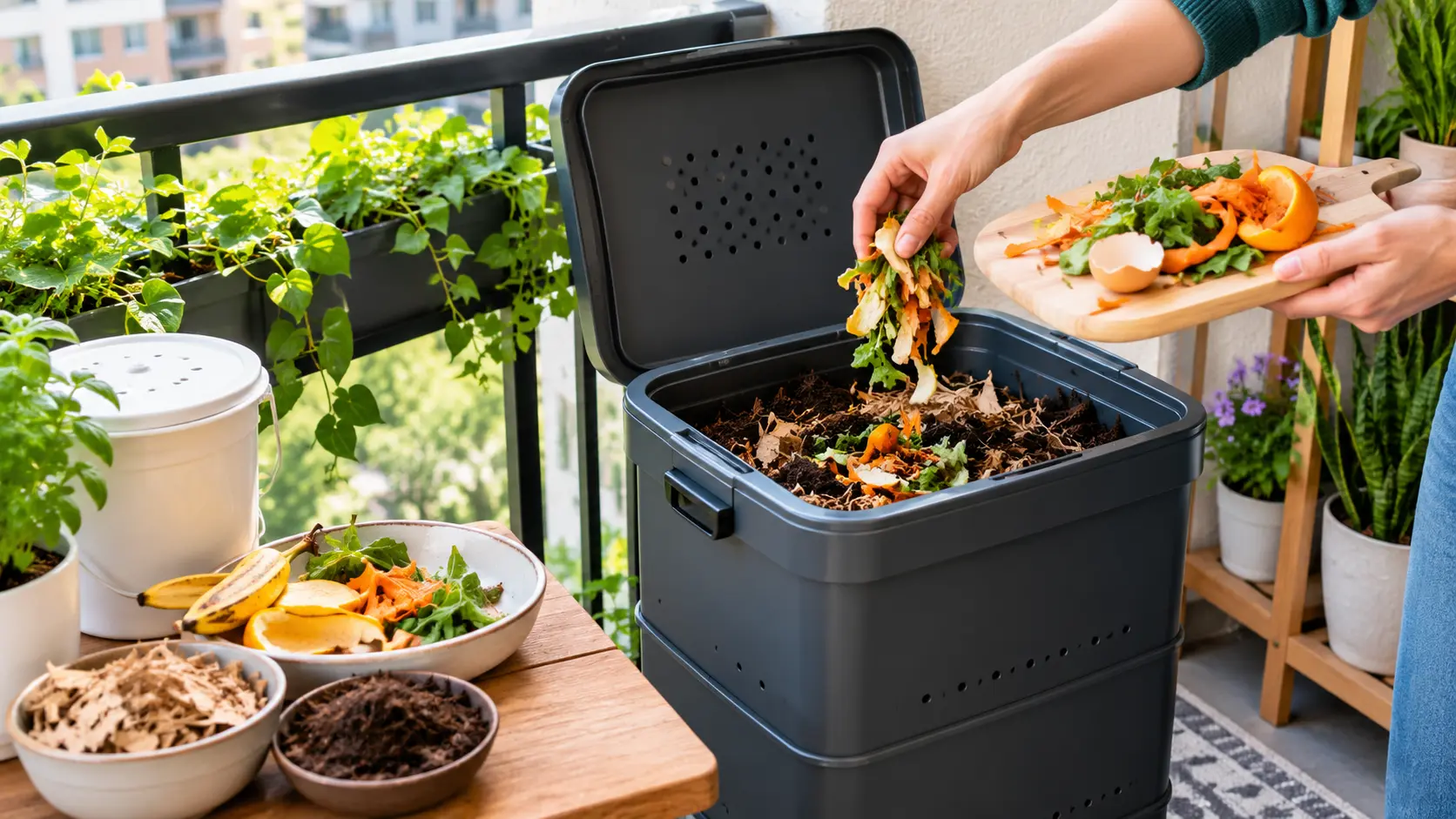

Quick Answer: You can compost smell-free on a balcony by using a sealed bin (a tumbler or bokashi bucket works best), layering wet food scraps with dry “brown” material like shredded paper or dry leaves, and keeping it slightly damp, not soggy. Bad smells come from too much moisture or too little air, not from composting itself.
If you live in an apartment, Balcony Composting Without Smell might sound impossible, but it is actually much easier than you think. Many people believe that composting requires a massive backyard and plenty of open space, but with the right methods, you can easily turn your kitchen scraps into rich fertilizer right on your balcony without attracting pests or causing any unpleasant odors.It is possible to still compost if you live in a flat! Many people believe that you need lots of space and a large backyard to compost, but this isn’t the case. By using the right method you can place your balcony compost bin in a corner of your flat and not even know it is there after weeks! This guide will show you how to do this.
Why Balcony Composting Without Smell Is Achievable (And How to Stop Odors)
Here’s the truth: finished compost smells like soil after rain. Fresh, earthy, a bit sweet. If your bin smells rotten, sour or like ammonia, something is out of balance. Usually it’s one of two things: too much wet food waste and not enough dry material, or not enough air getting in.
Fix the balance, and the smell goes away. That’s really the whole trick.
What You’ll Need to Get Started
You don’t need much to start composting on a balcony:
- A sealed compost bin, tumbler or bokashi bucket
- Kitchen scraps (fruit and veg peels, coffee grounds, eggshells)
- A “brown” material like shredded cardboard, dry leaves or newspaper strips
- A small trowel or stick for mixing
- A spot that’s shaded from strong afternoon sun
That’s it. No garden needed.
Step-by-Step: Composting on a Balcony Without Smell
- Pick a sealed container. A compost tumbler or a bokashi bucket with a tight lid works best for flats, since the seal is what keeps smell locked in.
- Collect your scraps in the kitchen first. Keep a small lidded caddy by the sink for peels, cores and coffee grounds. Empty it into your balcony bin every day or two.
- Always add a layer of “browns” after your scraps. A handful of shredded paper or dry leaves on top of wet scraps soaks up extra moisture and stops smell escaping.
- Keep it as damp as a wrung-out sponge. Not dripping wet, not bone dry. Add a splash of water if it looks dusty; add more browns if it looks soggy.
- Mix it every few days. Give it a stir or a spin (if using a tumbler) to let air in. Air is what keeps the process fresh instead of rotten.
- Check your balcony’s weight limit. A full compost bin gets heavy, so keep it to a manageable size and check your building rules before you start.
- Leave it to finish. Depending on the method, you’ll have usable compost in anywhere from two weeks (bokashi) to a few months (tumbler).
Browns vs Greens: The Real Secret to No-Smell Compost
Composting is really just a balancing act between two types of material.
| Type | Examples | What It Does |
| Greens (wet, nitrogen-rich) | Fruit and veg scraps, coffee grounds, tea bags | Feeds the process, but holds moisture |
| Browns (dry, carbon-rich) | Shredded paper, cardboard, dry leaves | Soaks up moisture and lets air through |
A good rule of thumb, backed by the US Environmental Protection Agency, is roughly two to three parts browns for every one part greens. Too many greens and not enough browns is the single biggest reason balcony compost starts to smell.
Best Composting Methods for Small Balconies
Compost Tumbler: A sealed tumbler with a stand. Ideal for a basic and easy way to make compost, although will take a few months. If sealed properly it will have little smell.
Bokashi Bucket: Using a bucket with specially treated bran, this is a Japanese method of making compost by fermentation. This can deal with cooked foods, meats and dairy which regular compost cannot. As it is sealed there is very little smell. Compost ready in around 2 weeks but the scraps still need to be broken down in soil.
Worm Bin (Vermicomposting): Using a series of stacked trays with red wiggler worms. This is very quiet and small. When balanced properly there is little smell. Great for making finished compost with no machines.
What to Compost (and What to Leave Out)
Safe to add: fruit and veg scraps, coffee grounds and filters, tea bags, crushed eggshells, shredded paper, cardboard, dry leaves.
Best avoided (especially if smell is your main worry): meat, dairy, oily or greasy food, and citrus peel in large amounts. These break down slowly and are the most likely to smell or attract pests. Bokashi is the exception, since it can handle most of these safely.
Troubleshooting: Fast Fixes for Common Smells
| Smell | Likely Cause | Quick Fix |
| Sour or rotten | Too wet, not enough air | Add dry browns and mix well |
| Ammonia-like | Too many greens | Add shredded paper or cardboard |
| Sticky, heavy texture | Too much moisture | Leave the lid cracked open; add dry leaves |
| Nothing is breaking down | Not enough greens or water | Add fresh scraps and a little water |
Quick FAQs
Can I really compost on a balcony without it smelling?
Yes. A sealed bin with the right browns-to-greens balance produces little to no smell.
How often should I empty my kitchen caddy?
Every one to two days, so scraps don’t sit and start to smell before they even reach the bin.
Will my balcony compost attract pests?
Rarely, if it’s sealed and you avoid meat, dairy and oily food (unless you’re using bokashi).
How long until I get finished compost?
About two weeks with bokashi, and two to three months with a tumbler or worm bin.
What do I do with finished compost if I don’t have a garden?
Mix it into pots for balcony plants, or share it with a community garden or local allotment.
Final Thought
Once you’ve got your head around the balance of wet to dry and air to moisture, balcony composting is easy! Start off small and monitor it closely for the first couple of weeks. Once you get into the swing of things you should be able to tell how it’s doing. After a month you should have lovely rich compost with no complaints from your neighbours!