

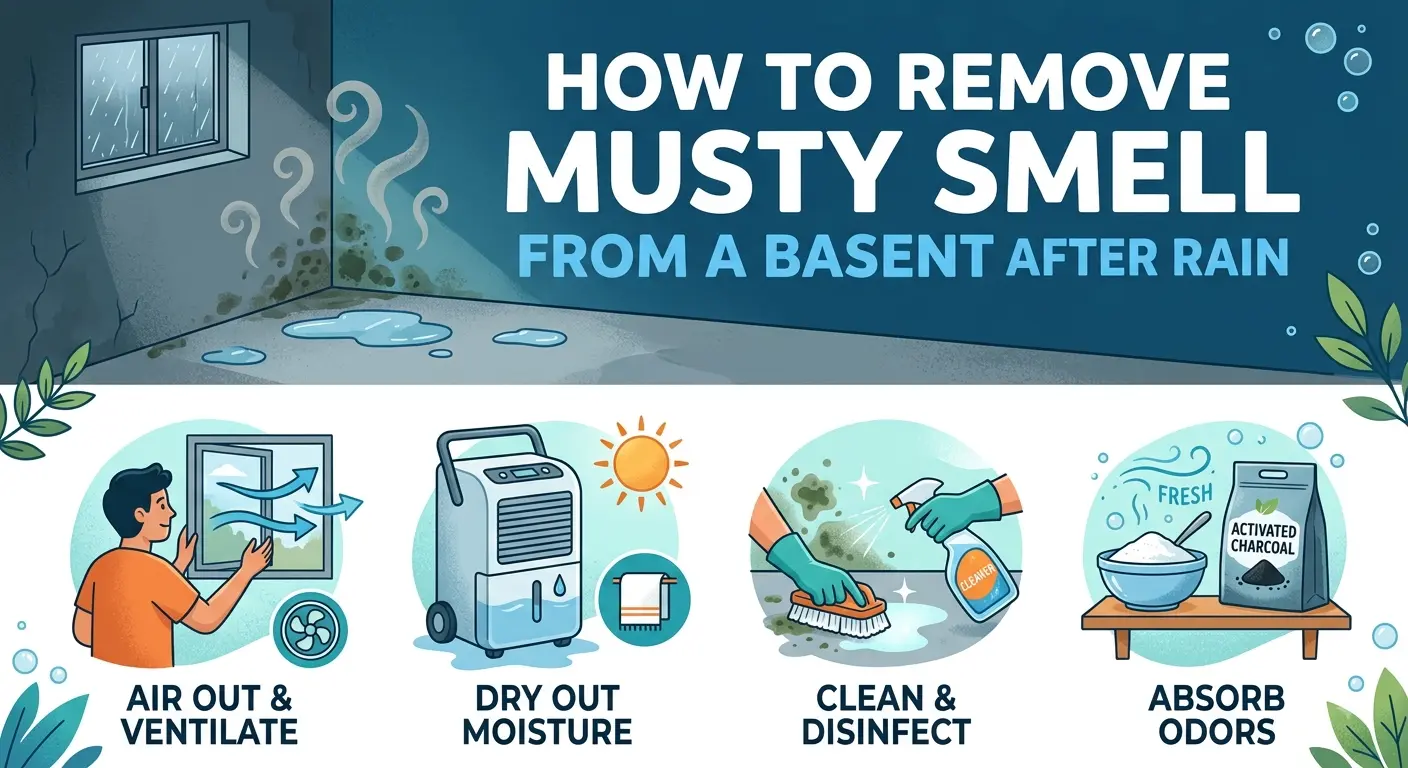

A musty smell in the basement after rain almost always means moisture is getting in and has nowhere to go. The fix is to find where the water or humidity is entering, dry the space out completely, clean any affected surfaces, and then improve airflow so the basement can’t hold onto moisture the next time it rains.
That’s the short version. The longer version is that a musty smell is a symptom, not the actual problem, and treating the smell without dealing with the moisture behind it is why the odor tends to come right back after the next storm.
Why Does a Basement Smell Musty After It Rains?
A basement smells musty after rain because rainwater is either seeping into the space directly or raising the humidity inside it enough for mold, mildew, and bacteria to start growing on damp surfaces. Basements sit below grade, meaning the surrounding soil is often at or above the level of the basement walls and floor, so they’re naturally more exposed to groundwater and surface runoff than any other room in the house.
That musty odor itself is a byproduct of microbial growth. Mold and mildew release compounds called microbial volatile organic compounds, or MVOCs, as they feed and grow, and it’s these compounds that produce the earthy, damp smell most people associate with a “basement smell.” If you can smell it, there’s a good chance there’s active moisture somewhere, even if you can’t see it.
What Causes the Musty Smell to Show Up Specifically After Rain?
The smell tends to show up or get stronger after rain because heavy or prolonged rainfall increases the amount of water pressing against your foundation and the amount of moisture in the air around your home. A few common sources are usually responsible:’
- Foundation cracks or gaps that let water seep through the walls or floor slab during or after a storm
- Poor grading around the house, where the ground slopes toward the foundation instead of away from it, directing rainwater straight at the basement walls
- Clogged or damaged gutters and downspouts that overflow near the foundation instead of carrying water away from the house
- A failing or absent sump pump system, which allows groundwater to accumulate under the slab and seep upward
- High indoor humidity that spikes after rain, even without any visible leak, because outdoor humidity rises and seeps in through the concrete itself
Concrete is porous, so even a basement with no visible leaks can absorb ambient moisture through the walls and floor during and after wet weather. That’s why some basements smell musty after rain without any obvious puddle or water stain to point to.
How Do You Get Rid of the Musty Smell in a Basement After Rain?
You get rid of a musty basement smell by removing the source of moisture first, then drying and cleaning the space, and finally addressing air circulation so humidity doesn’t build back up. Air fresheners, candles, and odor sprays only mask the smell temporarily because they don’t touch the underlying moisture or the mold and bacteria producing the odor.
Step 1: Find Where the Moisture Is Coming From
Walk the basement after a rain event and look for visible water, damp patches on walls or floor, peeling paint, efflorescence (a white, chalky mineral deposit left behind as water evaporates through concrete or masonry), or a musty smell concentrated in one corner. Check window wells, sump pump areas, and any spots where pipes or utility lines enter the foundation, since these are common entry points.
Step 2: Remove Standing Water and Wet Materials
If there’s standing water, remove it with a wet/dry shop vacuum or a sump pump before doing anything else. Pull up and discard any wet cardboard, carpet padding, or porous items that have been sitting in moisture for more than 24 to 48 hours, since these materials are difficult to fully dry and tend to hold onto mold spores even after the surface looks dry.
Step 3: Dry the Space Completely
Run a dehumidifier and, if possible, a few fans to circulate air across damp walls and floors. Basements should generally be kept below 50% relative humidity to discourage mold growth, so a dehumidifier with a built-in humidity reading is worth using if you have persistent moisture issues. This step can take anywhere from a day to several days depending on how much water was involved and how well the space is ventilated.
Step 4: Clean Affected Surfaces
Once the area is dry, clean hard, non-porous surfaces such as concrete, tile, or sealed masonry with a solution of water and a mild detergent, or a diluted household cleaner labeled for mold and mildew. Scrub visible mold or mildew stains, then rinse and allow the surface to dry fully again. Porous materials that have visible mold growth, such as drywall or wood, often need to be cut out and replaced rather than cleaned, since mold can grow into the material itself.
Step 5: Address the Underlying Water Source
Cleaning and drying won’t hold if water keeps getting in. Depending on what you found in Step 1, this might mean sealing foundation cracks with an appropriate masonry sealant, regrading soil so it slopes away from the house, clearing and extending downspouts, or installing or servicing a sump pump. This is the step that actually determines whether the smell returns after the next storm.
Step 6: Improve Ongoing Ventilation and Humidity Control
Once the immediate problem is handled, keep air moving through the basement with a fan, a dehumidifier, or, in finished basements, a properly sized HVAC vent. Stagnant, still air is one of the main reasons basements stay musty even after a leak has been fixed, because trapped moisture has nowhere to go.
Can You Just Use a Dehumidifier Instead of Fixing the Leak?
A dehumidifier can reduce a musty smell caused by general humidity, but it won’t solve a smell caused by an active leak or seepage point. If water is physically entering the basement, a dehumidifier is treating a symptom while the actual source keeps introducing more moisture than the unit can remove. It’s a useful tool for day-to-day humidity control, but it isn’t a substitute for fixing cracks, poor grading, or gutter problems.
Should You Worry About Mold If the Basement Smells Musty?
A musty smell is a reasonable sign that mold or mildew could be present, even if you can’t see it, since the smell itself comes from compounds these organisms release as they grow. That doesn’t mean every musty basement has a serious mold problem, but it’s worth treating the smell as a signal to inspect the space rather than something to ignore or simply cover up with an air freshener.
Visible mold, a smell that persists despite cleaning and drying, or any household member developing unexplained allergy-like symptoms (sneezing, coughing, itchy eyes) that improve when they’re away from the basement are all reasons to take the situation more seriously and consider a professional mold inspection.
How Long Does It Take for the Musty Smell to Go Away?
If the moisture source is minor and gets addressed quickly, the smell often fades within a few days of thorough drying and cleaning. If the basement has been damp for an extended period, or if mold has had time to establish itself in porous materials like drywall, carpet, or wood framing, the smell can persist until those materials are removed and replaced, even after the space is dry.
How Can You Prevent the Musty Smell From Coming Back After Future Rain?
Preventing the smell from returning comes down to keeping water away from the foundation and keeping indoor humidity low year-round, not just after a storm. A few practical habits make a real difference:
- Clean gutters and downspouts regularly so rainwater is actually carried away from the house instead of pooling near the foundation
- Check that the ground around your foundation slopes away from the house, and add soil if low spots have formed over time
- Run a dehumidifier during humid months, even without an active leak, to keep relative humidity below roughly 50%
- Inspect the basement after any heavy rain, rather than waiting until you notice a smell
- Avoid storing cardboard boxes, fabric, or other absorbent materials directly on a basement floor, since they’re quick to trap moisture and slow to dry
When Should You Call a Professional?
It’s worth calling a professional if water is actively entering the basement through visible cracks, if the musty smell returns repeatedly despite cleaning and drying the space, if you find mold covering an area larger than roughly a few square feet, or if you’re dealing with a finished basement where damage may be hidden behind walls or flooring. A waterproofing contractor can identify structural entry points that aren’t obvious from a simple walkthrough, and a mold remediation specialist has equipment and testing methods that go beyond what’s practical for a DIY cleanup. If anyone in the household has a compromised immune system or respiratory condition, it’s also reasonable to involve a professional sooner rather than later, since they can assess air quality more thoroughly than a smell test alone.
Frequently Asked Questions
Does bleach get rid of musty basement smells for good?
Bleach can kill surface mold on hard, non-porous materials, but it doesn’t address the moisture causing the smell and generally isn’t effective on porous materials like drywall or wood, since it can’t penetrate deep enough to kill mold growing inside them. Without fixing the moisture source, the smell typically returns.
Is it normal for a basement to smell musty sometimes, even without a leak?
Occasional mild mustiness can happen in basements due to their below-grade location and naturally higher humidity, but a strong or persistent smell usually indicates a moisture problem that’s worth investigating rather than something to consider normal.
Can an air purifier fix a musty basement smell?
An air purifier can help reduce airborne mold spores and improve overall air quality, but it doesn’t remove moisture from surfaces or address the source of the smell, so it works best alongside dehumidification and cleaning, not as a replacement for them.
Why does the smell get worse in summer even without rain?
Higher outdoor humidity in summer months can raise indoor humidity levels in a basement even without direct water intrusion, since basements are naturally cooler and tend to hold onto ambient moisture more than other parts of the house.
How do I know if the smell is mold or just dampness?
A general damp smell without visible growth often points to humidity alone, while a stronger, more persistent musty odor combined with visible spotting, discoloration, or a stronger smell near specific surfaces is more likely to indicate active mold or mildew growth on that surface.