

I Set an Alarm for 5 A.M. to Watch a Rocket Do Something It’s Done 599 Times Before
I am a tech guy, at least that’s what my browser history says. Tab after tab of launch trackers, weather squadron forecasts, droneship tracking accounts nobody sane should be following. That’s the box most people who know me would put me in without thinking twice. But here’s the thing about that box: I didn’t set an alarm for 5:10 a.m. on a Tuesday because I care about rockets in the abstract. I set it because somewhere between the third and the fourth coffee, I started caring about one specific piece of metal — a booster with a tail number, a résumé, a body that has been to space and back twenty-seven times and was about to go for a twenty-eighth.
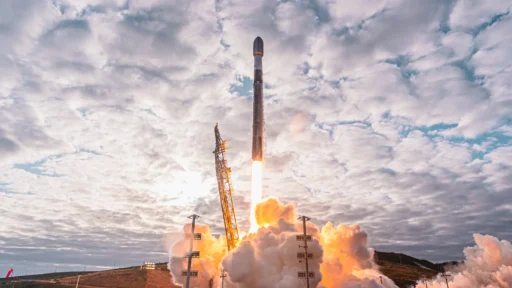
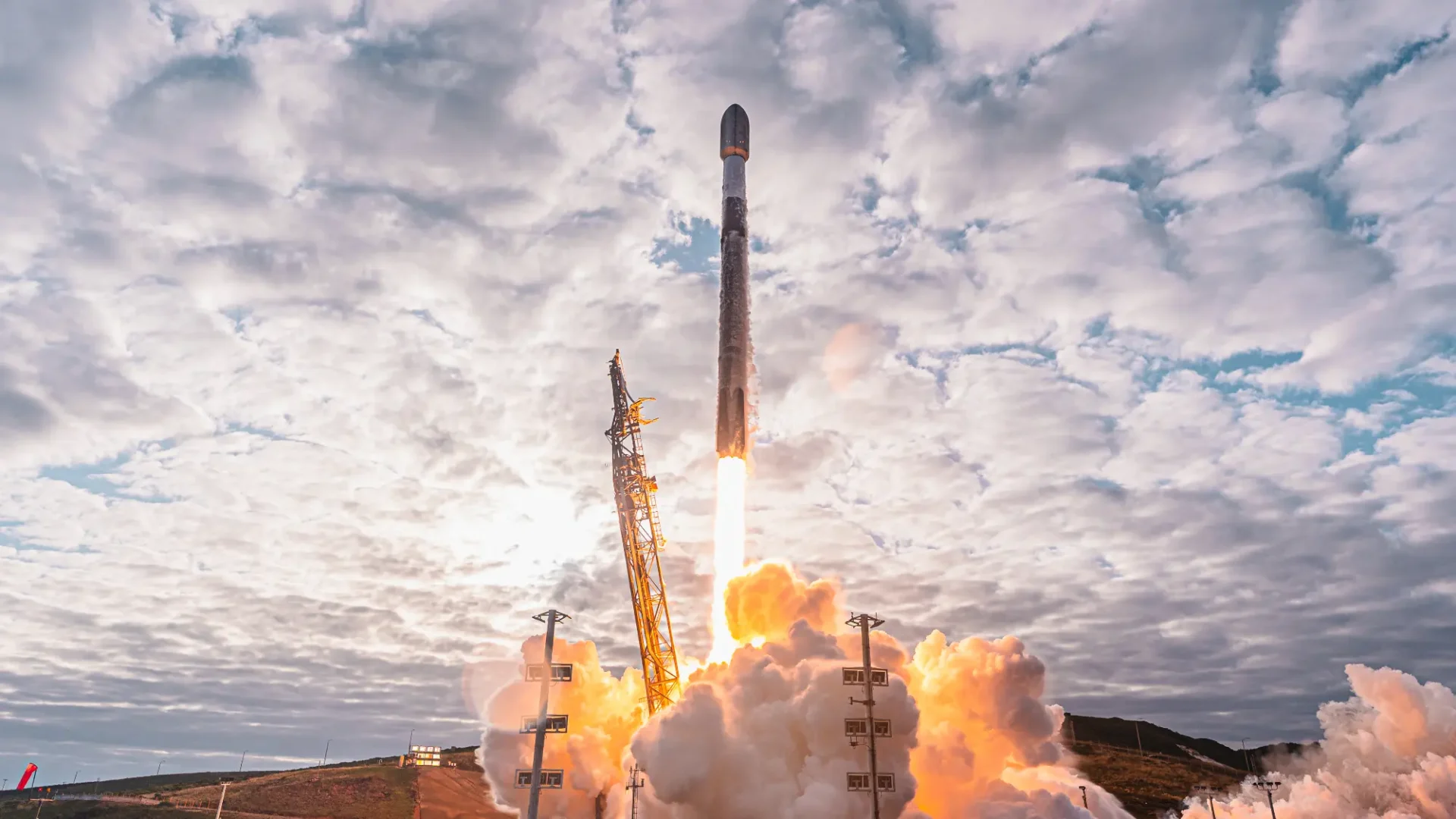
Its name is B1080. And on the morning of July 14, it flew again, carrying 29 Starlink satellites off the pad at Space Launch Complex 40 in Cape Canaveral, and in doing so, it helped SpaceX cross a number that sounds almost bureaucratic until you sit with it: the 600th reuse of a Falcon rocket booster.
Not the 600th launch. The 600th reuse. Which is a different, quieter kind of milestone — one that doesn’t get the fireworks treatment because it’s not a first, it’s a six-hundredth. And that, weirdly, is the part that got me.
The Mission, Because Facts Still Matter
Here’s what actually happened, stripped of my feelings about it: SpaceX launched the Starlink 10-45 mission from Cape Canaveral Space Force Station, lifting off at roughly 5:10 a.m. EDT (0910 UTC), riding a north-easterly trajectory out over the Atlantic. Aboard were 29 more Starlink satellites, folded into the fairing like something out of a packing-efficiency ad, headed to join a constellation that now numbers north of 10,700 spacecraft in low Earth orbit. That’s not a typo I’m going to dwell on — it’s a number that would have sounded like science fiction a decade ago and now barely makes a headline unless there’s a “600th” attached to it.
The booster doing the heavy lifting, B1080, was flying its 28th mission. Its résumé is genuinely wild if you read it slowly: two Axiom Space crew flights carrying private astronauts to orbit, the European Space Agency’s Euclid observatory, Northrop Grumman’s NG-21 cargo run to the space station, and a long tail of Starlink missions in between. This is not a rocket that’s been babied. This is a rocket that’s been worked.
About eight and a half minutes after liftoff, B1080 was targeted to come home — not to a hangar, not to a museum, but to a drone ship called A Shortfall of Gravitas, parked out in the Atlantic waiting to catch it. If the landing held, it would mark the 161st touchdown on that particular vessel and the 638th successful booster landing in SpaceX’s history. And somewhere in that sequence of numbers sits the one that actually stopped me mid-scroll: 600 reuses of a Falcon booster, full stop. Not one rocket flying 600 times — the program, collectively, having asked its boosters to come back and fly again 600 separate times, and having them say yes.
The Thread I Actually Wanted to Pull
I’ve been trying to figure out why this particular number hit different, and I think it’s because reuse was never supposed to be boring. When SpaceX first landed a Falcon 9 booster back in 2015, it was treated like a magic trick — a thing you replayed in slow motion, a moment people teared up over. Aka: reusability was the plot twist. Now it’s the premise. Nobody live-tweets the 600th reuse the way they live-tweeted the first one, and that’s not a failure of the milestone, that’s the milestone working.
There’s an economics thread here that I think is the more honest story, even if it’s less romantic than “rocket comes home.” Reused boosters are estimated to cut launch costs by as much as 65 percent compared to flying a new one every time — and that math, multiplied across hundreds of Starlink missions, is basically the mechanism by which SpaceX turned a wildly expensive habit into a business that could plausibly go public. I went in wanting to write about the poetry of a booster “coming home.” I’m leaving having written, mostly, about spreadsheets. That’s the trade the space industry keeps making right now — awe, quietly converting into infrastructure.
And maybe that’s fine. Maybe that’s actually the whole point of reusability: it’s supposed to become unremarkable. The Space Shuttle flew 135 missions across three decades and never got close to a booster flying 28 times on its own, let alone a fleet-wide 600. SpaceX didn’t just beat that number, it made it a Tuesday.
Where I Land, Which Is to Say: I Don’t, Fully
I don’t have a tidy ending for this one, because the story itself doesn’t have one — it’s a counter that keeps ticking up, mission after mission, satellite after satellite, until 600 becomes 700 becomes some number none of us will bother writing an article about. Maybe that’s the real milestone. Not the launch. Not the landing. The fact that I set an alarm for a rocket doing something routine, and somewhere in the routine, I found the thing worth writing about at all.
B1080 is back on Earth now, presumably being checked over for flight number 29. I’ll probably be up early again when it goes.
You May Also Read: