

I haven’t slept through a full night without waking up at least once in probably eight years, and I’ve made peace with the fact that I might just be one of those people who checks the ceiling at 3 a.m. for sport. I used to think it was a willpower problem — like if I just wanted sleep badly enough, my body would cooperate. It doesn’t work that way. Turns out a huge chunk of it comes down to something so unglamorous it’s almost insulting: what I ate three hours earlier.
I found this out the hard way, through my friend Alina, who used to text me at midnight with the same message every time — “up again, brain won’t shut off” — usually right after a dinner that was basically a spice-and-caffeine bomb disguised as biryani. She’d ask me what to do about it, and I’d say the obvious thing everyone says: “cut the caffeine after 2 p.m.” She’d roll her eyes at that (over text, somehow you can tell). “I know that, obviously. I mean what do I actually eat.” That question sent me down a rabbit hole of sleep nutrition research that I honestly didn’t expect to find so interesting, and here’s what stuck.
Tart cherries, and specifically the juice, not the candy version
This one surprised me the most. Tart cherries — Montmorency cherries, if you want the technical name — are one of the only food sources that naturally contain melatonin, the hormone your brain releases to signal “okay, it’s night now.” A small glass of tart cherry juice about an hour before bed has actually been studied for improving both sleep duration and sleep quality in adults with insomnia. It’s not a knockout drug. It’s more like giving your body’s own bedtime signal a little nudge instead of overriding it, which honestly feels like the more sustainable way to think about sleep anyway.
A handful of almonds or walnuts (aka the “boring but it works” snack)
Almonds have magnesium, walnuts have both magnesium and a small amount of melatonin themselves, and magnesium is the mineral your nervous system uses to downshift out of “alert” mode. Low magnesium intake has been linked to poorer sleep quality and more nighttime waking — which, if you’ve ever laid awake at 3 a.m. wondering why your brain won’t stop replaying an email you sent in 2019, might explain more than you’d think. A small handful, not a bowl. This is a bedtime snack, not dinner round two.
Kiwi, weirdly enough
There’s a small but genuinely interesting study out of Taiwan where adults who ate two kiwis an hour before bed for four weeks fell asleep faster and slept longer than they had before. Researchers think it’s the combination of serotonin and antioxidants in the fruit, though nobody’s fully cracked why kiwi specifically outperforms other fruit in these trials. I don’t have a poetic explanation for this one. Sometimes the science is just “huh, that’s neat” and you take the win.
Fatty fish — salmon, specifically, if you’re already eating dinner late
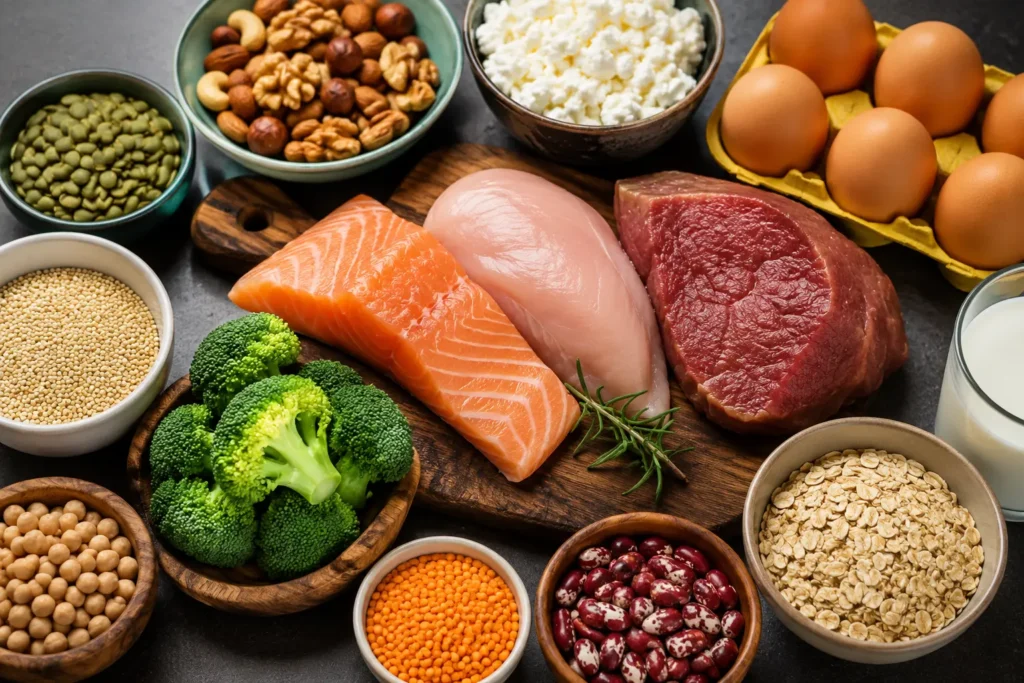
Salmon (and other fatty fish like mackerel or trout) is rich in both vitamin D and omega-3 fatty acids, and there’s research suggesting the combination helps regulate serotonin production, which your body eventually converts into melatonin. This is more of a dinner strategy than a midnight snack strategy — nobody wants salmon at 11 p.m. — but if sleep is a priority, it’s worth thinking about what’s on the plate three or four hours before bed, not just what you’re not eating right before you lie down.
Warm milk, and this one’s actually not just your grandmother being right
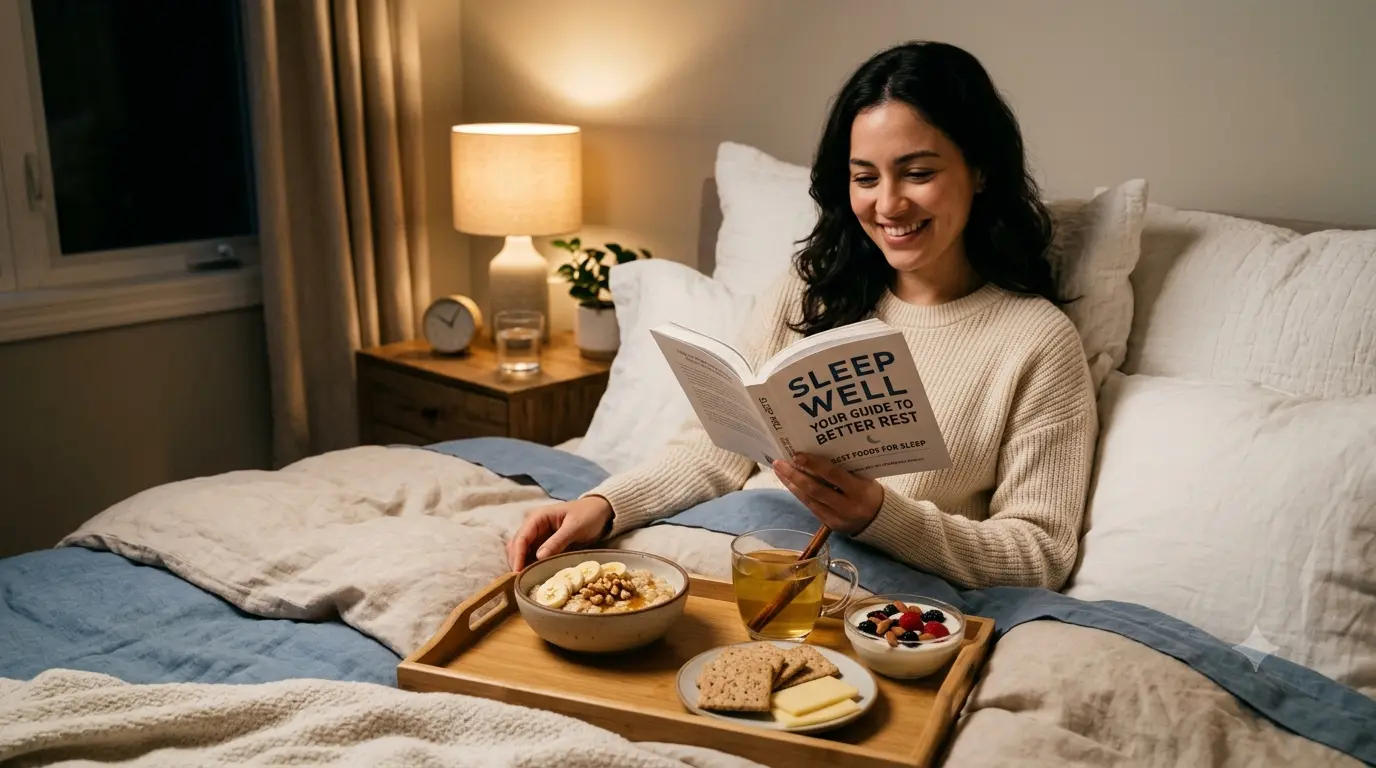
Milk contains tryptophan, the amino acid your body uses as a building block for serotonin and then melatonin. The “warm milk before bed” advice has been around forever and honestly sounded like folklore to me until I looked into the actual mechanism. It’s real, though the effect is modest on its own — it works best paired with a small amount of carbohydrate, which is part of why warm milk with a plain cracker, or a small bowl of oatmeal, tends to outperform milk alone in the research. The carb helps tryptophan actually get into the brain instead of competing with other amino acids for the ride.
Oats, in a small bowl, not a giant one
Oats are a natural source of melatonin and also have that carbohydrate-tryptophan pairing going for them. A small bowl an hour or so before bed can work as a genuinely effective wind-down food, especially compared to something sugary, which spikes blood sugar and can actually cause a wake-up a few hours later when it crashes. That 3 a.m. wide-awake feeling some people get isn’t always anxiety — sometimes it’s just a blood sugar dip talking.
Bananas, for the same magnesium-and-tryptophan combo
Bananas show up on basically every “sleep food” list for a reason — they’ve got magnesium, potassium, and a bit of tryptophan, and they’re about as low-effort a bedtime snack as it gets. Not magic. Just quietly useful.
What I didn’t expect, going into this, was how much the “what to avoid” side of things mattered just as much as what to add. Heavy, fatty, or spicy meals close to bedtime — Priya’s biryani situation — force your digestive system to work overtime right when it should be winding down, and that alone can be enough to keep you tossing regardless of how many almonds you ate for dessert. Alcohol is its own category of problem too; it might knock you out faster, but it fragments sleep in the second half of the night, which is probably why you can sleep eight hours after a few drinks and still feel like you got four.
I told Alina all of this eventually, minus the eleven links I’d opened trying to fact-check it. She switched her biryani nights to earlier in the evening, started keeping a small container of walnuts by her bed like some kind of squirrel, and texted me a few weeks later: “slept through the whole night, didn’t even wake up to pee, who am I.” Small wins. That’s mostly what good sleep is built from anyway — not one perfect food, just a handful of small, boring, consistent choices that add up over time.
You may also read: