
Neymar’s Brazil career is over. Not because he chose the timing. Because football chose it for him.
On Sunday night at MetLife Stadium in New Jersey, Brazil’s World Cup 2026 dream ended in the Round of 16. Norway won 2-1. And minutes after the final whistle, Neymar sat on the grass in tears and told the world he was done.
This wasn’t a scripted farewell tour. It was raw, sudden, and real. That’s exactly why it hit so hard.
What Happened in Brazil vs Norway
Brazil walked into this match as one of the favorites. Norway wasn’t supposed to be the team that ended their World Cup.
But Erling Haaland had other plans. He scored twice, tearing through Brazil’s defense in a performance his coach later called the greatest result in Norwegian football history. Brazil found themselves chasing the game for most of the second half.
The Seleção pushed. They created chances. But Norway’s defense, marshaled by a inspired goalkeeping display, refused to break again. When Neymar finally got his moment, a penalty deep into stoppage time, it was already too late to matter. Brazil lost 2-1, and their earliest World Cup exit since 1990 was confirmed.
Neymar’s Role in His Final Brazil Match
Neymar’s night didn’t start on the pitch. It started on the bench.
He came on as a substitute in the 67th minute, brought in as Brazil searched for a way back into the match. For most of the tournament, that had been his story. A right leg injury limited him to just two appearances across Brazil’s five games. He played only 15 minutes against Scotland in the group stage before this substitute cameo against Norway.
Then, in the final minutes of stoppage time, Brazil won a penalty. Neymar stepped up and scored. It was his only goal of the 2026 World Cup. A consolation, nothing more. But it turned out to be the last kick of his international career.
The Key Moment: Tears, Not Words
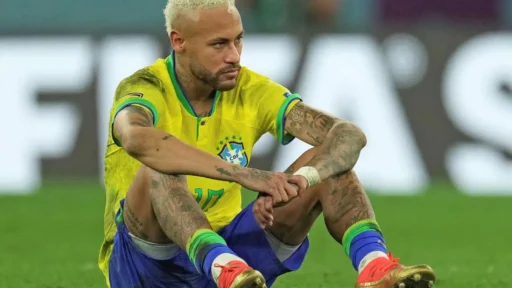
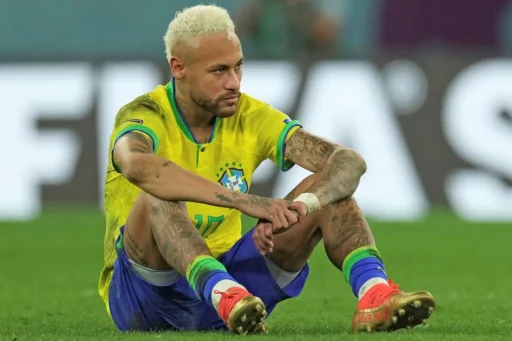
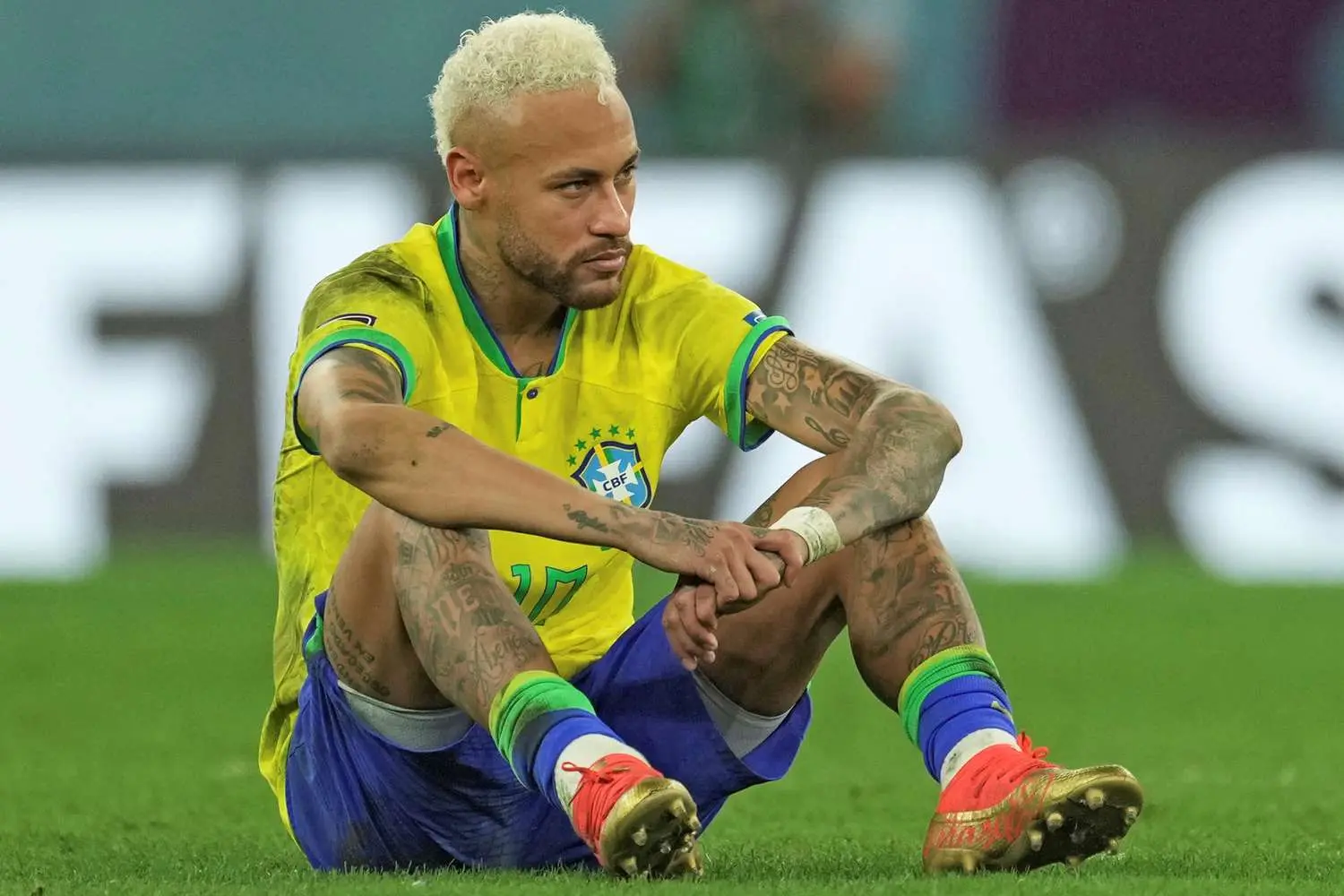
The final whistle blew. Brazil was out. And Neymar collapsed.
He dropped to the ground, sobbing, as Raphinha and Vinicius Junior rushed over to console him. Cameras caught every second of it. There was no need for narration. His body said what his career had just become: finished.
Speaking to Globo moments later, Neymar didn’t dress it up.
“I tried, I tried,” he said. “Now, it’s over. I started here; I finished here.”
The words carried weight because of where he stood. MetLife Stadium was the exact same ground where he made his Brazil debut back in August 2010, in a friendly against the United States. He scored on that day too. Sixteen years later, his story closed on the same patch of grass.
Neymar Decided to Retire From International Football
This wasn’t a decision made in a single night. It had been building for years.
Neymar, now 34, has spent the better part of his last few seasons fighting his body more than his opponents. Injuries have chipped away at the explosiveness that once made him one of the most feared attackers on the planet. His route to even making Brazil’s 2026 World Cup squad was uncertain. Coach Carlo Ancelotti wasn’t initially convinced he should be picked. Neymar’s rehab work got him onto the plane, but a leg problem still cost him most of the tournament.
Watching from the bench while his country fought without him, then getting only fleeting minutes when called upon, made the writing on the wall hard to ignore. His body could no longer keep pace with his ambition. Rather than limp through another cycle chasing a World Cup that had eluded him since his debut, he chose to walk away on his own terms, even if the ending wasn’t the one he dreamed of.
Carlo Ancelotti’s Reaction to Brazil’s Elimination
Ancelotti didn’t hide his disappointment in his post-match press conference, but he also refused to point fingers.
“It is a very disappointing result, and all of us are really saddened,” he said. “But this was a great group, and I have to thank my players; they worked really hard. I don’t think we deserved to lose, but we have to accept it. That is football for you, that is sports.”
He also looked ahead, signaling that Brazil’s focus now shifts to building the next generation. “What I say is that we continue to do our jobs and look for new ideas,” he added.
Captain Marquinhos echoed that sentiment, asking fans for understanding as a new core group takes shape. “We ask that people will have the patience with the new generation and support them from the get-go,” he said.
Neymar’s Legacy With Brazil
Numbers alone don’t capture what Neymar meant to Brazilian football, but they help tell the story. He finishes as Brazil’s all-time leading scorer, with 80 goals in 129 appearances, a tally that puts him ahead of even Pelé’s international goal count.
He played in four World Cups. He never lifted the trophy, and his cruelest near-miss came in 2014, when a back injury ruled him out of Brazil’s infamous 7-1 semifinal collapse against Germany on home soil. Beyond the World Cup, he won silver at the 2012 Olympics and led Brazil to gold in 2016.
Reaction poured in from across the football world. Thierry Henry, reflecting on Neymar’s career, called him an amazing talent with a skill set that was simply extraordinary, adding that it was a sad moment for Brazilian football.
What Comes Next for Brazil After Neymar
Brazil now enters a transition it has been quietly preparing for. Vinicius Junior, Raphinha, and a younger core of attacking talent are expected to carry the responsibility Neymar once shouldered alone.
Norway, meanwhile, moves on to the quarterfinals, where they’ll face the winner of Mexico versus England. For Brazil, the road back starts now, without the player who defined an era of their football.
Neymar’s Brazil story began with a goal at MetLife Stadium in 2010 and ended with tears on the same field sixteen years later. In between, he became the nation’s greatest goalscorer, a two-time Olympic medalist, and one of the most talked-about players of his generation, even without the World Cup he wanted most.
His retirement wasn’t planned as a moment. It arrived as one anyway. And for Brazilian football, it marks the true end of an era.