

(aka What I Wish Someone Told Me Two Diets Ago)
For most of my adult life, I thought weight loss was a discipline problem. Eat less, want less, complain less. That was the whole plan. It worked, technically, for about three weeks at a time — right up until the point where I’d open the fridge at 9 p.m. and eat standing up, straight out of the container, like a raccoon who’d found the good garbage.
I don’t say that for sympathy. I say it because I think a lot of people are running the same broken script I was, and the fix wasn’t willpower. It was protein. Specifically, it was realizing that hunger isn’t a character flaw — it’s a signal, and I’d been ignoring the one nutrient that actually turns the signal down.
Here’s the thing nobody tells you upfront: cutting calories without fixing what’s in those calories is basically setting a timer on your own failure. Protein is the one macronutrient that keeps you full, protects your muscle while the scale moves, and — this is the part that got me — makes your body burn more calories just digesting it. It’s not a hack. It’s just how digestion works. Carbs and fat get broken down cheaply. Protein costs your body real energy to process. You’re burning calories by chewing, essentially, which feels like the universe finally cutting you a break.
So I rebuilt my plate. Not dramatically — I didn’t go carnivore, I didn’t buy a scale that talks to me. I just started asking one boring question before every meal: where’s the protein in this? If I couldn’t answer it, I added something until I could.
Why Protein Actually Works for Weight Loss
The research backs up what I stumbled into by accident. Protein does three things at once that carbs and fat mostly don’t:
- It kills hunger at the source. Protein blunts appetite more effectively than fat or carbs, which means you stop white-knuckling your way through the afternoon.
- It preserves muscle in a calorie deficit. When you lose weight without enough protein, some of what you’re losing is muscle, not fat. That’s the version of weight loss that leaves you smaller but not actually healthier.
- It has a higher thermic effect. Digesting protein burns roughly 20–30% of its own calories, compared to single digits for carbs and fat. A free discount, basically, that most people never cash in.
Most nutrition guidance lands somewhere around 1.2 to 1.6 grams of protein per kilogram of body weight if you’re actively trying to lose fat — spread across meals, not stacked into one heroic dinner. The habit that changed things for me wasn’t a specific number, though. It was eating protein first, before the carbs, before I was already full on bread.
The High-Protein Foods That Actually Made the List
I went through a lot of trial and error here — some of it expensive, some of it just sad (a truly forgettable phase of dry chicken breast, no seasoning, pure punishment). What I landed on is a rotation, not a rulebook. Variety matters more than any single “best” food.
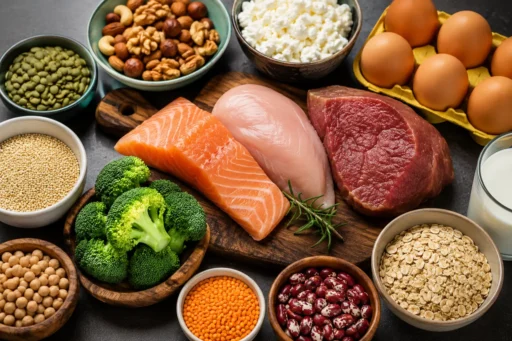
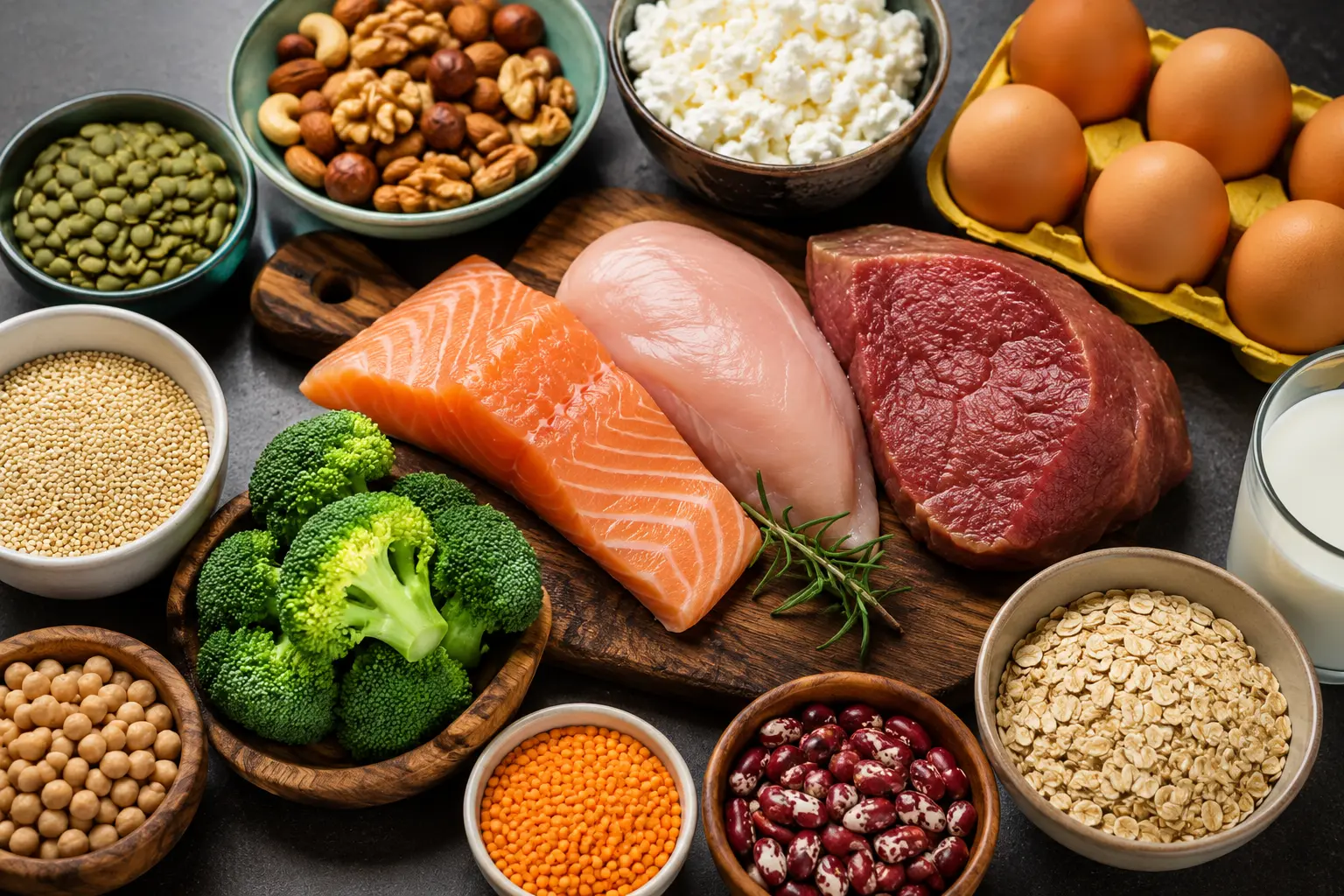
Animal-based, if that’s your thing:
- Chicken breast — the reliable one. About 31g of protein per 100g, lean, and it takes on whatever flavor you throw at it, which matters when you’re eating it four times a week.
- Eggs — six grams of protein each, plus the kind of fat and satiety that keeps blood sugar from crashing by 10 a.m.
- Greek yogurt — strained until it’s basically protein with a texture. Get the plain, unsweetened kind; the flavored stuff is dessert wearing a health halo.
- Cottage cheese — unfairly mocked for years, quietly one of the most protein-dense foods on a grocery shelf. Almost as much protein as two eggs, for under 100 calories a half-cup.
- Salmon — protein plus omega-3s, and it makes you feel like you’re eating well even when you’re eating on a budget week.
- Shrimp — nearly all protein, almost no saturated fat, and it cooks in about four minutes, which matters more than people admit.
- Canned tuna — unglamorous, cheap, doesn’t go bad in your pantry, delivers about 20g of protein for practically nothing.
- Lean ground turkey or 90% lean beef — the compromise food. Still satisfying, still protein-forward, without the guilt spiral.
Plant-based, because not everyone’s doing meat every day:
- Lentils — close to 18g of protein per cooked cup, plus enough fiber to keep things moving, literally and figuratively.
- Tofu and tempeh — tempeh edges out tofu on protein and has more texture to work with, which matters if tofu’s mushiness has ever been the thing standing between you and eating it regularly.
- Edamame — a snack that doesn’t feel like punishment. About 18g of protein per cup.
- Chickpeas — protein and fiber in the same bite, and they’ll turn into everything from hummus to a lazy weeknight curry.
- Quinoa — one of the rare plant carbs that’s also a complete protein, all nine essential amino acids included.
- Nuts and seeds — a handful of almonds gets you close to seven grams of protein, though it’s easy to overdo the calories here if you’re not paying attention.
I keep two or three of these in rotation at all times, because the second I run out of options, I fall back on whatever’s fastest — and “fastest” is rarely “high-protein” unless I’ve planned for it.
What I’d Tell Past Me
Don’t chase a diet. Chase a pattern you can repeat without gritting your teeth. Protein isn’t a trick that melts fat off while you sleep — nothing does that — but it’s the difference between a deficit that feels like starvation and one that just feels like a Tuesday.
I still eat the raccoon-at-the-fridge foods sometimes. I’m not claiming a full personality transplant. But most nights now, I’m just not hungry enough to want them. That’s the whole trick, really. Not more discipline. Less hunger.
What surprised me — and this is the part nobody mentions — is that once protein was actually handled, I stopped white-knuckling everything else. I wasn’t staring down a bag of chips at 4pm anymore. I wasn’t negotiating with myself about dinner. The deficit did what deficits do, but it stopped feeling like a deficit.
I won’t pretend this is some tidy transformation story. I still overcook the cod sometimes. I still buy the cottage cheese and let half of it expire because I forget it’s there. But the twelve pounds I used to lose and regain, on repeat, for years — that cycle finally broke, not because I found more willpower, but because I finally fed it correctly.
I don’t know if that’s a diet plan or just a slightly better relationship with my own fridge. Probably both.