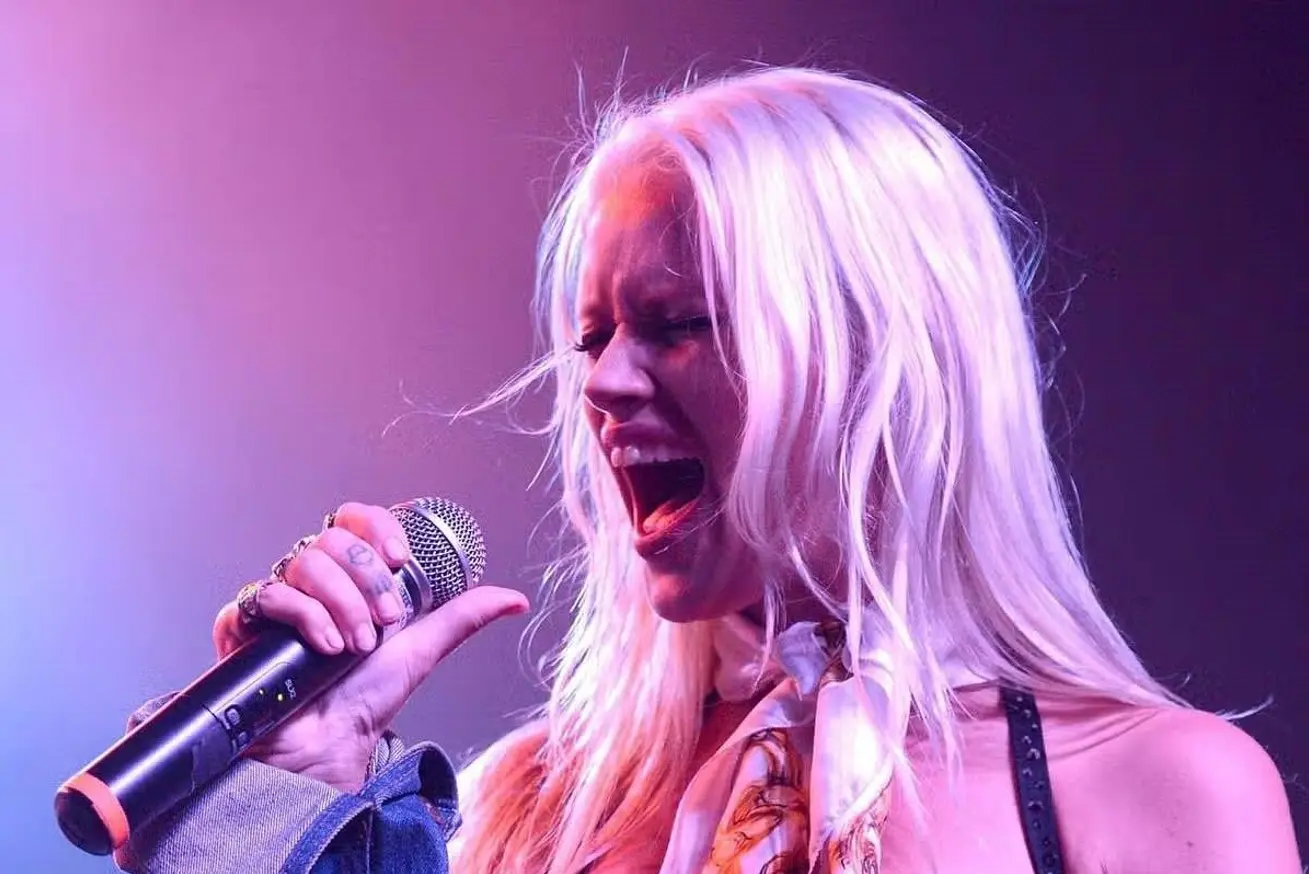

Everybody knows the song. Almost nobody knows the woman who sang the hook.
That’s the strange math of one-hit-wonder culture, isn’t it? “Party Rock Anthem” has been played at every wedding, every gym, every awkward middle school dance since 2011 — six weeks at No. 1, certified diamond, the whole deal. But ask someone to name the woman whose voice actually carries that “party rock is in the house tonight” line, and you’ll mostly get a shrug.
Her name was Lauren Bennett. And on July 6, 2026, the world found out she’d died — weeks after the fact, quietly, the way her whole career sort of was.
The Girl from Meopham, Kent
Bennett wasn’t a pop star who fell into music. She built her way in, the slow way, from a small town most people have never heard of.
She was born Lauren Diane Bennett on June 24, 1989, in Meopham, Kent, England. By 14, she’d already formed a duo with a friend and was performing in pubs and bars — not exactly a glamorous start, but a real one. Two years later she auditioned for the third series of The X Factor, made it all the way to the final 12, and then got sent home. That’s the part of the story that usually ends careers. For Bennett, it was the opening act.
That X Factor run got her noticed. At 17, she moved to Los Angeles to join a new girl group being assembled by Interscope’s Jimmy Iovine and Pussycat Dolls founder Robin Antin. The group would become the Paradiso Girls — five women, five different countries, one label bet. Their 2009 debut single, “Patron Tequila,” featuring Eve and Lil Jon, cracked the top 3 on Billboard’s Dance Club Songs chart. It looked, for a minute, like the beginning of something big.
Then Interscope dropped them.
The Solo Years, and the Song That Changed Everything
Here’s the part of Bennett’s career that almost never gets its own paragraph, even though it should. After Paradiso Girls dissolved, she didn’t quit. She pivoted — worked with CeeLo Green on “Love Gun” off The Lady Killer, contributed to a will.i.am remix, kept her name circulating in rooms where careers get made or quietly ended.
Then, in 2011, LMFAO called.
“Party Rock Anthem” needed a hook, and Bennett delivered one that turned out to be inescapable. The song hit No. 1 on the Billboard Hot 100 for six weeks, topped charts in roughly 20 other countries, and became the kind of cultural wallpaper you stop noticing is even playing. It was, by any measure, the biggest moment of her career. It also became — this is the part that stings a little — mostly LMFAO’s moment. Bennett was the voice. The recognition went elsewhere.
G.R.L., and a Group That Kept Surviving Loss
In 2013, Antin folded Bennett into another project: G.R.L., a girl group built once again from members across different countries. They landed a feature on Pitbull’s “Wild Wild Love” and released a self-titled EP the same year, spawning “Ugly Heart,” a top-20 hit across the UK, Australia, and New Zealand.
Then, in 2014, tragedy hit the group directly — member Simone Battle died by suicide at 25. G.R.L. paused. Bennett didn’t walk away. She came back in 2016 as part of a reformed trio, and the group even confirmed plans for new music in 2021, though — as bandmate Natasha Slayton later admitted in a 2025 podcast interview — funding fell apart and the timing “just wasn’t right.” By then, Bennett had relocated back to London and had a daughter, Harlow, born in 2019 with dancer and actor Kenny Wormald. Life had quietly reorganized itself around something other than the charts.
A Death That Took Weeks to Reach the Public
This is where the story gets uncomfortable, and I don’t think it should be smoothed over.
Bennett died sometime between late May and June 2026 — the exact date still isn’t confirmed. Her former Paradiso Girls bandmate Aria Crescendo posted a tribute around what would’ve been Bennett’s 37th birthday, quietly marking a loss the public didn’t yet know about. It wasn’t until July 6, 2026, that G.R.L. — Natasha Slayton, Emmalyn Estrada, and Paula van Oppen — confirmed her death in a joint statement: “Our hearts are broken, and we cannot begin to express how much she meant to us. We will forever cherish the love, laughter and countless memories she gave us.”
No cause of death has been released. Kent and Medway Coroner records reportedly show an inquest scheduled for October 2026, which is often what happens when a death is sudden or unexplained. Until then, the how of it stays private — and maybe that’s fair. Not every part of a person’s story is owed to the public, even when their voice was.
The Part That’s Hard to Sit With
Lauren Bennett spent nearly two decades doing the unglamorous work of staying in an industry that kept almost letting her go — dropped labels, disbanded groups, a hit song credited more to the artist beside her than to her own voice. She kept showing up anyway. Formed new groups. Took new features. Became a mother. Came back to a band that had already survived one member’s death.
She was 36, maybe 37 — even that detail is still unsettled, which somehow fits. A woman whose voice millions of people have shouted along to at 2 a.m. on a dance floor, and whose name most of those same people are only learning now, because of an ending instead of a chart position.
That’s the trade-off nobody warns featured vocalists about, I think. You can be the hook everyone remembers, and still be the person nobody asks about until it’s too late to ask.